

The Authority in Global Agricultural Chemistry & Bio-Resources
When feed & grain processing equipment pays back sooner
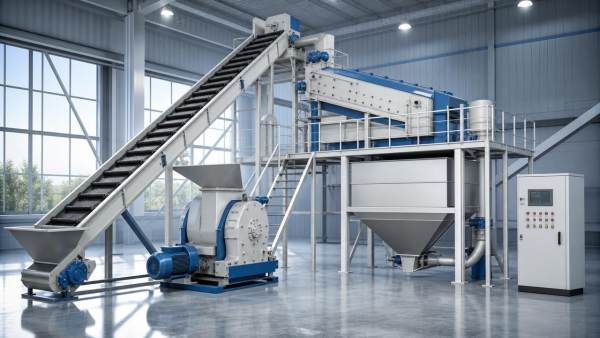
For financial decision-makers, the real question is not whether Feed & Grain processing equipment improves output, but how quickly it returns capital. In a market shaped by energy costs, compliance demands, and margin pressure, understanding payback timelines is essential. This article examines the operational and financial factors that determine when equipment investments begin delivering measurable value.
For CFOs, plant controllers, and approval committees, the investment case rarely rests on throughput alone. The more practical questions are whether a new line cuts cost per ton, reduces downtime, improves yield, and strengthens compliance within 12, 18, or 24 months.
In feed mills, grain handling sites, and integrated processing operations, the economics of Feed & Grain processing equipment are shaped by more than list price. Utilities, labor, maintenance, contamination control, and changeover time often determine whether payback arrives sooner than expected or drifts beyond budget tolerance.
What Shortens the Payback Period in Feed & Grain Processing Equipment
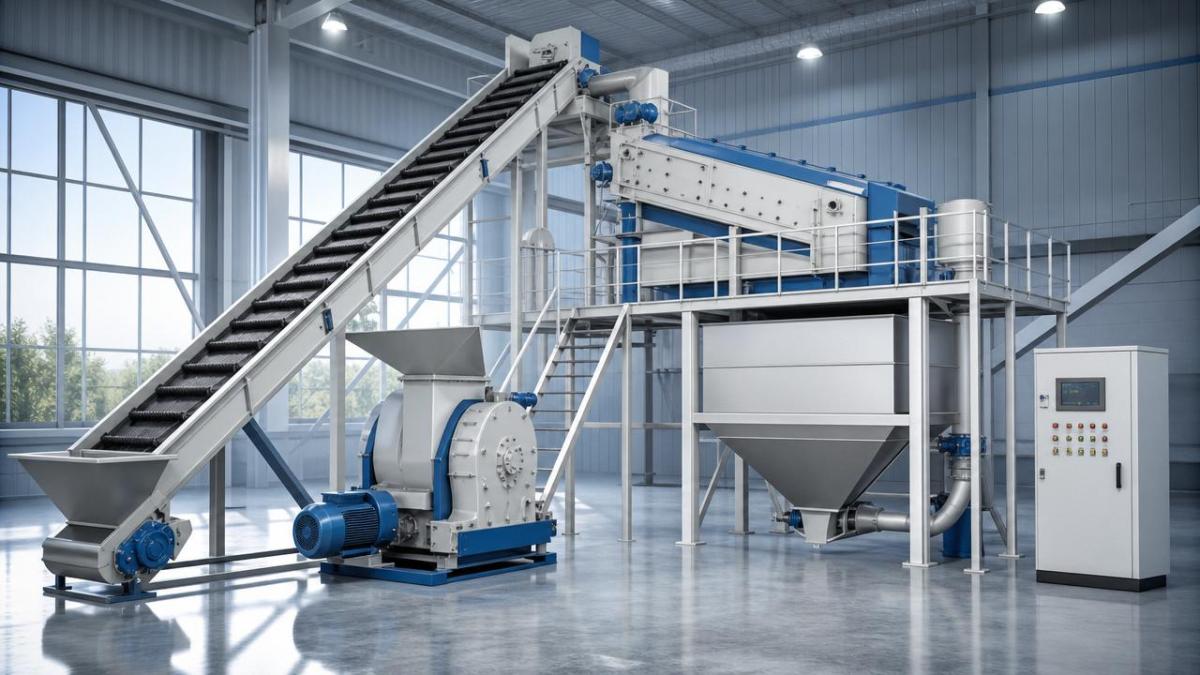
A shorter payback period usually comes from four measurable drivers: higher throughput, lower operating cost, reduced product loss, and fewer unplanned stops. In many industrial settings, even a 2% to 4% improvement in yield can have a larger financial effect than a headline capacity increase.
Financial approvers should evaluate Feed & Grain processing equipment as a system rather than a stand-alone machine. A grinder, dryer, screener, mixer, or pelletizing section may perform well individually, but the return is only realized when upstream intake and downstream handling remain balanced.
The four cost levers that matter most
- Energy draw per ton processed, especially where motors run 16 to 24 hours daily
- Labor hours per shift, including cleaning, adjustment, and material changeover
- Waste, shrink, or off-spec volume, often measured as 1% to 3% of throughput
- Maintenance frequency, spare parts consumption, and downtime duration
Consider a plant processing 8 to 12 tons per hour across two shifts. If upgraded equipment lowers energy consumption by 8% and trims labor by one operator per shift, the annual savings can materially accelerate capital recovery without any change in selling price.
Why throughput alone can mislead
A line rated at 15 tons per hour may not produce a faster return than one rated at 12 tons per hour if the larger system requires heavier power loads, more frequent wear-part changes, or longer shutdowns for sanitation. Utilization rates matter more than nameplate capacity.
In practice, a stable line running at 85% to 90% availability often outperforms a larger line stuck near 65% to 75% because of bottlenecks, moisture variation, dust handling issues, or inconsistent raw material flow.
The table below shows how financial teams can compare the main factors that influence the payback speed of Feed & Grain processing equipment across typical plant conditions.
The key takeaway is that the fastest payback rarely depends on one dramatic improvement. It usually comes from stacked gains across utilities, yield, labor, and uptime. For finance teams, this layered savings model is more reliable than a single optimistic production assumption.
How Financial Approvers Should Evaluate the Total Investment Case
A capital request for Feed & Grain processing equipment should be reviewed through total installed cost, not equipment invoice value alone. Civil works, electrical integration, dust collection, controls, commissioning, and operator training can add 15% to 35% beyond the machine package.
Ignoring these items can distort payback assumptions from the start. A machine that appears to recover capital in 14 months may move to 20 months after auxiliary systems and implementation downtime are included.
Five approval questions before releasing budget
- What is the full installed cost, including utilities, automation, and commissioning?
- What baseline is being used for current throughput, scrap, labor, and maintenance?
- How many months are needed before the line reaches stable operating conditions?
- What assumptions depend on ideal raw material quality rather than actual variability?
- What compliance or safety costs are avoided by modernizing the process?
Compliance also has financial value
In regulated agricultural and primary processing environments, compliance can influence payback just as much as mechanical efficiency. Better dust control, traceability, and cleaner transfer points help reduce audit risk, contamination events, and rejected lots.
For businesses supplying export markets or contract manufacturing networks, avoiding one quality incident can preserve margins across several quarters. That makes compliance-enhancing Feed & Grain processing equipment easier to justify, even when direct savings appear moderate.
The following table gives a practical framework for comparing capital proposals from a financial approval perspective rather than a purely engineering perspective.
This type of review helps procurement and finance align on realistic ROI. It also creates a documented approval trail, which is critical when capital committees must compare multiple projects competing for the same annual budget.
Operational Conditions That Make Equipment Pay Back Faster
Not every facility will see the same return timeline. Feed & Grain processing equipment tends to pay back sooner in plants with high utilization, expensive energy, frequent format changes, or high-value formulations where small yield losses carry outsized cost.
A site running 20 hours a day, 6 days a week usually captures savings much faster than a plant with intermittent schedules. More runtime means energy gains, labor reductions, and uptime improvements convert into cash flow more quickly.
High-impact plant scenarios
- Legacy systems older than 10 to 15 years with declining spare-part availability
- Plants with moisture variability that causes uneven drying or quality inconsistency
- Operations where dust management and sanitation consume more than 1 hour per shift
- Facilities facing labor shortages and needing more automated control points
The role of raw material variability
One underappreciated factor in payback is how well equipment handles fluctuating grain condition. Variations in moisture, kernel size, foreign material, and bulk density can erode effective capacity by 5% to 12% if the system lacks responsive controls or proper separation stages.
When new Feed & Grain processing equipment stabilizes output despite inconsistent intake, the financial value appears in reduced rework, fewer operator interventions, and more predictable scheduling. These benefits are particularly important for contract supply chains with delivery penalties.
Common mistakes that delay return on investment
- Buying for peak capacity without validating normal operating loads
- Underestimating dust extraction, conveying, or storage upgrades
- Using theoretical maintenance intervals instead of site-specific conditions
- Skipping operator training in the first 30 to 60 days after commissioning
- Measuring success only by tons per hour instead of total cost per ton
For financial decision-makers, these issues matter because they convert directly into delayed savings. Even a 6-week commissioning overrun or a 10% gap in expected uptime can materially change the internal case for expansion, refinancing, or phased modernization.
A Practical Payback Model for Procurement and Finance Teams
The most useful approval model is simple enough to audit but detailed enough to reflect plant reality. For Feed & Grain processing equipment, many companies use a 3-part framework: annual savings, implementation cost, and stabilization period.
Annual savings should include direct labor, utility reduction, lower waste, maintenance avoidance, and incremental output only where demand already exists. Implementation cost should include machine package, installation, integration, and planned shutdown expense.
A three-step capital review method
Step 1: Establish the baseline
Use at least 6 months of actual plant data, and preferably 12 months if seasonal variation is significant. Track kWh per ton, labor hours per batch or shift, unplanned downtime hours, and average maintenance spend.
Step 2: Stress-test the assumptions
Review best case, expected case, and conservative case. A prudent model might assume only 60% to 70% of the vendor’s headline savings during the first quarter after startup, then move toward full value after stabilization.
Step 3: Map the cash recovery timeline
Convert monthly savings into cumulative cash recovery. This makes it easier for budget committees to compare a 9-month, 15-month, or 24-month payback project against other capital uses such as storage expansion, energy systems, or compliance upgrades.
Finance teams should also ask whether the project supports broader strategic goals. Feed & Grain processing equipment that enables better traceability, cleaner processing, or easier recipe control may support customer retention and premium contracts, even if direct payback is not the shortest in the portfolio.
For institutional buyers and industrial operators following complex supply-chain standards, the strongest investment proposals combine measurable operating savings with lower compliance risk and stronger production continuity. That combination is often what turns a borderline request into an approved project.
When reviewed with realistic baselines and full-scope costing, Feed & Grain processing equipment often pays back sooner than expected in sites burdened by energy waste, avoidable downtime, and manual handling inefficiencies. The fastest returns typically come from system-level improvements rather than isolated machine upgrades.
AgriChem Chronicle helps financial approvers, procurement leaders, and industrial operators assess these investments with clearer technical and commercial context. To evaluate a modernization project, obtain a tailored equipment roadmap, or compare implementation scenarios, contact us to get a customized solution and deeper processing intelligence.
Related Intelligence
- Milling MachineryCan Agricultural Scientists Validate Grain Processing Machinery?Can agricultural scientists validate process machinery performance? Discover how grain equipment testing verifies throughput, quality, and efficiency before you invest.
- Milling MachineryGrain Processing Explained: From Cleaning and Milling to Finished Product QualityGrain Processing explained: discover how cleaning, conditioning, milling, and quality control turn raw grain into safe, consistent flour, feed, and food ingredients.
- Milling MachineryGerman Grain Processing Plants: Evaluating Automation and Energy-Efficiency UpgradesGrain processing Germany: evaluate automation and energy-efficiency upgrades to improve throughput, quality, safety, and lifecycle value.
The Morning Broadsheet
Daily chemical briefings, market shifts, and peer-reviewed summaries delivered to your terminal.
