

The Authority in Global Agricultural Chemistry & Bio-Resources
Grain Machinery for Food Processing: Key Equipment Types and How to Match Them to Output Needs
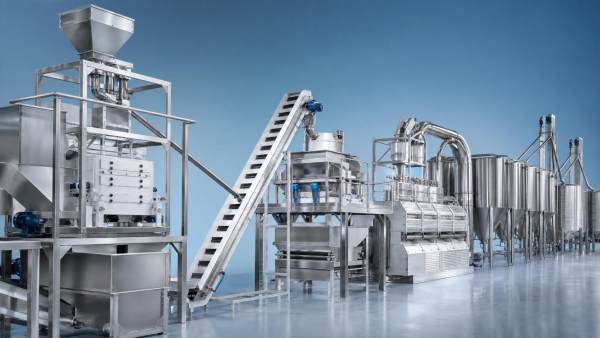
Selecting grain machinery for food processing has become a strategic operating decision, not a routine plant purchase. Capacity, yield stability, product safety, labor intensity, and downstream consistency are all shaped by equipment fit.
That matters more now because grain processing sits inside tighter supply chains, stricter quality systems, and faster market shifts. A line sized for yesterday’s volume can quickly become a cost burden or a quality risk.
Across feed, flour, starch, cereal, and ingredient production, the best results usually come from matching machinery to actual output needs, material behavior, and compliance targets rather than buying for headline capacity alone.
Why equipment matching now carries more business weight
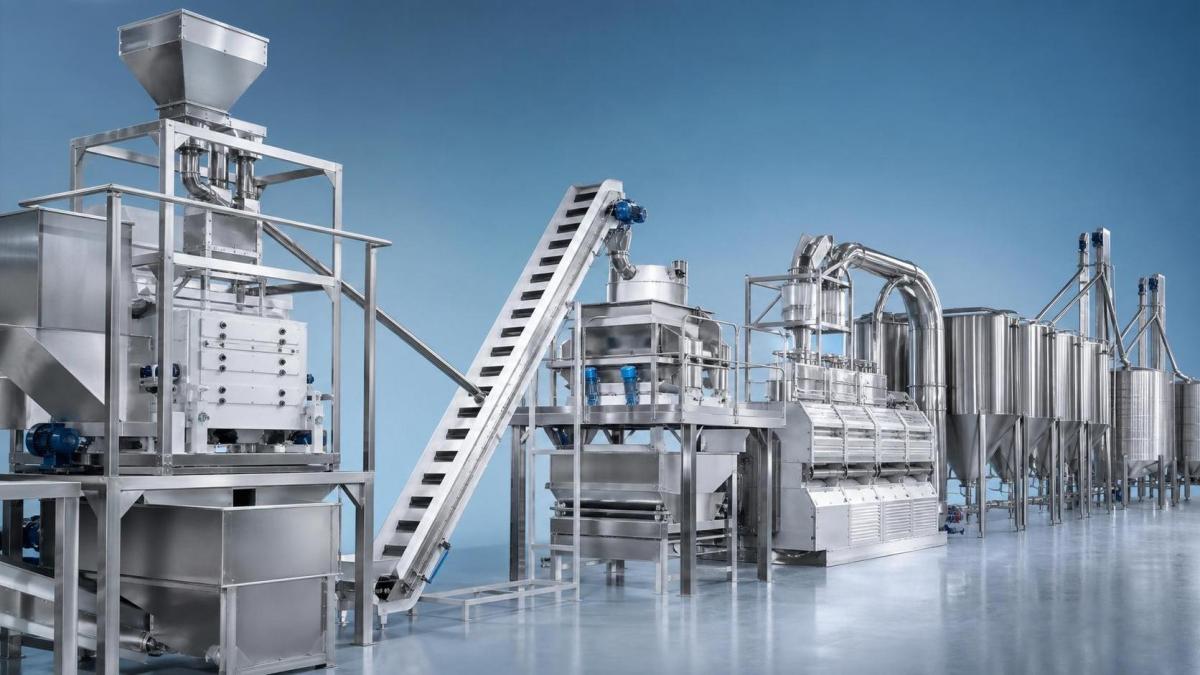
Grain machinery for food processing now operates in a more complex industrial context. Input quality varies by region and season, while buyers demand tighter particle size, moisture, traceability, and contamination control.
Energy pricing also changes the economics of every ton processed. Oversized systems can waste power and increase idle maintenance. Undersized systems create bottlenecks, overtime pressure, and unstable finished product quality.
This is where a broader industry view helps. Publications such as AgriChem Chronicle have highlighted how primary processing decisions increasingly intersect with regulation, technical validation, and supply chain transparency.
In practice, grain machinery for food processing is no longer judged only by mechanical performance. It is evaluated by how well it supports throughput planning, audit readiness, waste control, and long-term plant flexibility.
The core equipment groups in a grain processing line
Most processing plants do not rely on a single machine. They depend on an integrated sequence, where each stage affects the next one. Understanding the main categories makes capacity planning more realistic.
Cleaning and pre-processing systems
These include scalpers, aspirators, destoners, magnetic separators, and graders. Their role is to remove foreign matter, protect downstream equipment, and stabilize raw material quality before milling or further treatment.
When raw grain sources vary widely, this section deserves more attention than many buyers initially expect. Poor pre-cleaning can reduce extraction rates and increase wear across the entire line.
Conditioning and moisture control equipment
Tempering bins, dampeners, dryers, and moisture management systems prepare grain for stable processing. They influence breakage behavior, milling efficiency, shelf life, and final texture.
This stage is especially important when the product mix includes flour, starch, breakfast cereals, or specialty ingredients that require narrow process tolerances.
Size reduction and milling equipment
Hammer mills, roller mills, pin mills, and pulverizers define particle size and process efficiency. The right choice depends on grain type, target fineness, heat sensitivity, and whether uniformity or throughput is the main priority.
For grain machinery for food processing, this category often draws the most attention. Still, line performance usually depends on how well milling is supported by the stages before and after it.
Separation, sifting, and grading units
Plansifters, screens, separators, and classifiers sort material into usable fractions. They support consistent specification control and determine how much rework or recirculation the system must handle.
Conveying, storage, and automation
Bucket elevators, screw conveyors, pneumatic systems, bins, dosing units, and control software often receive less attention during procurement. Yet they define line balance, sanitation, and labor efficiency.
A technically strong mill can still underperform if transfer points clog, buffer storage is too small, or control logic cannot maintain steady flow.
How output needs should shape equipment choices
The central question is not simply, “How many tons per hour?” Output needs must be defined more carefully. Capacity targets only become useful when linked to operating reality.
A line producing 60 tons per day over three shifts needs different equipment from one producing the same daily volume in a shorter production window. The installed capacity may look similar on paper, but operating stress will not.
Grain machinery for food processing should also be judged at the system level. One high-capacity mill paired with weak cleaning or slow conveying rarely delivers the expected output.
Typical processing scenarios and the machinery logic behind them
Different products place different demands on grain machinery for food processing. Matching equipment starts with understanding the process objective rather than starting from a machine catalog.
Flour and dry ingredient production
These operations usually prioritize particle consistency, extraction rate, and clean separation. Roller mills, tempering systems, sifters, and contamination control equipment often deserve the largest share of technical evaluation.
Feed and blended grain products
Throughput, flexibility, and robust handling matter more here. Hammer mills, mixers, conveyors, and bulk storage must tolerate variable formulations without creating frequent downtime.
Breakfast cereals and ready-to-process bases
Uniform raw preparation is essential because inconsistency multiplies in later cooking or forming stages. Moisture conditioning, precise milling, and screening become critical for downstream stability.
Specialty starches and functional ingredients
These lines often need tighter process control, lower contamination risk, and stronger documentation. In such cases, grain machinery for food processing must support repeatability as much as physical capacity.
What to check before committing capital
The most expensive mistake is buying equipment against nominal output alone. A more reliable review process tests how machinery will perform under realistic plant conditions.
- Map the full material path, from intake to finished packing or bulk discharge.
- Check the narrowest point in the line, not only the largest machine.
- Compare rated capacity with expected capacity at actual moisture and impurity levels.
- Review sanitation access, cleanout time, and changeover requirements.
- Confirm spare parts availability, local service response, and control system support.
- Test whether utilities, floor loading, dust control, and automation are sized correctly.
It is also worth asking how fast the line can recover after a stoppage. Recovery speed affects practical throughput far more than brochure figures suggest.
For regulated or export-facing operations, documentation quality matters as well. Equipment records, material contact specifications, and process data can influence customer approval and audit outcomes.
A workable framework for the next decision
A sound grain machinery for food processing strategy begins with five numbers: annual volume, shift pattern, acceptable loss rate, product specification range, and planned expansion horizon.
From there, compare equipment options as complete process systems. Look at bottlenecks, cleanability, energy draw, operator dependence, and data visibility, not just purchase price or nameplate capacity.
That approach reflects the broader direction of primary industries covered by AgriChem Chronicle, where technical purchases are increasingly judged through the lens of resilience, compliance, and measurable operating performance.
The next useful step is to build a line-by-line requirement sheet, then test suppliers and configurations against real production scenarios. Grain machinery for food processing performs best when output needs are defined with that level of discipline.
Related Intelligence
- Milling MachinerySaudi Arabia Grain Processing: Assessing Local Milling Capacity and Supply GapsGrain processing Saudi Arabia: assess local milling capacity, storage, logistics, and supply gaps to identify resilient investment opportunities across the Kingdom’s import-dependent grain chain.
- Milling MachineryUK Grain Processing Compliance: Key Food Safety Controls for Mill OperatorsGrain processing UK compliance guide for mill operators: strengthen HACCP, intake controls, allergen management, traceability and foreign-body prevention for safer, audit-ready operations.
- Milling MachineryGrain Processing in Singapore: Import Dependence and Value-Add OpportunitiesGrain processing Singapore: explore import dependence, high-value processing opportunities, supply-chain resilience, and regional growth strategies for food and feed businesses.
The Morning Broadsheet
Daily chemical briefings, market shifts, and peer-reviewed summaries delivered to your terminal.
