

The Authority in Global Agricultural Chemistry & Bio-Resources
Clean Label Biochemical Materials: What to Check for Traceability, Purity, and Label Claims

Why do clean label biochemical materials need deeper verification?
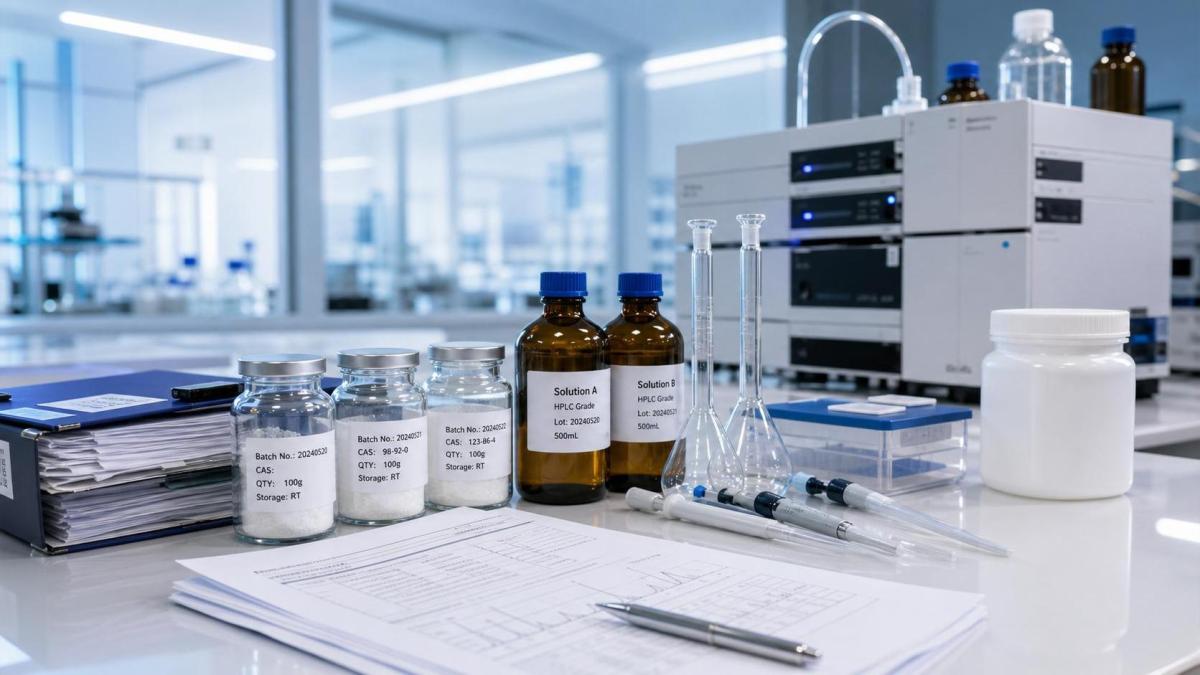
Clean label biochemical materials sound simple, but approval decisions rarely are.
In controlled production, a clean-looking specification sheet is only a starting point.
What matters is whether the material can be traced, verified, and defended during audits.
That is especially true across fine chemicals, bio-extracts, feed inputs, and regulated processing chains.
A supplier may describe a material as natural, low-residue, or minimally processed.
Those phrases are not enough unless batch records, analytical methods, and label claims align.
In practice, clean label biochemical materials are judged by evidence, not by positioning language.
This is why technical publications in primary industries keep returning to traceability and compositional integrity.
Across agricultural, biochemical, and processing sectors, supply chains now face tighter documentation expectations.
The useful question is not whether a claim sounds credible.
The useful question is whether the claim survives a specification review, deviation review, and market compliance check.
When people say “clean label,” what should you actually look for?
The term often mixes marketing language with legitimate technical expectations.
A practical review separates appearance from evidence.
For clean label biochemical materials, three checks usually matter most.
- Origin transparency: source organism, feedstock, synthesis path, or extraction route.
- Composition clarity: active fraction, carrier system, residual solvents, and impurity pattern.
- Claim accuracy: label wording must match technical files and testing limits.
A strong dossier will identify raw material provenance and critical process steps.
It should also explain which stages can change purity, allergen status, or residue risk.
That distinction matters because two materials may share a common name but differ significantly in control history.
More careful reviewers also examine how the supplier defines the clean label claim itself.
If the definition changes between brochures, certificates, and contracts, the material is already high risk.
How much traceability is enough before approval?
Enough traceability means you can reconstruct the batch without depending on supplier memory.
That usually includes lot genealogy, manufacturing site identity, and chain-of-custody records.
For clean label biochemical materials, traceability should move beyond a generic certificate of analysis.
A robust file normally shows where the feedstock originated and where transformation occurred.
It also identifies outsourced steps, reprocessing events, and any blending across lots.
In real assessments, gaps often appear at intermediates rather than at finished goods.
This is common in fermentation derivatives, botanical extracts, and functional additives.
A quick screening table can help clarify what counts as acceptable evidence.
If these records are incomplete, clean label biochemical materials become difficult to defend in audits or recalls.
The risk is not abstract.
It affects release decisions, incident investigations, and cross-border documentation reviews.
What purity data matters most, beyond the headline assay?
A high assay can hide a weak impurity profile.
That is one of the most common misunderstandings in clean label biochemical materials screening.
The assay tells you how much target component is present.
It does not automatically explain what else is there.
A more useful review checks residual solvents, heavy metals, processing aids, microbial counts, and degradants.
For botanical or fermentation-based materials, matrix variability also deserves attention.
Suppliers sometimes report broad purity ranges that look acceptable on paper.
The better question is whether the analytical method is stability-indicating and fit for that matrix.
Needle-moving details include detection limits, method validation scope, and whether unidentified peaks are tracked over time.
When clean label biochemical materials are used in sensitive formulations, even low-level carryover can create downstream problems.
- Ask whether impurity specifications are risk-based or copied from a similar grade.
- Check if seasonal or raw material variation changes the impurity fingerprint.
- Review trend data, not just a single passing batch.
- Confirm whether out-of-trend results trigger investigation, not only out-of-specification failures.
This is where a technical editorial mindset helps.
The strongest evaluations compare evidence across batches, methods, and processing conditions rather than trusting one number.
Are label claims usually reliable, or where do they break down?
Label claims are useful only when they can be translated into measurable requirements.
That is where many clean label biochemical materials fail initial review.
Claims such as solvent-free, non-synthetic, preservative-free, or naturally derived can mean different things across markets.
Some claims reflect process choices.
Others describe composition thresholds.
A few are simply commercial shorthand with no stable regulatory meaning.
Before accepting a claim, match it against supporting records.
- Does the manufacturing route support the wording?
- Do test methods directly verify the claim?
- Is the claim valid in every destination market?
- Do packaging labels, technical sheets, and contracts use the same phrase?
The most practical approach is to convert each claim into a checklist item.
If a statement cannot be tied to a method, threshold, or source document, it should remain provisional.
This matters in sectors monitored through GMP, FDA, EPA, or buyer-specific quality agreements.
Across primary industries, the burden is increasingly on documented consistency, not broad narrative claims.
What mistakes show up most often during supplier comparison?
The biggest mistake is comparing clean label biochemical materials only by price and nominal specification.
That approach ignores release delays, testing burden, and hidden compliance exposure.
Another frequent problem is treating every certificate as equally meaningful.
A certificate helps, but its value depends on scope, date, and issuing system.
Some teams also underestimate how often label claims drift after process optimization or sourcing changes.
A short comparison framework usually prevents most of these issues.
This kind of comparison is especially relevant in markets covered by technical reporting and cross-border oversight.
It reflects the same evidence-first discipline seen in leading sector intelligence and compliance analysis.
What should the next review cycle include?
A useful next step is to build a decision file for each of your clean label biochemical materials.
Keep it focused on evidence that supports release, claim acceptance, and change management.
At minimum, include the approved specification, validated methods, traceability map, and claim justification notes.
Then review whether the current supplier package would still hold up after a sourcing change or regulatory query.
For many organizations, that exercise reveals where the real gaps are.
The point is not to reject every material with complexity.
The point is to approve clean label biochemical materials on standards that remain defensible over time.
If the evidence is strong, approval becomes faster and more consistent.
If the evidence is weak, the cost usually appears later through deviations, relabeling, or repeat testing.
A disciplined review process should therefore ask three closing questions.
- Can the material be traced across the full batch pathway?
- Do purity and impurity data reflect real process risk?
- Are all label claims supported by stable, auditable evidence?
Those questions provide a workable standard for cleaner approvals and fewer surprises later.
Related Intelligence
- Natural IngredientsMayonnaise vs. Salad Dressing: Ingredient and Texture DifferencesMayonnaise vs. salad dressing: discover key ingredient, texture, stability, and application differences to choose the right product for every recipe.
- Natural IngredientsIndustrial-Scale Agricultural Sourcing: Key Criteria for Reliable SupplyIndustrial scale agri sourcing made reliable: assess supplier capacity, traceability, landed cost, logistics, and resilience to protect production continuity.
- Natural IngredientsHow Microencapsulated Botanical Ingredients Improve Stability and Controlled ReleaseMicroencapsulated botanical ingredients enhance stability, protect sensitive actives, and enable controlled release for reliable performance across demanding applications.
The Morning Broadsheet
Daily chemical briefings, market shifts, and peer-reviewed summaries delivered to your terminal.
