

The Authority in Global Agricultural Chemistry & Bio-Resources
How to compare agri & forestry machinery manufacturers
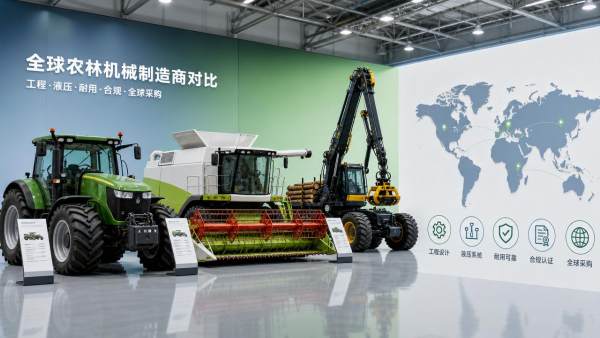
Choosing among Agri & Forestry machinery manufacturers is no longer just about price or product range. For global sourcing decisions, the stronger comparison method combines engineering depth, compliance performance, service infrastructure, and supply continuity. A structured review reduces hidden operating costs, shortens qualification cycles, and helps separate credible long-term partners from suppliers that look competitive only on paper.
Why a checklist matters when comparing Agri & Forestry machinery manufacturers
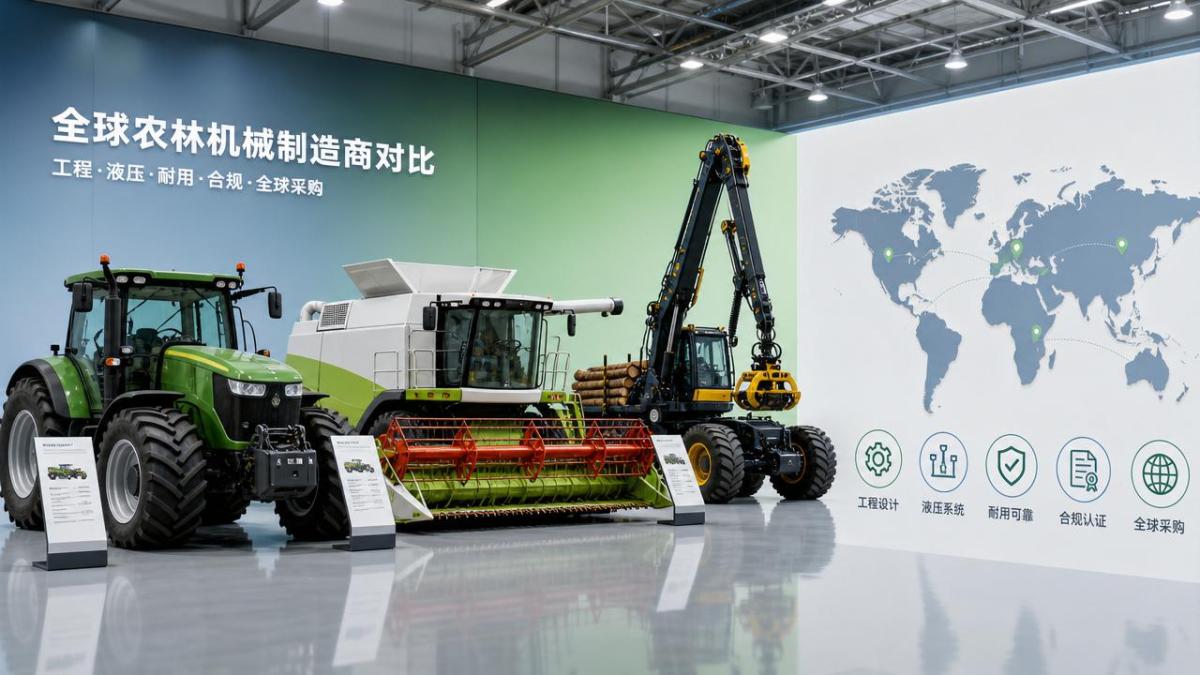
Agricultural and forestry equipment now operates in a tighter environment of emissions rules, safety expectations, digital integration, and parts traceability. Simple catalog comparisons miss critical differences in design maturity and lifecycle support.
A checklist creates a repeatable framework. It allows apples-to-apples comparison across tractor builders, harvesting system suppliers, logging equipment producers, and mixed-line OEMs serving multiple primary industries.
It also improves audit discipline. When Agri & Forestry machinery manufacturers are measured against documented technical and commercial criteria, decisions become easier to defend internally and operationally.
Core checklist for evaluating Agri & Forestry machinery manufacturers
- Verify production scope. Confirm whether the supplier builds core machines, major assemblies, hydraulic systems, or only performs final assembly using outsourced components.
- Check application fit. Match engine power, PTO options, lifting capacity, ground pressure, and attachment compatibility to the intended agricultural or forestry workload.
- Review engineering documentation. Request BOM control methods, material specifications, welding procedures, tolerance standards, and validation records for critical load-bearing structures.
- Assess compliance coverage. Confirm conformity with CE, ISO, EPA emissions rules, operator safety requirements, and any destination-market certification needed before import or operation.
- Inspect quality systems. Look for incoming inspection controls, in-process testing, final inspection routines, supplier qualification procedures, and corrective action tracking.
- Measure durability evidence. Ask for field-test hours, fatigue testing data, corrosion protection methods, gearbox life estimates, and performance records from comparable operating environments.
- Compare component sourcing. Identify the brands behind engines, pumps, bearings, controls, axles, and electronics because serviceability often depends on upstream component quality.
- Examine digital capability. Determine whether the equipment supports telematics, fault diagnostics, usage tracking, remote updates, and integration with fleet management systems.
- Audit spare parts readiness. Review fill rates, safety stock logic, warehousing locations, lead times for wear parts, and support for legacy models still active in the field.
- Test after-sales response. Check service manuals, technician training, escalation paths, warranty turnaround, and local partner coverage before treating support promises as reliable.
- Validate supply chain resilience. Ask about dual sourcing, key-material exposure, logistics backup plans, and how the company handled recent shipping or raw material disruptions.
- Compare total cost of ownership. Include fuel use, maintenance intervals, consumables, downtime risk, training needs, and resale value instead of relying on purchase price alone.
How to score the checklist
Use weighted scoring rather than a pass-fail approach. Technical fit, compliance, and service capacity usually deserve more weight than brochure features or cosmetic customization.
For example, assign 25% to machine performance, 20% to quality systems, 20% to after-sales support, 15% to compliance, 10% to supply stability, and 10% to commercial terms.
What to compare in different operating scenarios
Row crop and broadacre farming
In large-scale farming, uptime and field efficiency dominate. Compare working width, fuel economy, transmission behavior, hydraulic output, and compatibility with precision agriculture systems.
Among Agri & Forestry machinery manufacturers, stronger candidates usually provide clearer performance data on seasonal utilization, maintenance intervals, and support for high-hour operations.
Forestry harvesting and timber extraction
Forestry equipment requires more than power. Compare frame strength, boom reach, guarding design, tire or track configuration, slope stability, and hydraulic reliability under shock loading.
Service access matters more here because remote operating zones extend repair times. The best Agri & Forestry machinery manufacturers can document field support plans for isolated sites.
Mixed-use fleets and contractor operations
When one fleet covers multiple jobs, flexibility becomes a decision driver. Compare quick-attach systems, operator training needs, transport dimensions, and compatibility across attachments and implements.
Suppliers with modular product families often reduce spare parts complexity. That can produce measurable advantages in workshop efficiency and fleet standardization across sites.
Commonly overlooked issues when reviewing Agri & Forestry machinery manufacturers
- Warranty language may exclude high-wear forestry or heavy-season agricultural use. Read duty-cycle assumptions, excluded parts, and documentation requirements before approval.
- Local dealer presence can appear strong while actual technician capacity is thin. Confirm the number of trained service staff and stocked parts by region.
- Customization can increase risk if engineering change control is weak. Non-standard hydraulics, cabs, or attachments may complicate future maintenance and compliance.
- Short lead times sometimes signal shallow order books, but sometimes signal unfinished design validation. Ask why delivery is faster than competing offers.
- Imported component dependence can affect continuity. If key engines or control units come from single regions, geopolitical or freight issues may disrupt deliveries.
Risk signals worth escalating
Escalate any mismatch between catalog claims and audit evidence. Missing serial traceability, incomplete test reports, or vague answers on core suppliers often indicate deeper control weaknesses.
Also watch for excessive dependence on one export market. Some Agri & Forestry machinery manufacturers struggle when regulatory requirements change outside their historical comfort zone.
Practical steps to execute a better manufacturer comparison
Start with a structured RFQ package. Include duty cycle, terrain, climate, operator profile, target service interval, mandatory certifications, and expected annual machine hours.
Then request supporting evidence, not just quotations. Useful documents include factory audit summaries, test data, quality manuals, sample spare parts lists, and warranty templates.
Conduct reference checks in similar environments. A machine that performs well in mild conditions may not hold up in wet forestry zones, abrasive soils, or high-temperature field work.
If volumes justify it, arrange a pilot order or site demonstration. Real-world operation often reveals ergonomic issues, hydraulic heat buildup, visibility limits, or software weaknesses.
Finally, compare contracts as carefully as machines. Delivery penalties, parts availability commitments, commissioning scope, and technical training obligations should be written, measurable, and enforceable.
Summary and next action
The most effective way to compare Agri & Forestry machinery manufacturers is to move from catalog review to evidence-based qualification. Technical fit, compliance, durability, and service readiness should lead the decision.
Build a shortlist using the checklist above, score each supplier with weighted criteria, and validate claims through documents, references, and field exposure. That approach produces lower risk and stronger lifecycle value.
Where requirements are complex, create a formal comparison matrix before issuing final commercial negotiations. It helps identify which Agri & Forestry machinery manufacturers are truly prepared for long-term operational partnership.
Related Intelligence
- Forestry EquipmentChoosing Compact Forestry Machinery for Small Woodlots and Narrow AccessChoose compact forestry machinery that fits small woodlots and narrow access. Compare payload, turning clearance, safety, and running costs to find the right machine for your site.
- Forestry EquipmentAre PTO driven wood chipper vibration levels within ISO 5349-1 hand-arm exposure limits for forestry crews?PTO driven wood chipper vibration often exceeds ISO 5349-1 limits—discover real-world data, actionable mitigation strategies, and how to protect forestry crews now.
- Forestry EquipmentSelecting Timber Processing Equipment for Middle East Heat, Dust, and Wood SpeciesTimber processing equipment for Middle East operations: discover how to select heat-resistant, dust-protected, species-matched systems for reliable output and lower downtime.
The Morning Broadsheet
Daily chemical briefings, market shifts, and peer-reviewed summaries delivered to your terminal.
