

The Authority in Global Agricultural Chemistry & Bio-Resources
Agri & Forestry Soil Management Methods: When to Use Tillage, Mulching, or Cover Crops
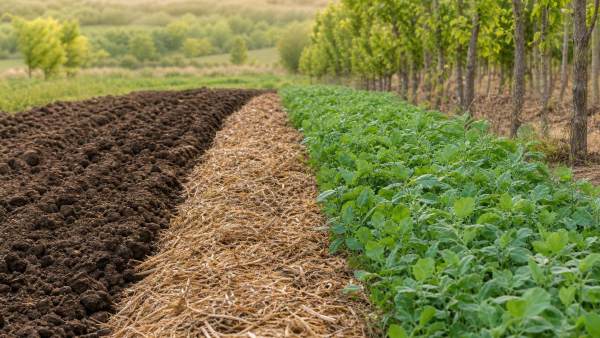
Agri & Forestry soil management is rarely about choosing a single “best” practice. It is about matching disturbance, surface protection, and biological recovery to actual field conditions. Tillage, mulching, and cover crops each solve different problems, and their value becomes clearer when weather volatility, fuel costs, residue handling, and long-term soil resilience are considered together.
That decision matters more now because land productivity is tied to wider industrial supply chains. Crop quality affects feed, bio-based ingredients, fiber, timber, and processing outputs. In that context, soil strategy is no longer a narrow farm issue; it is a planning issue that touches machinery use, input efficiency, compliance pressure, and operational risk.
Why method selection matters more than ever
In both agriculture and forestry, soil is expected to do several jobs at once. It must support rooting, store water, cycle nutrients, resist erosion, and remain workable across unpredictable seasons.
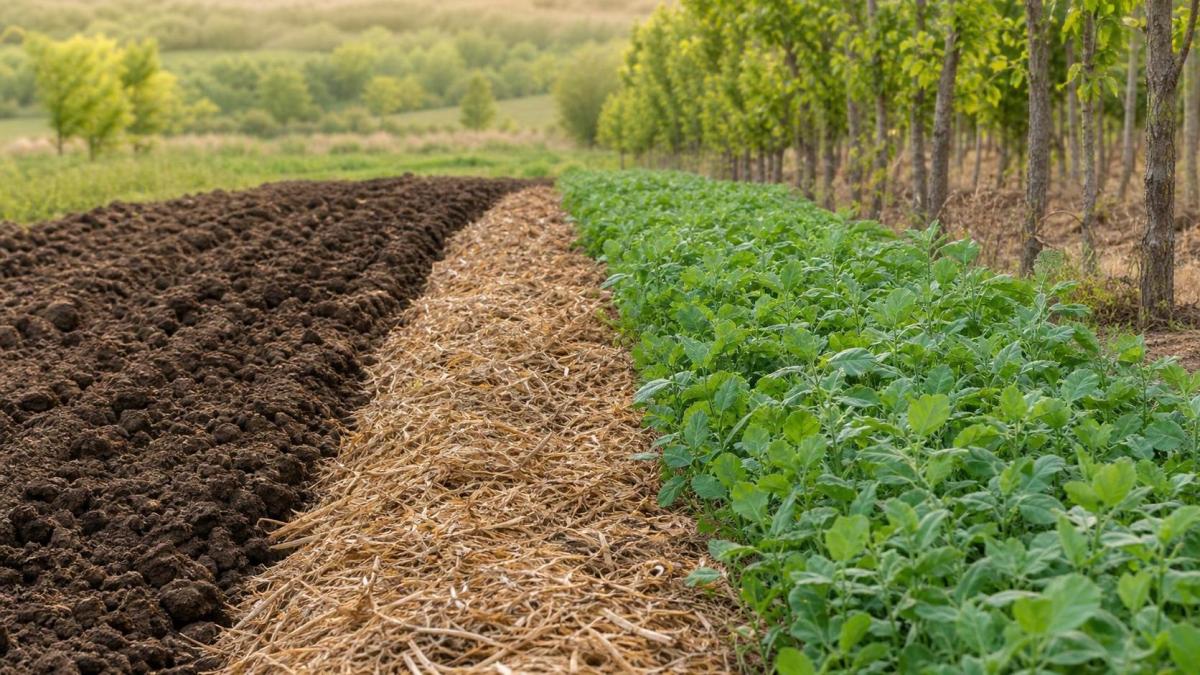
A field with surface sealing after heavy rain needs a different response from a site losing moisture through heat and wind. A harvested forestry block with traffic damage behaves differently from a low-residue grain rotation.
This is why Agri & Forestry soil management should be assessed as a system. The wrong method can solve one issue while creating another, such as reducing compaction but increasing erosion, or preserving moisture while delaying spring warming.
Editorial analysis across primary industries increasingly treats soil practices as infrastructure decisions. That perspective is common in technically rigorous journals such as AgriChem Chronicle, where machinery performance, land stewardship, and downstream material quality are closely linked.
Three tools, three different purposes
Tillage, mulching, and cover crops are often discussed together, but they operate through different mechanisms. Understanding those mechanisms is the fastest way to decide when each method fits.
Tillage changes soil structure quickly
Tillage physically disturbs the soil profile. It can break crusts, loosen shallow compaction, incorporate residues, prepare seedbeds, and manage weeds where herbicide or residue pressure is difficult.
Its advantage is speed. When infiltration is poor or establishment windows are narrow, tillage can create immediate operational access.
Mulching protects the surface
Mulching works from above. Crop residues, wood chips, bark, straw, or other organic covers reduce evaporation, buffer soil temperature, limit splash erosion, and slow weed emergence.
It is especially useful where exposed ground loses moisture rapidly or where slope and rainfall intensity threaten topsoil loss.
Cover crops rebuild biological function
Cover crops are living tools. They keep roots in the soil between main cash or harvest cycles, improve aggregation, capture unused nutrients, suppress weeds, and add organic matter over time.
They usually deliver the strongest value when the objective is long-term soil health rather than a rapid mechanical reset.
When tillage is the right call
Tillage still has a place in Agri & Forestry soil management, especially where a physical constraint is blocking production. The key is using it as a targeted correction, not an automatic routine.
Usually, tillage is most defensible when diagnosis shows a structural problem that roots cannot overcome alone. It is less defensible when used only because it is familiar.
The timing also matters. Dry enough soil shatters; wet soil smears. That difference often determines whether tillage solves compaction or simply moves it around.
Where mulching delivers the greatest value
Mulching becomes attractive when the surface itself is the weak point. In orchards, nurseries, reforestation areas, and row systems, protecting the top few centimeters can change water balance and weed pressure dramatically.
For Agri & Forestry soil management, mulching often performs well in these settings:
- Young tree establishment where roots need cooler, more stable moisture conditions.
- Sloped ground exposed to intense rainfall and sediment loss.
- Sites with sparse canopy cover and high summer evaporation.
- Operations with access to clean organic residues from processing or forestry streams.
Still, mulch is not neutral. Thick layers may slow warming, tie up nitrogen near the surface, or harbor pests if material quality is poor. The source of mulch matters almost as much as the depth applied.
That broader materials perspective is increasingly relevant in integrated sectors. Residues from sawmills, crop processing, or biomass handling can become valuable soil inputs if contamination, consistency, and logistics are properly evaluated.
Why cover crops are gaining ground
Cover crops are moving from conservation practice to mainstream management because they address several pressures at once. They reduce bare-soil periods, retain nutrients, improve pore structure, and support microbial activity.
In practical terms, they are strongest where time exists between production cycles and where the goal is to improve future performance, not just fix current symptoms.
Species choice should follow the problem being solved. Grasses are useful for biomass and erosion control. Legumes help nitrogen capture. Brassicas can assist with rooting depth and bio-drilling effects.
Mixed stands often outperform single species because they spread risk and stack functions. But they also require better planning around termination timing, moisture drawdown, and main-crop planting windows.
For forestry and perennial systems, living covers can stabilize inter-rows, improve trafficability, and reduce runoff. The trade-off is competition if the cover is not managed carefully near young plants.
How to compare the methods in real operations
The most useful comparison is not “which practice is better,” but “which limitation is most expensive right now.” That reframes Agri & Forestry soil management as a decision about constraints.
Use tillage when the barrier is physical
Compaction, crusting, severe incorporation needs, or damaged planting conditions usually justify a mechanical response.
Use mulch when the barrier is exposure
Moisture loss, splash erosion, and unstable surface temperatures point toward a cover layer rather than deeper disturbance.
Use cover crops when the barrier is system fatigue
Low biological activity, declining aggregation, nutrient leakage, and poor resilience between seasons are signs that living roots may offer the best return.
In many cases, the strongest program combines methods across time. A one-time corrective tillage may be followed by mulch retention and then a cover crop phase to prevent the same issue from returning.
Judgment points that deserve closer attention
Short-term field performance can hide long-term cost. Before selecting a method, several checks are worth making.
- Check where the problem sits: on the surface, in the root zone, or across the full system.
- Match the method to soil moisture conditions, not only calendar timing.
- Estimate machinery, labor, and material availability before favoring a technically ideal option.
- Review erosion risk, especially after disturbance on sloping or light-textured ground.
- Track how the practice influences next-season inputs, not just current appearance.
This wider lens reflects how leading primary-industry analysis now works. Soil methods are being judged not only by agronomy, but also by traceability, residue use, machine efficiency, and the reliability of outputs moving into downstream processing chains.
A practical next step for evaluation
A sensible review starts with three questions: Is the main issue compaction, exposure, or biological decline? Is the site annual, perennial, or post-harvest forestry ground? And is the priority immediate recovery or multi-season improvement?
Once those points are clear, Agri & Forestry soil management becomes easier to structure. Tillage can be reserved for targeted correction, mulching for surface stability, and cover crops for rebuilding function over time.
The strongest decisions usually come from comparing field symptoms with operating constraints, then reviewing whether the chosen method supports both present productivity and future soil capacity. That is often the difference between a practice that looks useful for one season and a strategy that remains effective across many.
Related Intelligence
- Forestry EquipmentAre PTO driven wood chipper vibration levels within ISO 5349-1 hand-arm exposure limits for forestry crews?PTO driven wood chipper vibration often exceeds ISO 5349-1 limits—discover real-world data, actionable mitigation strategies, and how to protect forestry crews now.
- Forestry EquipmentSelecting Timber Processing Equipment for Middle East Heat, Dust, and Wood SpeciesTimber processing equipment for Middle East operations: discover how to select heat-resistant, dust-protected, species-matched systems for reliable output and lower downtime.
- Forestry EquipmentAgri & Forestry Soil Management Methods: When to Use Tillage, Mulching, or Cover CropsAgri & Forestry soil management explained: learn when tillage, mulching, or cover crops work best to reduce erosion, protect moisture, and build long-term soil resilience.
The Morning Broadsheet
Daily chemical briefings, market shifts, and peer-reviewed summaries delivered to your terminal.
