

The Authority in Global Agricultural Chemistry & Bio-Resources
How to Choose Disc Blades for Harrow: Size, Concavity, Steel Grade, and Soil Type
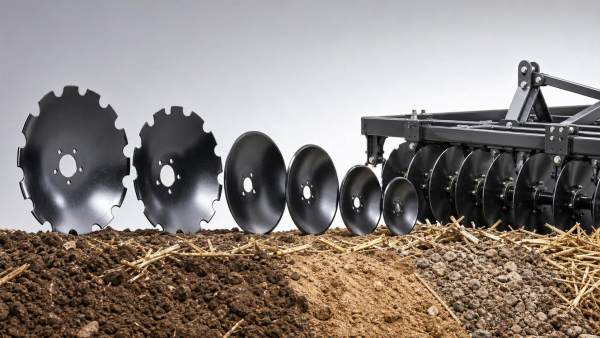
Selecting disc blades for harrow systems is rarely a simple matter of choosing a larger diameter. In field conditions, blade size, concavity, steel grade, and soil type interact continuously, shaping penetration, residue flow, draft demand, wear rate, and replacement cost. That makes disc blades for harrow a practical engineering decision rather than a catalog choice, especially in supply environments where performance data, material consistency, and lifecycle value matter as much as unit price.
Why blade selection now carries more weight
Agricultural machinery procurement has become more analytical across primary industries. Buyers increasingly compare working life, steel traceability, compatibility, and field efficiency in the same review cycle.
That broader view reflects the same discipline seen across AgriChem Chronicle coverage, where equipment, materials, compliance, and supply chain transparency are assessed together rather than in isolation.
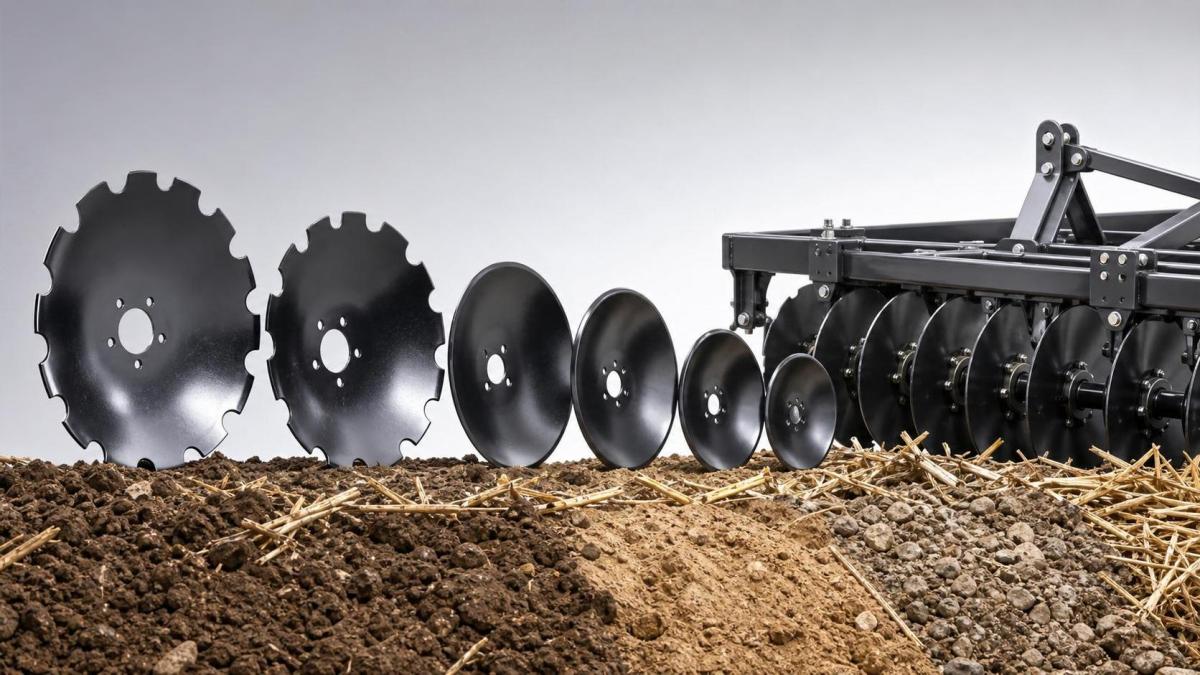
For harrow assemblies, a blade that cuts aggressively in one soil may polish, crack, or consume excess power in another. The right specification reduces uncertainty before field deployment.
The four variables that define performance
Disc blades for harrow are judged most effectively through four linked variables. None should be reviewed alone, because each one changes the impact of the others.
Size affects depth, speed, and residue flow
Blade diameter influences cutting depth and soil entry angle. Larger blades usually maintain effective penetration longer as edge wear reduces overall diameter over time.
They also offer more clearance in high-residue conditions. Corn stalks, cover crop biomass, and fibrous trash often pass more cleanly under larger rotating profiles.
Smaller blades can still be appropriate for lighter finishing work, shallower incorporation, or machines operating with limited available horsepower.
Concavity changes soil movement
Concavity determines how strongly the blade lifts, throws, and mixes soil. A deeper dish generally creates more soil inversion and stronger residue incorporation.
That can be useful in harder ground or where significant trash mixing is required. It can also increase draft load and surface roughness if overmatched to the task.
A shallower concavity tends to support smoother finishing and lower disturbance, which may suit seedbed refinement or moisture-conscious field preparation.
Steel grade influences wear life and failure risk
Not all disc blades for harrow are equal in metallurgy. Boron steel, heat-treated carbon steel, and alloy-enhanced variants differ in hardness, toughness, and edge retention.
Higher hardness can improve abrasion resistance in sandy soils. Yet excessive hardness without adequate toughness may raise the risk of brittle cracking in rocky conditions.
Material selection should therefore be tied to real operating stress, not just advertised hardness values or generic durability claims.
Soil type sets the operating context
Soil type decides how the blade actually behaves. Clay, loam, sand, and stony fields each place different demands on penetration, scour, abrasion resistance, and structural integrity.
Moisture level matters as well. Wet clay may clog an otherwise capable blade, while dry abrasive ground can shorten service life even when tillage quality appears acceptable.
How diameter should be matched to the job
Diameter is often the first visible specification, but its value lies in context. Choosing solely on size can distort cost comparisons and create avoidable field inefficiency.
A larger disc blade is not automatically better. It is better only when the machine frame, gang angle, bearing system, and power availability can support it efficiently.
Concavity and edge profile in real field scenarios
Concavity is often underestimated during sourcing reviews. Yet it shapes the difference between cutting, slicing, and moving soil with real consistency.
In conservation tillage, deeper concavity may improve residue mixing, but it can also leave a rougher finish that requires another pass.
On lighter ground, a moderate dish may deliver cleaner flow with lower energy demand. That balance is often more valuable than maximum aggression.
Edge form also deserves attention. Smooth edges suit many conventional tasks, while notched edges can improve bite in residue-heavy or firmer surfaces.
- Use deeper concavity where mixing and penetration matter more than surface finish.
- Use shallower profiles where uniform finishing and lower draft are priorities.
- Check whether notched edges improve entry without overstressing the machine setup.
Steel grade is a cost issue, not only a material issue
When evaluating disc blades for harrow, metallurgy should be treated as a lifecycle cost driver. A lower-priced blade may become the expensive option if replacement frequency rises.
Heat treatment quality matters as much as raw material designation. Two blades described with similar steel names can perform very differently in abrasive or impact-prone fields.
Useful comparison points include hardness range, uniformity of heat treatment, microstructural consistency, edge wear behavior, and documented resistance to cracking around the center hole.
This is also where supply chain discipline becomes important. Traceable manufacturing data and consistent batch quality reduce the risk of unexpected variation across installed sets.
Matching disc blades for harrow to soil conditions
Soil-driven selection usually produces better long-term results than brand-led selection. The field environment determines both tillage quality and wear economics.
Seasonal shifts should be included in the assessment. A blade that performs well in dry post-harvest conditions may respond differently during wet spring preparation.
What to verify before making a final comparison
A reliable comparison of disc blades for harrow should move beyond brochure language. Shortlisting becomes clearer when the same evaluation checklist is used across suppliers.
- Confirm blade diameter, thickness, concavity depth, and edge type against the intended operating depth.
- Review steel grade and heat treatment evidence, not only generic material labels.
- Check center hole accuracy, flatness tolerance, and fit with the existing hub or gang assembly.
- Compare wear life expectations by soil condition, not by a single universal hour figure.
- Factor in residue volume, machine speed, available horsepower, and maintenance intervals.
In practice, the strongest option is usually the one that keeps tillage quality stable while reducing replacement disruption across a full operating season.
A practical next step for evaluation
The most useful way to assess disc blades for harrow is to build a comparison matrix around field conditions, machine limits, and expected wear environment.
That approach makes it easier to separate nominal specifications from workable value. It also supports clearer conversations with OEMs and component suppliers.
Where performance uncertainty remains, sample-based review, metallurgy documentation, and field validation in representative soils often provide better guidance than price-led selection alone.
A disciplined review of size, concavity, steel grade, and soil fit creates a more dependable basis for choosing disc blades for harrow that perform well beyond the first pass.
Related Intelligence
- Heavy Agri MachineryHow to Assess Heavy Agricultural Machinery Producers for Dealer Support and Parts AvailabilityHeavy agricultural machinery producers: learn how to assess dealer expertise, critical parts availability, service response, and downtime risk before you buy.
- Heavy Agri MachineryWhich agricultural machinery manufacturer offers modular service documentation compatible with OEM diagnostic software?Which agricultural machinery manufacturer delivers modular service docs that integrate natively with OEM diagnostic software? Discover CLAAS, John Deere & SDF—real interoperability, zero PDF friction.
- Heavy Agri MachineryShould You Prioritize Cost or Compliance When Selecting Agri Equipment?Should I prioritize cost or compliance when selecting agri equipment? Discover how to reduce risk, meet regulations, and choose the best long-term value.
The Morning Broadsheet
Daily chemical briefings, market shifts, and peer-reviewed summaries delivered to your terminal.
