

The Authority in Global Agricultural Chemistry & Bio-Resources
Global Grain Storage Tenders Rise as Silo Export Quotes Jump 8.2%
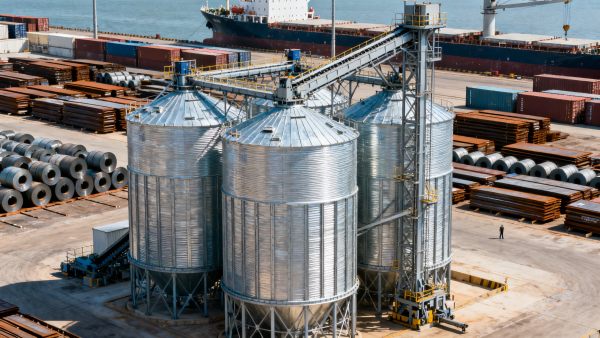
The timing of this development was not specified in the provided information, but the signal is clear: global tender activity for grain storage infrastructure has accelerated while export pricing for steel silos from China has moved up sharply in a single week. For manufacturers, traders, project buyers, and logistics providers involved in Grain Silos & Storage, this matters because demand, pricing, and delivery schedules are shifting at the same time rather than in isolation.
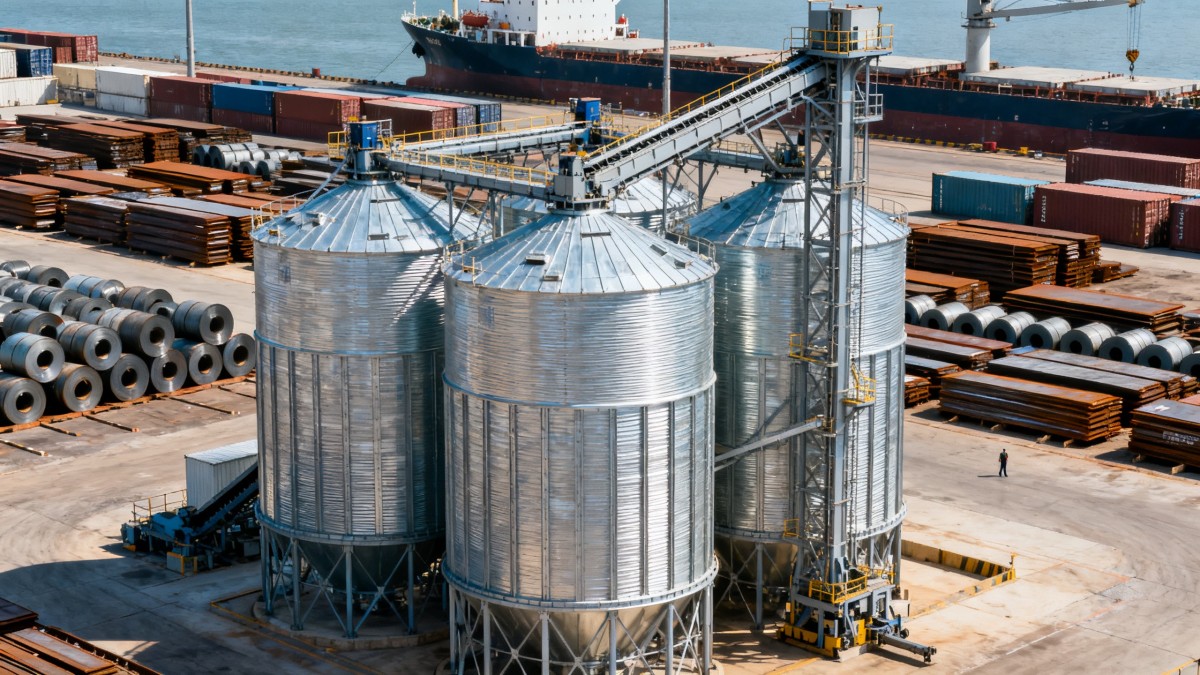
Tender growth and pricing changes now moving together
According to joint monitoring by FAO and Drewry, global tender volume for grain storage infrastructure in week 25 of 2026 increased 41% year on year. The newly announced demand was mainly concentrated in new grain storage projects across East Africa, the Middle East, and Southeast Asia.
At the same time, CCIC data showed that China's Grain Silos & Storage export FOB quotations rose 8.2% in a single week. The information provided attributes this increase to higher hot-rolled steel plate costs and tight ocean freight capacity.
For the mainstream 3,000-ton corrugated steel silo segment, the quoted price reached USD 218,000 per set. Delivery time also extended to 14 weeks.
Where the pressure is likely to be felt across the chain
Project buyers are facing a narrower procurement window
From an industry perspective, buyers involved in new grain depot construction may be affected first because tender activity is rising while equipment quotations and lead times are also moving upward. The immediate impact is likely to be seen in procurement budgeting, bid evaluation, and delivery planning, especially for projects that depend on fixed cost assumptions.
Manufacturers and exporters need to manage parallel demand and cost shifts
Analysis shows that equipment manufacturers and export traders may face pressure on both quotation strategy and order execution. Higher hot-rolled steel plate costs directly affect equipment pricing, while longer delivery cycles can influence contract commitments, production scheduling, and customer communication.
Shipping and supply chain service providers should watch schedule risk
Observably, tight ocean freight capacity is not only a freight issue but also a delivery issue for storage equipment exporters. The main concern is whether shipment timing, booking certainty, and cross-border coordination can keep pace with projects that may already be moving into procurement stages.
What market participants should watch next
Whether tender momentum turns into sustained order flow
What deserves closer attention is whether the reported rise in tender volume translates into continued purchasing activity. Tender growth is a confirmed signal in the provided information, but actual order conversion still requires further observation.
How raw material costs are reflected in quotations
For companies preparing offers or negotiating contracts, the key practical issue is how fast hot-rolled steel plate cost changes are being passed through into export FOB prices. This affects quotation validity, margin control, and the timing of customer decisions.
How to communicate lead time changes early
With delivery extended to 14 weeks for the mainstream 3,000-ton corrugated steel silo segment, suppliers and service providers should pay close attention to fulfillment schedules, supporting documents, and milestone communication. For buyers, this makes schedule confirmation more important at the procurement stage.
Which regional markets deserve closer operational follow-up
Because the current tender increase is concentrated in East Africa, the Middle East, and Southeast Asia, companies active in these markets should focus on project tracking, bid preparation, and supply chain readiness tied specifically to those regions rather than treating demand as evenly distributed worldwide.
How this signal should be understood at this stage
Analysis shows that this update is meaningful because demand-side activity and supply-side constraints are appearing at the same time. That combination does not by itself confirm a long-term market shift, but it does indicate that grain storage equipment participants may be entering a period in which procurement timing, export pricing, and delivery execution need to be reviewed together.
It is more appropriate to understand this as a market signal that deserves continued monitoring rather than as a fully settled trend. The confirmed facts point to stronger tender activity, higher export quotations, and longer lead times, but the durability of these changes still depends on what follows in subsequent procurement and shipment developments.
A practical reading of the current development
For the industry, the main significance of this update is not only that more grain storage projects are entering tender stages, but also that equipment cost and delivery conditions are changing simultaneously. That creates immediate relevance for exporters, buyers, and supply chain partners working around steel silos and related storage infrastructure.
A neutral reading is that the market is showing short-term tightening signals with potential broader implications, but it is still too early to treat the current movement alone as a definitive long-term outcome. At this stage, it is more appropriate to read the development as an important industry dynamic that requires continued observation.
Basis of this article and points requiring verification
This article is based on the user-provided news title, event timing information, and event summary. The specific official source link was not provided in the input, so further verification is still necessary.
For this type of industry update, commonly relevant source categories may include official announcements, company disclosures, industry association releases, authoritative media reporting, and documents from standards or trade-related organizations. Follow-up attention should remain on subsequent tender developments, export quotation changes, lead-time adjustments, and any later source disclosures that clarify the timeline and market progression.
Related Intelligence
- Grain Silos & StorageExport-Compliant Grain Storage Systems: Standards, Documentation, and Design ChecksExport compliant storage systems: learn how grain facilities strengthen segregation, condition control, fumigation readiness, traceability, and shipment release.
- Grain Silos & StorageApplication-Based Moisture Specifications for Stored Grain: Limits, Testing, and Risk ControlApplication based moisture specification guide for stored grain: set defensible limits, improve testing, and control spoilage risks across storage applications.
- Grain Silos & StorageHow to Plan Grain Storage Capacity and Flow for a Food Processing PlantGrain storage planning for processing plants: optimize capacity, flow, drying, segregation, and resilience to protect quality and prevent bottlenecks.
The Morning Broadsheet
Daily chemical briefings, market shifts, and peer-reviewed summaries delivered to your terminal.
