

The Authority in Global Agricultural Chemistry & Bio-Resources
RAS Order Surge Extends Aeration Lead Times
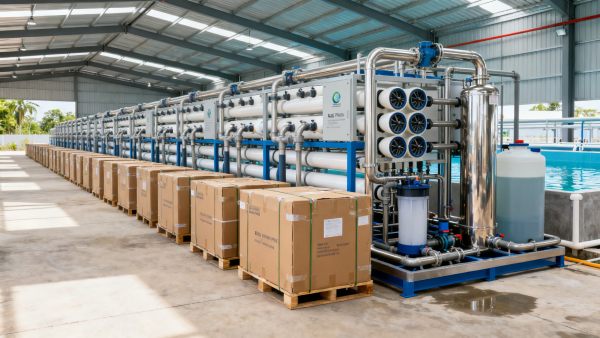
The timing of this development is not specified in the provided information, but the signal is clear for the aquaculture equipment trade: concentrated RAS tenders in Indonesia and Vietnam are pushing up demand for aeration and water technology equipment, extending delivery schedules and shifting attention to local assembly, certification status, and bid execution readiness. For suppliers, buyers, certification-related service providers, and project procurement teams, this is worth close attention because the issue is no longer only equipment availability, but whether delivery plans and compliance documents remain valid when supply is restructured.
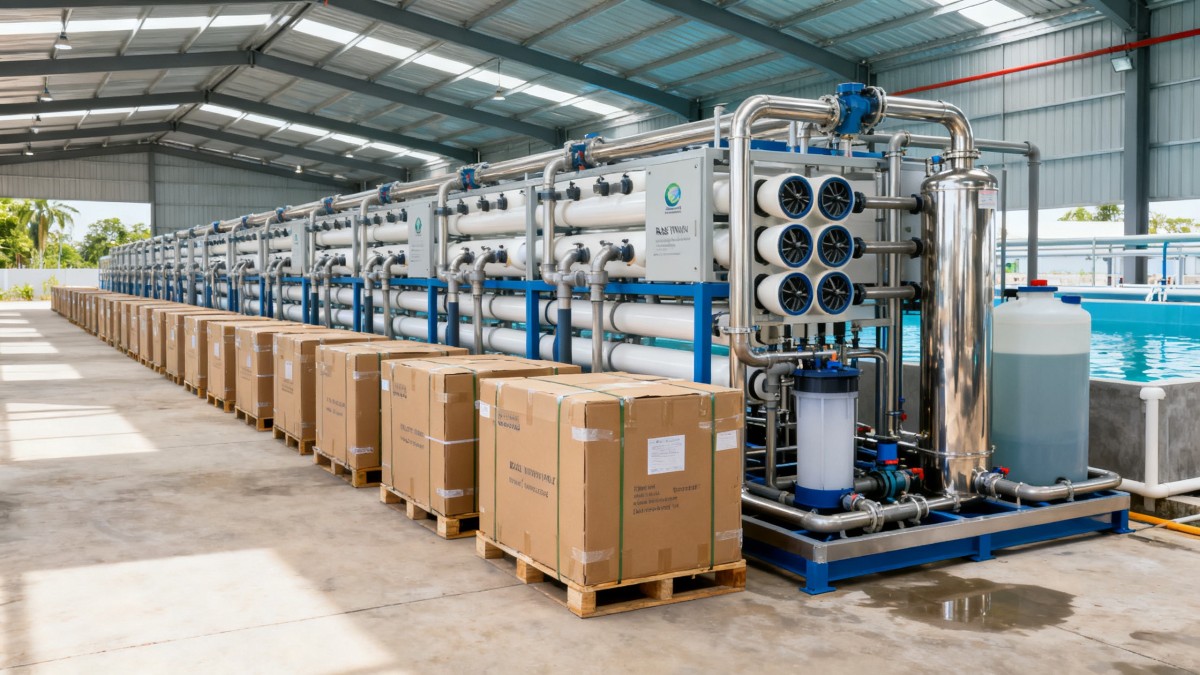
What has been confirmed so far
According to the provided summary, concentrated tender activity for recirculating aquaculture system projects in Indonesia and Vietnam has driven a 67% quarter-on-quarter increase in global orders for Aeration & Water Tech equipment, citing FAO Aquaculture Monitor 2026-W25.
The same information states that lead times among leading Chinese suppliers have generally extended to 16 to 18 weeks. In response, multiple companies have started local assembly lines in the bonded zone of Hanoi, Vietnam, and the first batch of modular aeration units is scheduled for delivery in mid-July.
The provided information also indicates that this local assembly move may ease delivery pressure for Southeast Asian customers, but the local status of CE and ISO 22000 certification needs to be reconfirmed.
Why the supply response now carries compliance weight
For project buyers, delivery risk is now tied to document validity
From an industry perspective, buyers in RAS-related projects may be affected not only by longer lead times but also by whether tender submissions, technical files, and supplier qualification documents still match the actual place of assembly and delivery arrangement. What deserves closer attention is whether product declarations, certification references, and supporting documents remain consistent after part of the supply chain shifts to local assembly.
For manufacturers, assembly relocation changes the compliance checkpoint
Analysis shows that the move from direct export supply to local bonded-zone assembly can reduce delivery pressure, but it also creates a new review point around certification scope and traceability. Manufacturers may need to pay closer attention to whether CE and ISO 22000 documentation, factory-related records, and technical descriptions used in customer communication still align with the new fulfillment model.
For certification and testing service providers, review demand may become more practical and time-sensitive
Observably, when assembly arrangements change under active tender demand, certification-related firms and testing support providers may face more requests for status confirmation, document review, and alignment checks. The practical pressure is likely to center on whether existing certificates, reports, and technical files can still support project delivery, customs documentation, or buyer acceptance requirements without inconsistency.
For after-sales and supply-chain service teams, handover complexity may increase
Supply-chain service providers and after-sales teams may also be affected because a shorter delivery route does not automatically simplify execution. More attention may be needed on shipping records, batch identification, parts traceability, and handover files, especially where buyers expect consistency between bid documents, delivered modules, and later service support.
What companies should watch in the next stage
Reconfirm certification status before shipment or bid submission
Analysis shows that the most immediate issue is not the existence of CE or ISO 22000 as labels, but whether their locally relevant status has been reconfirmed after assembly starts in Vietnam. Companies involved in bidding, supply, or distribution should pay close attention to the applicability and presentation of certification documents in current transactions.
Review tender files and technical descriptions for consistency
Where projects are driven by concentrated tenders, specification alignment matters. Companies should closely watch whether bid documents, technical datasheets, production descriptions, and delivery commitments still accurately reflect the revised supply arrangement, especially if modular units are assembled locally rather than shipped fully completed from China.
Reassess procurement and delivery schedules against longer lead times
What deserves closer attention is the practical effect of 16 to 18 week lead times on purchasing plans and contract execution. Buyers and suppliers may need to revisit procurement sequencing, milestone expectations, and inventory assumptions, rather than relying on earlier delivery norms that may no longer hold under current order pressure.
Keep trade and quality records ready for later verification
Observably, when supply routes adjust quickly, later questions often focus on documentation rather than on the shipment alone. Companies should therefore monitor the completeness of technical files, delivery records, quality documentation, and product traceability materials that may be requested during project acceptance, commercial review, or after-sales follow-up.
How this signal is best understood at this point
Analysis shows that this development is better understood as an execution signal than as a fully settled rule change. The order surge and local assembly response already indicate that procurement pressure is affecting how suppliers serve Southeast Asian RAS projects. At the same time, the need to reconfirm CE and ISO 22000 status suggests that the compliance side of this adjustment is still in a verification stage rather than a completed transition.
From an industry perspective, continued attention is warranted because the commercial response is moving faster than the formal clarity around certification positioning. That gap can matter in tenders, customer acceptance, and downstream service commitments.
A practical reading for the market
The immediate industry meaning of this event is not simply that aeration equipment is in short supply. More appropriately, it shows that demand concentration in Southeast Asian RAS projects is beginning to reshape delivery models, and that any shift toward local assembly must be checked against certification status, document consistency, and procurement execution requirements.
At this stage, it is more appropriate to understand the development as a real operational change accompanied by compliance questions that still require close follow-up, rather than as a finished and fully standardized market adjustment.
Basis of this article
This article is generated on the basis of the user-provided news title, event timing, and event summary. The specific official source link was not provided in the input, so further verification is still needed.
For developments of this kind, commonly relevant source types may include official announcements, regulator releases, customs or trade authority information, industry association updates, standard-setting documents, and reporting from authoritative trade media. What still requires continued observation includes certification interpretation in local execution, any change in tender documentation, market feedback from buyers and suppliers, and how companies implement the new assembly arrangement in practice.
Related Intelligence
- Aeration & Water TechWhat RO water treatment systems deliver consistent 98% salt rejection at 25°C with feed TDS over 3,000 ppm?RO water treatment systems that deliver proven 98% salt rejection at 25°C with >3,000 ppm TDS—engineered for API synthesis, aquaculture & grain processing.
- Aeration & Water TechCan pond aeration systems maintain dissolved oxygen above 5 mg/L during summer stratification in catfish ponds?Pond aeration systems can sustain >5 mg/L DO during summer stratification—when engineered for mixing *and* oxygen transfer. See field-proven data & design essentials.
- Aeration & Water TechHow to Choose Alarm Water Monitoring Systems for Critical Water FacilitiesAlarm water monitoring systems: learn how to select reliable sensors, alarms, communications, and workflows to protect critical water facilities and prevent costly failures.
The Morning Broadsheet
Daily chemical briefings, market shifts, and peer-reviewed summaries delivered to your terminal.
