

The Authority in Global Agricultural Chemistry & Bio-Resources
2026 Hong Kong Auto Show Opens May 20: Smart Farm Equipment & Poultry Housing in Focus
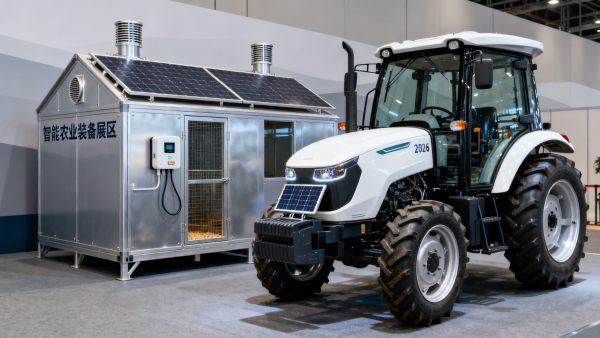
On May 20, 2026, the Hong Kong Auto Show officially opens — marking the first edition to feature a dedicated ‘Smart Agricultural Equipment Zone’. This development signals emerging cross-sector alignment between automotive electrification infrastructure and agricultural mechanization, particularly for export-oriented manufacturers of electric tractors, automated feeding robots, and modular poultry housing and caging systems. Stakeholders in agricultural equipment export, off-grid power integration, and livestock facility design should monitor this shift closely — as early buyer feedback highlights accelerated demand from off-grid markets.
Event Overview
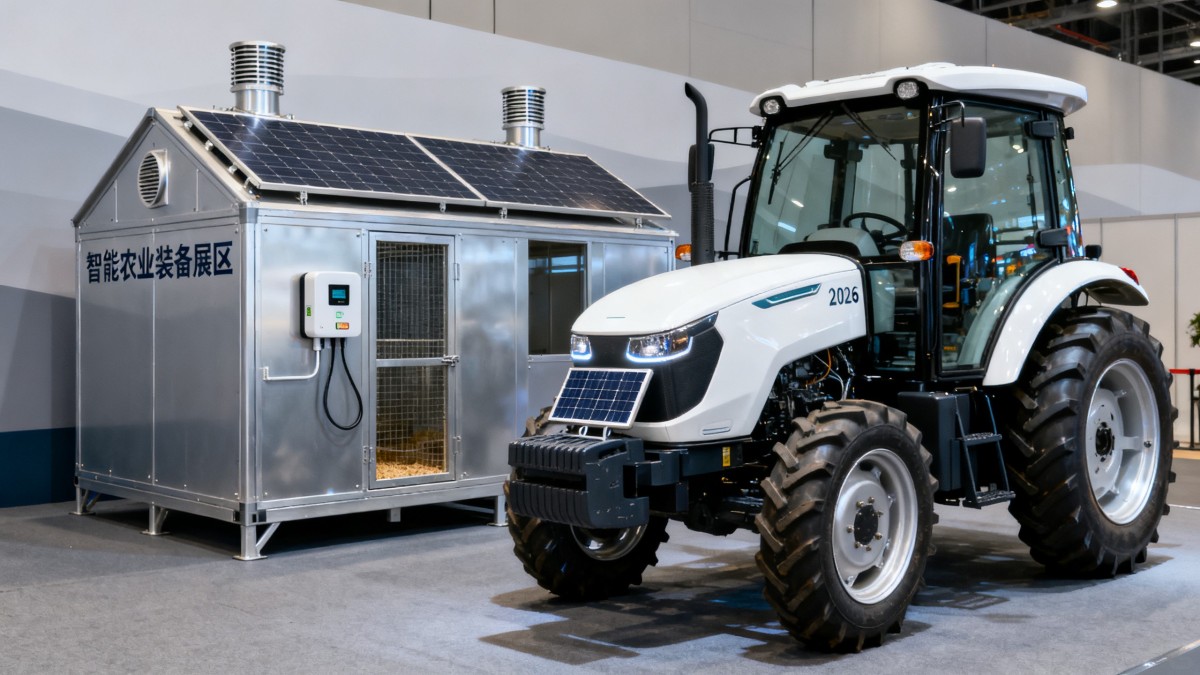
The 2026 Hong Kong Auto Show commences on May 20, 2026. For the first time, it includes a ‘Smart Agricultural Equipment Zone’, showcasing over 40 models including electric tractors, automated feed delivery robots, and modular Poultry Housing & Caging systems. On-site reports indicate that procurement delegations from the Middle East and East Africa registered a threefold increase in inquiries for solar-compatible cage systems.
Which Subsectors Are Affected
Export-Oriented Agricultural Equipment Manufacturers
These firms face shifting product specification expectations — especially around power source flexibility (e.g., solar-ready vs. grid-dependent designs). The surge in inquiries for off-grid-adapted systems suggests growing emphasis on energy resilience in target markets, potentially requiring re-evaluation of standard configurations and certification pathways.
Power System Integrators & Battery Module Suppliers
Increased demand for solar-compatible poultry housing implies higher requirements for DC-coupled power management, low-voltage battery integration, and thermal stability in tropical or arid environments. This may affect component sourcing priorities and testing protocols for battery enclosures and charge controllers.
International Livestock Facility Design & Engineering Firms
Modular Poultry Housing & Caging systems are now entering formal trade channels via an auto-industry platform — indicating evolving go-to-market strategies. Firms involved in layout planning, ventilation modeling, or welfare-compliant cage configuration may need to align technical documentation with automotive-grade logistics standards (e.g., containerized transport, rapid assembly).
Export Logistics & Certification Service Providers
With new equipment categories entering consolidated trade fairs, regulatory classification becomes more complex — e.g., whether solar-integrated cages fall under agricultural machinery, building products, or electrical safety frameworks in importing countries. Service providers must track divergent conformity assessment routes across GCC, EAC, and ASEAN jurisdictions.
What Relevant Companies or Practitioners Should Monitor and Act On
Track official exhibition documentation for category definitions and compliance guidance
The Hong Kong Auto Show’s inclusion of agricultural equipment raises questions about how product classifications — and associated import duties, safety certifications, or labeling rules — will be interpreted by customs authorities in key export destinations. Reviewing official zone guidelines and exhibitor handbooks is advisable before finalizing shipment plans.
Monitor inquiry patterns for solar compatibility as a proxy for regional energy infrastructure gaps
The reported tripling of solar-related inquiries from the Middle East and East Africa is not merely a feature preference — it reflects underlying constraints in rural grid access and diesel dependency. Companies should treat such data points as field-validated indicators of regional infrastructure readiness, rather than isolated product requests.
Distinguish between trade show visibility and actual market entry timelines
Participation in the Smart Agricultural Equipment Zone provides exposure but does not equate to regulatory approval or distribution readiness in target countries. Firms should avoid conflating exhibition presence with commercial launch capability — especially where local type approvals (e.g., UAE ESMA, Kenya KEBS) remain pending.
Prepare for modular system logistics and after-sales support coordination
Modular Poultry Housing & Caging systems involve interdependent components (structural frames, climate controls, feeding modules). Exporters should pre-align with freight forwarders on container loading sequences and develop localized spare parts kits — as serviceability in remote regions affects long-term adoption more than initial pricing.
Editorial Perspective / Industry Observation
Observably, the 2026 Hong Kong Auto Show’s introduction of a Smart Agricultural Equipment Zone reflects a structural recalibration — not just of exhibition scope, but of how electrification capabilities developed for mobility are being repurposed for productivity infrastructure in low-grid environments. Analysis shows this is less a one-off marketing pivot and more a signal of converging supply chain logic: battery platforms, motor control firmware, and CAN bus architectures originally designed for vehicles are now being adapted for farm automation. From an industry perspective, this convergence remains nascent — with certification pathways, service networks, and financing models still fragmented across sectors. It is better understood as an early-stage alignment indicator than a fully formed market segment.
This event matters because it reveals how trade platforms can accelerate cross-industry technology transfer — especially where end-user needs (e.g., reliable operation without stable grid access) override traditional sector boundaries. However, current traction remains concentrated in inquiry volume, not order fulfillment or after-sales deployment. Continued observation is warranted on whether follow-up exhibitions include dedicated technical forums, certification facilitation desks, or buyer-seller matching programs focused on off-grid agricultural applications.
For now, this development is best interpreted as a diagnostic marker: it confirms growing demand for adaptable, energy-resilient farm equipment in specific geographies — and highlights the role of non-agricultural trade venues in surfacing those needs. It does not yet represent scaled commercial readiness, nor does it imply uniform regulatory acceptance across target markets.
Source: Official announcement and on-site reporting from the 2026 Hong Kong Auto Show (confirmed date: May 20, 2026; confirmed zone launch: Smart Agricultural Equipment Zone; confirmed exhibitor count: 40+ units; confirmed regional inquiry trend: Middle East & East Africa, 3× increase in solar-compatible Poultry Housing & Caging inquiries).
Areas requiring ongoing observation: Regulatory treatment of hybrid-category equipment (e.g., solar-integrated cages) across GCC and EAC member states; post-show order conversion rates; participation criteria for future editions of the Smart Agricultural Equipment Zone.
Related Intelligence
- Poultry Housing & CagingHow Cage Specifications Affect Poultry Housing Costs in NigeriaLocally made poultry cage price in Nigeria: compare cage specifications, housing costs, durability, ventilation, manure systems, and installation factors for smarter poultry investment.
- Poultry Housing & CagingWhat Determines Battery Cage Prices in Nigeria Beyond Bird Capacity?Battery cage price in Nigeria depends on more than capacity. Compare steel, automation, logistics, and installation scope for a smarter poultry investment.
- Poultry Housing & CagingBuilding a Poultry Farm Equipment Solution Around Flock Size and LayoutPoultry farm equipment solution planning for flock size and layout—optimize feeding, water, ventilation, automation, and future expansion.
The Morning Broadsheet
Daily chemical briefings, market shifts, and peer-reviewed summaries delivered to your terminal.
