

The Authority in Global Agricultural Chemistry & Bio-Resources
Japan Enforces New Battery Safety Rules for Agri-Drones
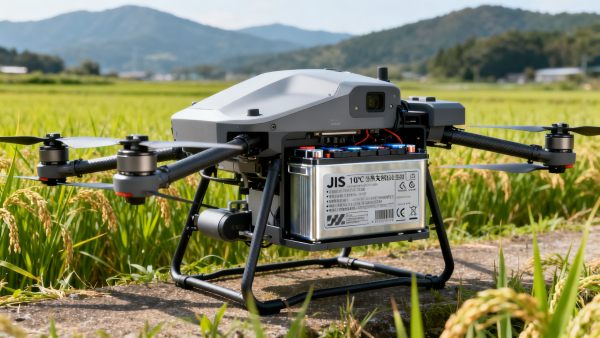
On May 20, 2026, Japan implemented JIS C 8714-2:2026 — a mandatory safety standard for lithium-ion batteries used in agricultural drones and intelligent farm machinery. The regulation directly affects exporters of heavy agricultural machinery from China and other countries, introducing new technical and procedural barriers to market access.
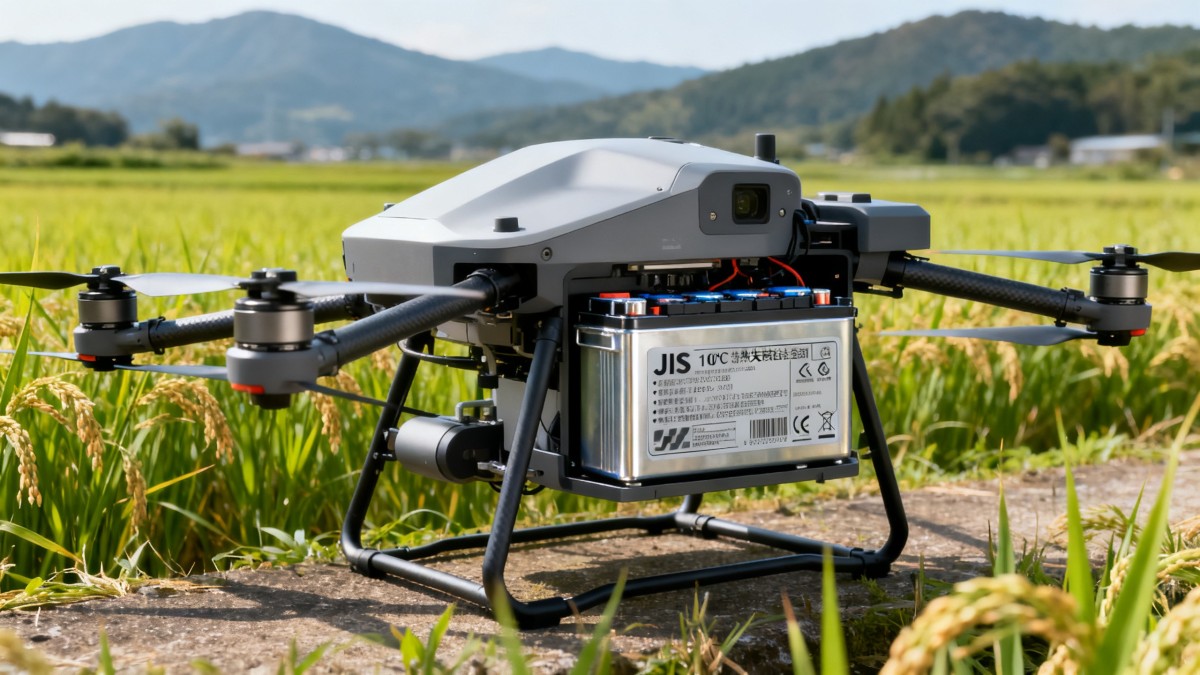
Event Overview
The Ministry of Economy, Trade and Industry (METI) of Japan officially enforced JIS C 8714-2:2026 on May 20, 2026. This standard requires all动力电池 (power batteries) installed in agricultural drones and smart farming equipment to pass a 150°C thermal runaway propagation resistance test. The requirement has been incorporated as a prerequisite for import licensing by the Ministry of Agriculture, Forestry and Fisheries (MAFF), effective immediately for all new battery module and integrated machine submissions.
Industries Affected
Direct trading enterprises — Exporters of complete agricultural drones or battery-integrated heavy agri-machinery face delayed customs clearance and potential rejection if their products lack valid test reports certified under JIS C 8714-2:2026. Compliance is now embedded in MAFF’s import permit workflow, meaning pre-market verification — not post-shipment conformity assessment — is required.
Raw material procurement enterprises — Suppliers of cathode materials, separators, and battery management system (BMS) components must now align with upstream design specifications that support thermal runaway containment. Demand is rising for flame-retardant electrolytes and ceramic-coated separators, but no official list of pre-approved materials exists; sourcing decisions carry increased technical due diligence risk.
Manufacturing enterprises — OEMs assembling drone platforms or autonomous tractors must redesign battery integration architecture — including cell layout, thermal barriers, and venting paths — to meet the 150°C diffusion-blocking threshold. This extends development cycles and increases unit costs, especially for legacy platforms not originally engineered for such stringent thermal containment.
Supply chain service enterprises — Third-party testing labs, certification consultants, and logistics providers specializing in Japanese regulatory compliance are seeing intensified demand for JIS-aligned thermal testing capacity and bilingual technical documentation support. However, only laboratories accredited by Japan’s Japan Accreditation Board (JAB) can issue recognized test reports — limiting options for cost-sensitive SMEs.
Key Focus Areas and Recommended Actions
Verify lab accreditation status before initiating testing
Only JAB-accredited laboratories may issue test reports accepted by MAFF. Enterprises should confirm accreditation scope covers JIS C 8714-2:2026 — not just older versions — and allow at least 8–10 weeks for full-cycle thermal propagation testing per battery configuration.
Assess battery modularity and replaceability
Systems with non-replaceable or sealed battery modules face higher re-certification burdens when firmware or mechanical revisions occur. Manufacturers are advised to adopt modular, field-swappable designs to isolate compliance updates and reduce recurring certification costs.
Engage with METI’s Technical Guidance Portal early
METI launched an English-language Q&A portal in March 2026 clarifying borderline cases (e.g., battery packs used across multiple vehicle classes). Submissions via this channel receive formal written responses within 15 business days — useful for resolving ambiguities prior to formal application.
Editorial Perspective / Industry Observation
Analysis shows that JIS C 8714-2:2026 is not merely a technical update but a strategic signal: Japan is shifting from component-level safety oversight to system-level resilience requirements. Observably, the 150°C threshold exceeds current UN38.3 and IEC 62133-2 benchmarks — suggesting alignment with evolving aviation-grade battery safety expectations. From an industry perspective, this reflects growing regulatory convergence between unmanned aerial systems and ground-based autonomous machinery in high-risk operational environments. Current more critical than certification timing is the need to map internal R&D roadmaps against Japan’s emerging ‘safety-by-design’ expectation — particularly for firms targeting both domestic and export markets.
Conclusion
This regulation marks a structural inflection point for global suppliers of agricultural electrification technologies. It does not simply raise entry costs — it reshapes product development logic, supply chain accountability, and cross-border technical dialogue. A rational reading is that compliance is becoming inseparable from innovation capability: those who treat JIS C 8714-2:2026 as a design constraint rather than a paperwork hurdle will likely gain durable advantage in Japan’s precision agriculture ecosystem.
Source Attribution
Official sources: Ministry of Economy, Trade and Industry (METI) Notice No. 2026-17 (April 12, 2026); Ministry of Agriculture, Forestry and Fisheries (MAFF) Import Licensing Directive Revision Annex 4-B (effective May 20, 2026); Japan Standards Association (JSA) publication of JIS C 8714-2:2026 (March 2026).
Areas under ongoing observation: Potential extension of the standard to battery swapping stations and fleet-level BMS cybersecurity requirements — both referenced in METI’s 2026–2028 Smart Farming Infrastructure Roadmap but not yet codified.
Related Intelligence
- Heavy Agri MachineryHow Does Market Forecasting Help Plan Farm Machinery Procurement?How does market forecasting help agri procurement planning? Discover how to time machinery purchases, protect cash flow, and reduce delivery risks before critical farm deadlines.
- Heavy Agri MachineryIs It Safe to Source Farm Machinery from Emerging Markets?Is it safe to source agri machinery from emerging markets? Discover how to verify suppliers, check compliance, and secure parts support to protect your farm and avoid costly buying mistakes.
- Heavy Agri MachineryHow to Size a Combine Harvester for Acreage, Crop Mix, and Harvest WindowsCombine harvesters sized for your acreage, crop mix, and harvest window: calculate real field capacity, match headers, and avoid costly bottlenecks.
The Morning Broadsheet
Daily chemical briefings, market shifts, and peer-reviewed summaries delivered to your terminal.
