

The Authority in Global Agricultural Chemistry & Bio-Resources
How to compare Agri & Forestry machinery manufacturers
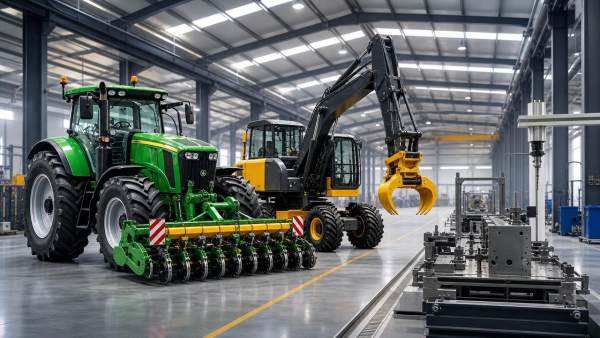
Selecting among Agri & Forestry machinery manufacturers demands more than a quick price check. Procurement teams must weigh production capacity, compliance standards, after-sales support, parts availability, and long-term operating value. This guide explains how to compare suppliers systematically, helping buyers reduce sourcing risk, verify technical capability, and identify manufacturers that can deliver reliable performance in demanding agricultural and forestry operations.
What procurement teams should compare first
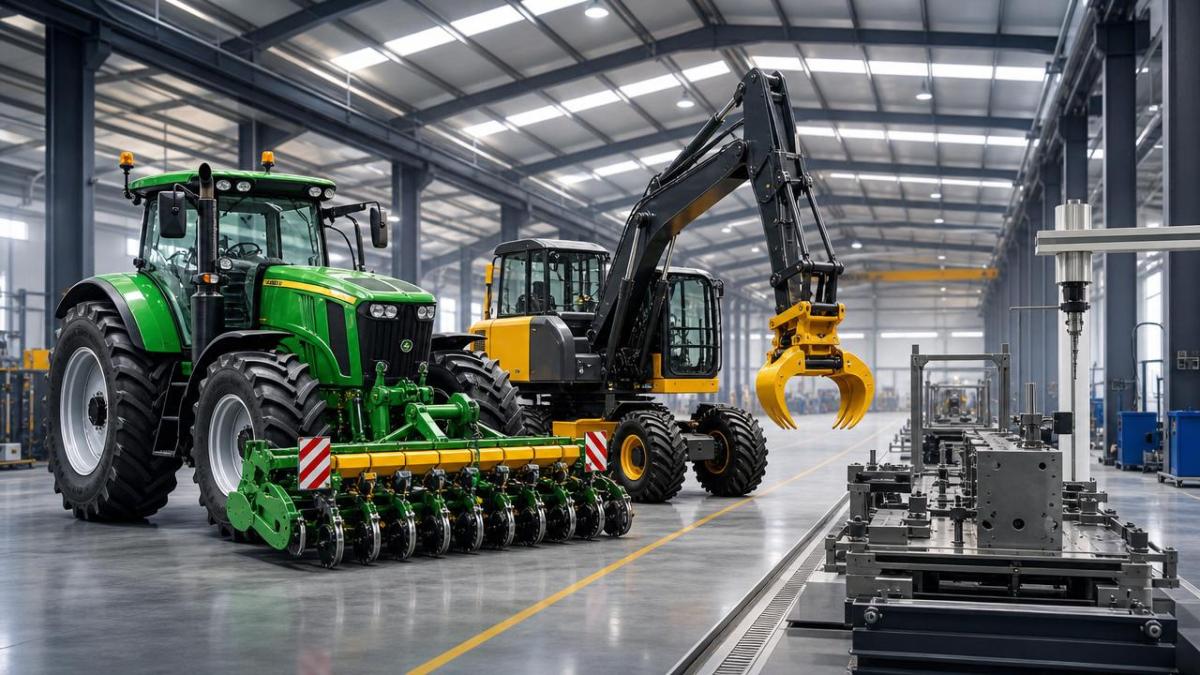
When buyers compare Agri & Forestry machinery manufacturers, the best starting point is not brochure quality, trade show presence, or the lowest quoted unit cost.
The core question is whether a supplier can deliver consistent machine performance, stable parts support, compliant documentation, and predictable lifecycle economics across your intended operating conditions.
For procurement teams, this means comparing manufacturers across six practical dimensions: technical fit, manufacturing capability, quality systems, service support, supply reliability, and total cost of ownership.
If one supplier scores well on price but weakly on uptime support or critical component availability, the lower acquisition cost may quickly become a higher operating cost.
That is especially true in agricultural and forestry environments, where seasonal timing, terrain stress, operator variability, and maintenance delays can turn small specification gaps into large commercial losses.
Start with application fit, not generic machine categories
Many sourcing mistakes happen because buyers compare machines within broad categories rather than against the actual duty cycle they must handle in the field.
A manufacturer may be strong in row-crop equipment, for example, yet far less capable in high-load forestry attachments, steep-slope operation, or wet-climate durability.
Procurement teams should define application requirements before requesting final quotations. That includes crop type, terrain profile, annual operating hours, climate exposure, payload, attachment compatibility, and operator skill level.
For forestry equipment, add timber size range, extraction conditions, ground pressure limits, guarding requirements, and hydraulic performance under sustained heavy loads.
For agricultural machinery, include planting width, soil conditions, fuel efficiency targets, precision farming integration, and expected seasonal throughput.
Once those conditions are documented, buyers can assess whether each manufacturer’s machine platform was designed for similar use cases or merely adapted for them.
This approach also makes technical comparisons more objective. Instead of asking which brand is better in general, the team asks which supplier is better for this exact workload.
Evaluate manufacturing depth and OEM capability
Not all Agri & Forestry machinery manufacturers control the same parts of production. Some are true OEMs with deep fabrication, machining, welding, assembly, and testing capacity.
Others mainly assemble outsourced structures and purchased components. That does not automatically make them unsuitable, but it changes the risk profile significantly.
Manufacturing depth matters because it affects quality control, lead times, engineering responsiveness, spare parts continuity, and the ability to customize equipment for institutional buyers.
Buyers should ask what percentage of key structures and components are manufactured in-house, which systems are outsourced, and how supplier quality is managed across the chain.
Critical systems to review include engines, transmissions, hydraulics, control systems, chassis fabrication, protective structures, and electronic interfaces.
It is also useful to verify production scale. A manufacturer may offer excellent engineering but lack the capacity to meet delivery windows for fleet orders or multi-site expansion plans.
Ask for annual production volumes by machine type, current lead times, surge capacity, and examples of recent deliveries similar in size and complexity to your project.
Compare quality systems and compliance evidence
In industrial procurement, claims are less important than verifiable systems. Buyers should therefore examine how each manufacturer documents quality, traceability, and conformity.
Relevant evidence may include ISO-aligned processes, welding certifications, factory inspection protocols, component traceability methods, and pre-delivery testing records.
For machinery sold internationally, documentation quality is often as important as the machine itself. Missing manuals, incomplete serial records, or weak test data can create regulatory and warranty problems later.
Procurement teams should request sample quality documents, inspection checklists, certificate packages, and maintenance manuals before placing significant orders.
For forestry machinery, safety compliance deserves special attention because these machines often operate in high-risk environments with rollover, debris, and visibility hazards.
For agricultural equipment, buyers should assess guarding, braking systems, lighting, control ergonomics, and compatibility with regional safety and emissions standards.
A credible manufacturer should be able to explain how quality escapes are handled, how non-conforming parts are contained, and how field failures feed back into design improvement.
Do not overlook parts availability and after-sales infrastructure
For many buyers, the most expensive procurement mistake is selecting a machine that performs well initially but becomes difficult to maintain after the first operating season.
That is why comparing Agri & Forestry machinery manufacturers must include spare parts policy, service coverage, technical training, and field response capability.
A strong supplier should clearly state where parts are stocked, typical fill rates, dispatch times, and which wear components are recommended for local inventory holding.
Ask whether the manufacturer supports regional dealers, direct service teams, remote diagnostics, and operator or technician training for customer maintenance staff.
It is also worth identifying long-lead items. Hydraulic pumps, control modules, driveline assemblies, and specialized forestry heads can create long downtime if not properly supported.
Buyers managing fleets should request a recommended spare parts package tied to expected annual utilization, not a generic list copied from a catalog.
Where local support is limited, the supplier’s ability to provide digital troubleshooting, illustrated parts manuals, and fast engineering responses becomes even more important.
Measure total cost of ownership, not just purchase price
Purchase price remains important, but it should sit within a broader total cost of ownership model that reflects how the machine will actually generate or protect operational value.
That model should include fuel or energy consumption, maintenance intervals, wear rates, labor productivity, downtime risk, resale value, and expected useful life.
In agriculture, a cheaper machine that misses seasonal windows can cost more through reduced planting precision, delayed harvest, or lower field efficiency.
In forestry, weak durability or low hydraulic stability can reduce cycle times, increase repair frequency, and compromise output in demanding extraction conditions.
Procurement teams should compare the cost per operating hour or cost per productive unit rather than relying only on the initial invoice amount.
Ask suppliers for maintenance schedules, expected wear part replacement intervals, consumption benchmarks, and field performance references from similar environments.
If possible, translate those figures into your own operation’s economics. A machine that is 8 percent more expensive upfront may still deliver a lower five-year cost profile.
Use supplier references to verify real-world performance
Reference checks are one of the simplest and most underused ways to validate manufacturer claims. They are especially valuable when comparing unfamiliar or rapidly growing suppliers.
Ask for references that match your region, application type, machine class, and ownership model. A small dealer reference may not reflect a fleet procurement reality.
During reference calls, focus on uptime, parts support, training quality, warranty handling, and whether the machine performed as represented under actual operating conditions.
It is also helpful to ask what went wrong. Strong manufacturers are not defined by zero problems, but by how quickly and transparently they resolve them.
If a supplier hesitates to provide relevant references, or only offers highly controlled testimonial material, procurement teams should treat that as a caution signal.
Independent reviews, service partner feedback, and market reputation within the target segment can further clarify whether the manufacturer’s strengths are structural or promotional.
Assess engineering support and customization discipline
Many institutional buyers require more than standard catalog equipment. They may need specific attachment interfaces, telematics integration, branding, safety modifications, or region-specific compliance adjustments.
This is where engineering support becomes a key differentiator among Agri & Forestry machinery manufacturers. Good suppliers can customize without undermining reliability or documentation quality.
Buyers should evaluate whether the manufacturer has internal design engineers, configuration control procedures, and clear approval paths for customer-requested modifications.
A risky supplier may agree to every request quickly but lack proper design validation, testing, or service documentation for the final machine configuration.
Procurement teams should ask how customizations are recorded, how revised parts lists are managed, and whether warranty terms change for modified builds.
Well-controlled customization is a sign of engineering maturity. Poorly controlled customization often leads to spare parts confusion, field service disputes, and uneven machine performance.
Watch for commercial and supply chain risk signals
Even technically capable manufacturers can become difficult partners if they have unstable supply chains, unclear commercial terms, or weak export execution.
Buyers should review payment terms, Incoterms, warranty scope, packing standards, shipment visibility, and responsibility for commissioning or installation support.
For international orders, check whether the supplier has experience with destination-country documentation, customs requirements, and packaging suitable for long transit exposure.
Supply chain transparency is equally important. If a manufacturer depends heavily on a narrow set of critical component suppliers, disruptions may affect lead times or service continuity.
Ask about dual sourcing strategies, inventory buffers for key components, and business continuity measures for engines, electronics, and hydraulic systems.
Commercially, vague warranty language or unrealistic delivery promises often indicate deeper process weaknesses. Clear, measurable commitments are usually a better sign than aggressive sales assurances.
A practical scorecard for comparing manufacturers
To make supplier comparison easier, procurement teams can use a weighted scorecard rather than relying on fragmented impressions from sales meetings and quotations.
Typical weighted categories include application fit, technical specifications, manufacturing capability, quality systems, parts support, delivery reliability, commercial terms, and total cost of ownership.
Each category should include measurable criteria. For example, parts support can be scored using fill rates, warehouse locations, response times, and training availability.
Manufacturing capability can be scored using production capacity, in-house process control, inspection methods, and customization discipline.
This method helps teams defend decisions internally, align engineering and procurement views, and reduce bias toward either the lowest bid or the most recognized brand.
It also creates a repeatable framework for future sourcing rounds, especially for businesses buying across several machine classes or multiple operating regions.
Final thoughts: choose the supplier, not just the machine
The best comparison process goes beyond technical brochures and headline pricing. It examines whether a manufacturer can support performance over the full life of the asset.
For procurement teams, that means selecting a supplier with proven application fit, disciplined manufacturing, strong quality documentation, dependable after-sales support, and commercially realistic commitments.
In practice, the strongest Agri & Forestry machinery manufacturers are not always the cheapest or the most visible. They are the ones that reduce operational uncertainty.
If buyers compare suppliers systematically across capability, support, and lifecycle value, they are far more likely to secure machines that perform reliably in demanding field conditions.
That disciplined approach protects uptime, improves long-term return on capital, and lowers the sourcing risk that often accompanies large agricultural and forestry equipment investments.
Related Intelligence
- Heavy Agri MachineryHow Does Market Forecasting Help Plan Farm Machinery Procurement?How does market forecasting help agri procurement planning? Discover how to time machinery purchases, protect cash flow, and reduce delivery risks before critical farm deadlines.
- Heavy Agri MachineryIs It Safe to Source Farm Machinery from Emerging Markets?Is it safe to source agri machinery from emerging markets? Discover how to verify suppliers, check compliance, and secure parts support to protect your farm and avoid costly buying mistakes.
- Heavy Agri MachineryHow to Size a Combine Harvester for Acreage, Crop Mix, and Harvest WindowsCombine harvesters sized for your acreage, crop mix, and harvest window: calculate real field capacity, match headers, and avoid costly bottlenecks.
The Morning Broadsheet
Daily chemical briefings, market shifts, and peer-reviewed summaries delivered to your terminal.
