

The Authority in Global Agricultural Chemistry & Bio-Resources
Why seaweed farming lines fail earlier than expected
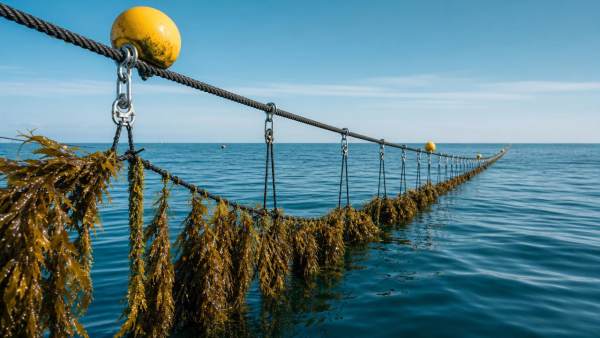
When seaweed farming lines fail earlier than expected, operators face lost yield, rising maintenance costs, and serious disruption to harvest schedules. Understanding why seaweed farming lines degrade, snap, or lose performance is essential for improving farm reliability and protecting long-term returns. This article examines the most common causes of premature failure and offers practical insights to help users select, inspect, and manage line systems more effectively.
Why do seaweed farming lines fail sooner than their rated service life?
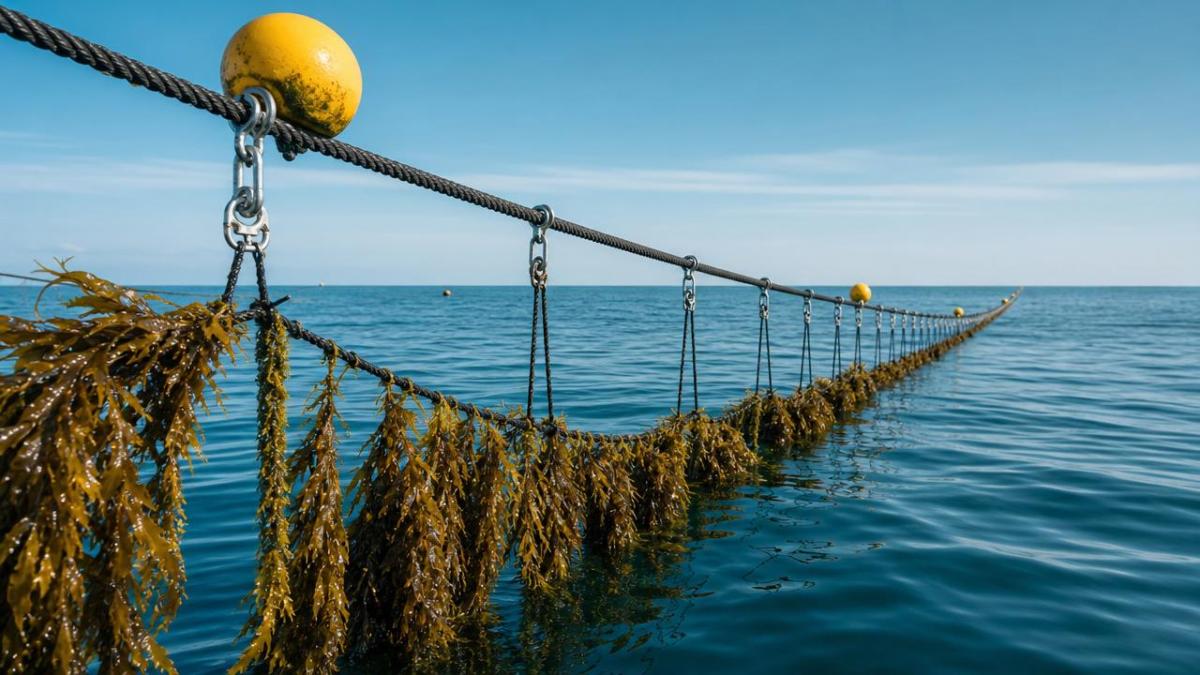
In most cases, early failure is not caused by one dramatic event. It usually comes from several manageable problems acting together over time.
Operators often assume the rope, backbone, or dropper line itself is the weak point. In reality, failure frequently begins with mismatch between material, environment, load, and handling practice.
Seaweed farming lines work in a harsh setting. They face constant wetting, drying, UV exposure, wave shock, abrasive fouling, salinity shifts, and repeated harvest stress.
Even a line marketed for marine use can underperform if it is undersized, poorly tensioned, badly spliced, or exposed to currents beyond its design envelope.
For users and farm crews, the practical answer is clear. Most premature failures can be reduced by better specification, routine inspection, and more disciplined installation methods.
What operators usually overlook when choosing seaweed farming lines
A common mistake is buying by breaking strength alone. High tensile rating looks reassuring, but it does not tell you enough about fatigue resistance, creep, stiffness, or abrasion tolerance.
Seaweed farming lines must match the cultivation method. Longline systems, raft systems, nearshore farms, and offshore layouts place very different demands on rope construction and hardware.
Polypropylene may be attractive because it is light and affordable. However, in some applications it can suffer from faster wear, lower abrasion resistance, or greater long-term deformation.
Polyester often performs better under sustained loading and UV exposure. Yet it is heavier, behaves differently in water, and may alter buoyancy calculations across the full line assembly.
Blended or specialty polymers may solve one problem while introducing another. A line that resists abrasion well may become harder to knot, splice, or handle efficiently during seeding and harvest.
Operators should also consider surface texture. A rougher surface may improve seed attachment in some systems, but can trap fouling, increase drag, and accelerate cleaning damage.
The wrong selection rarely fails immediately. Instead, it slowly loses reliability until operators begin seeing unexplained fraying, tension imbalance, float instability, or repeated component replacement.
Environmental stress is often more destructive than users expect
Marine farming environments are dynamic, and line systems rarely experience steady loads. They are exposed to cyclic loading, which can be more harmful than a single heavy pull.
Wave action creates repeated tension and slack transitions. This cycling weakens fibers, loosens connections, and increases internal friction within twisted or braided constructions.
Current speed also matters more than many users realize. As biomass grows, drag rises sharply, especially when fronds become long, dense, and heavily fouled.
A line that was adequate during deployment can become overloaded months later. The farm has not changed location, but the biological load and water resistance have changed significantly.
UV radiation is another major factor in early degradation. Lines stored on deck, exposed between tidal cycles, or left uncovered before installation often age before entering full service.
Temperature, salinity, and chemical exposure can also influence polymer behavior. Cleaning agents, fuel contamination, or nearby industrial discharge may shorten expected service life.
In shallow or nearshore sites, seabed contact is especially damaging. Repeated rubbing on rock, shell, or debris can wear through outer fibers long before the full rope looks compromised.
How installation errors turn acceptable line systems into weak systems
Many seaweed farming lines fail because they were installed with hidden stress concentrations. A technically suitable product can still fail early if the setup creates localized overload.
Sharp bends around shackles, undersized thimbles, or rough connection points can cut into fibers and reduce real working strength far below the rated figure.
Improper knots are another problem. Some knots can reduce rope strength dramatically, and they may tighten under load in ways that make damage difficult to detect.
Bad splicing practices are equally risky. Short bury lengths, uneven tapering, or rushed field splices may hold at first, then begin slipping or distorting after repeated sea movement.
Tensioning errors are common during deployment. If lines are set too tight, they lose the ability to absorb dynamic movement. If too loose, they can whip, sag, chafe, or foul.
Anchor geometry also affects service life. Poor alignment can cause side loading, twisting, and irregular force transfer across the cultivation line and supporting hardware.
Even float placement matters. Uneven buoyancy can create point loading, excessive droop, and biomass clustering that overloads certain segments while leaving others underused.
Biological growth adds weight, drag, and hidden wear
Operators naturally focus on the cultivated seaweed, but non-target biological growth can be just as important in line failure analysis.
Biofouling by mussels, barnacles, algae, and slime layers increases mass and hydrodynamic resistance. This added burden changes how the whole line behaves in currents and swell.
Fouling also traps sediment and moisture, creating abrasive conditions during movement. When lines rub against hardware or adjacent ropes, wear accelerates quickly.
Heavy growth can hide damage from visual inspection. A line may appear functional from a distance while outer fibers underneath have already been cut, flattened, or weakened.
Cleaning itself can become a source of damage. Aggressive scraping, high-pressure washing, or rough mechanical handling may remove fouling but also strip protective outer fibers.
As cultivated biomass matures, operators should reassess loads rather than relying on deployment-day assumptions. A line that was safe in week one may be marginal near harvest.
Why hardware and connectors are frequent failure points
When users discuss seaweed farming lines, they often mean the rope sections. But many failures actually begin at the interfaces between line, hardware, and support structure.
Shackles, swivels, clips, rings, and spliced eyes are all critical points. Corrosion, fatigue, deformation, and misalignment can reduce system performance before the rope itself breaks.
Dissimilar metals in marine conditions may increase corrosion risk. Once hardware roughens or pits, it can abrade adjacent fibers with every cycle of motion.
Cheap connectors are especially dangerous in exposed farms. Their nominal load rating may not reflect real offshore shock loading, repeated movement, or poor manufacturing consistency.
Swivels that seize can transfer twist back into the line. Over time, this can distort rope structure, complicate handling, and increase localized stress at terminations.
For operators, the lesson is simple. A seaweed farming line system should be inspected as a complete assembly, not as isolated rope lengths.
How to inspect seaweed farming lines before failure becomes expensive
Inspection should not wait until breakage occurs. By the time a line snaps, the farm has usually been giving earlier warning signs.
Crews should look for fuzzing, glazing, flattened areas, hard spots, discoloration, strand separation, diameter reduction, and irregular stiffness along the line.
Pay special attention to contact zones near hardware, float attachments, anchor connections, and tidal exposure points. These areas often deteriorate first.
Inspection should also include operational symptoms. Increased sag, unstable float behavior, unequal loading, repeated need for retensioning, or drifting alignment may indicate line degradation.
Users should document findings consistently. A simple inspection log with date, location, observed damage, and action taken helps identify patterns before they become chronic failures.
Photographic records are useful, especially across seasons. They help crews compare wear progression and decide whether a section needs repair, rotation, or full replacement.
Where possible, schedule inspections around key stages: post-installation, after storms, mid-growth, before harvest, and after cleaning or line handling operations.
Practical ways to extend service life without overcomplicating operations
Improving durability does not always require a full system redesign. Often, the best gains come from a few disciplined operating changes.
Start by matching line type to actual site conditions, not generic marine labels. Ask suppliers for data on UV resistance, creep, abrasion behavior, and recommended working loads.
Use appropriately sized hardware with smooth bearing surfaces. Avoid makeshift substitutions that create sharp contact points or unknown strength reductions.
Standardize splicing and installation procedures across crews. Written methods reduce variation and help ensure the system performs as designed.
Control storage conditions before deployment. Keep lines out of direct sunlight, away from contaminants, and off rough surfaces that can damage fibers before use.
Rotate or reposition high-wear sections if your system design allows it. This can spread damage more evenly and postpone catastrophic failure in the most stressed zones.
After severe weather, inspect before resuming normal operations. Storm loads can cause hidden damage even when the farm remains visually intact.
Most importantly, replace lines on condition and risk, not only on habit. Waiting for complete failure usually costs more than planned replacement.
When early line failure points to a design problem, not a maintenance problem
If the same failure repeats despite careful handling, maintenance may not be the root issue. The system may be underdesigned for the site or production target.
Repeated breakage at the same location often indicates force concentration, poor layout geometry, or insufficient allowance for biomass growth and environmental loading.
Frequent abrasion may mean the line path needs redesign. Unexpected sag can suggest buoyancy imbalance. Twisting may point to connector choice or current-driven layout problems.
In these cases, replacing the same component with the same specification will only repeat the cycle. Operators need to review the whole load path and farm configuration.
Useful questions include: Has stocking density increased? Has crop weight changed by season? Have storm patterns become harsher? Has fouling pressure intensified?
Operational expansion can quietly push old systems beyond their original design basis. What once worked acceptably may no longer be appropriate for current production goals.
What a better purchasing decision looks like for working operators
For users and field operators, a good buying decision balances durability, handling ease, replacement frequency, and predictable performance under real farm conditions.
The best seaweed farming lines are not always the cheapest per meter. They are the ones that reduce unplanned downtime, preserve crop stability, and simplify crew work.
Ask suppliers for application-specific evidence, not only product claims. Request material details, test data, recommended safety factors, and examples from comparable sea conditions.
It is also worth evaluating how easy the line is to inspect and repair. A product that performs well in theory but is difficult to handle may create more field problems.
Consistency matters too. Variability between batches can affect splicing, buoyancy behavior, and line tension across a farm, making system tuning much harder.
In practice, reliable performance comes from buying the right system, then supporting it with disciplined installation and inspection rather than expecting the material alone to solve everything.
Conclusion
Seaweed farming lines usually fail earlier than expected because of combined stress, not isolated bad luck. Material mismatch, dynamic loading, installation errors, fouling, hardware wear, and weak inspection routines all play a role.
For operators, the most effective response is practical rather than theoretical. Choose line systems for the real site, install them correctly, inspect them consistently, and treat connectors and load growth as part of the same risk picture.
When these basics are managed well, seaweed farming lines last longer, harvest schedules become more predictable, and maintenance costs become easier to control. That is what turns line performance into farm reliability.
Related Intelligence
- Commercial FishingWhat Should You Check in a Fishery Equipment Maintenance Contract?What should I look for in a fishery equipment maintenance contract? Explore coverage, response times, costs, records, safety, and biosecurity essentials.
- Commercial FishingDo commercial fishing vessels with hybrid diesel-electric propulsion reduce fuel cost per kg landed by more than 12%?Commercial fishing vessels with hybrid diesel-electric propulsion *can* cut fuel cost per kg landed by >12%—but only under precise operational and infrastructure conditions. Discover the real ROI.
- Commercial FishingHow to Choose Oyster Processing Equipment for Capacity, Hygiene, and Labor EfficiencyOyster processing equipment guide: compare capacity, hygienic design, and labor efficiency to build a reliable, scalable line and make smarter buying decisions.
The Morning Broadsheet
Daily chemical briefings, market shifts, and peer-reviewed summaries delivered to your terminal.
