

The Authority in Global Agricultural Chemistry & Bio-Resources
How oyster farming equipment affects harvest consistency
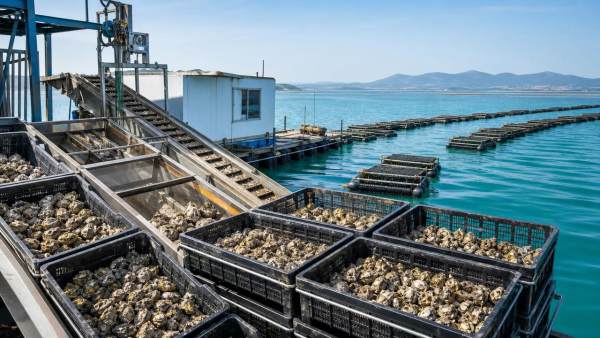
In commercial aquaculture, harvest consistency depends on more than water conditions or seed quality. Oyster farming equipment shapes grading accuracy, growth uniformity, labor flow, mortality control, and the timing of market-ready harvests.
When output must meet contractual volumes and narrow delivery windows, equipment choices become operational decisions, not simple capital purchases. The right oyster farming equipment reduces variation across batches and supports repeatable harvest planning.
Why harvest consistency changes across farming scenarios
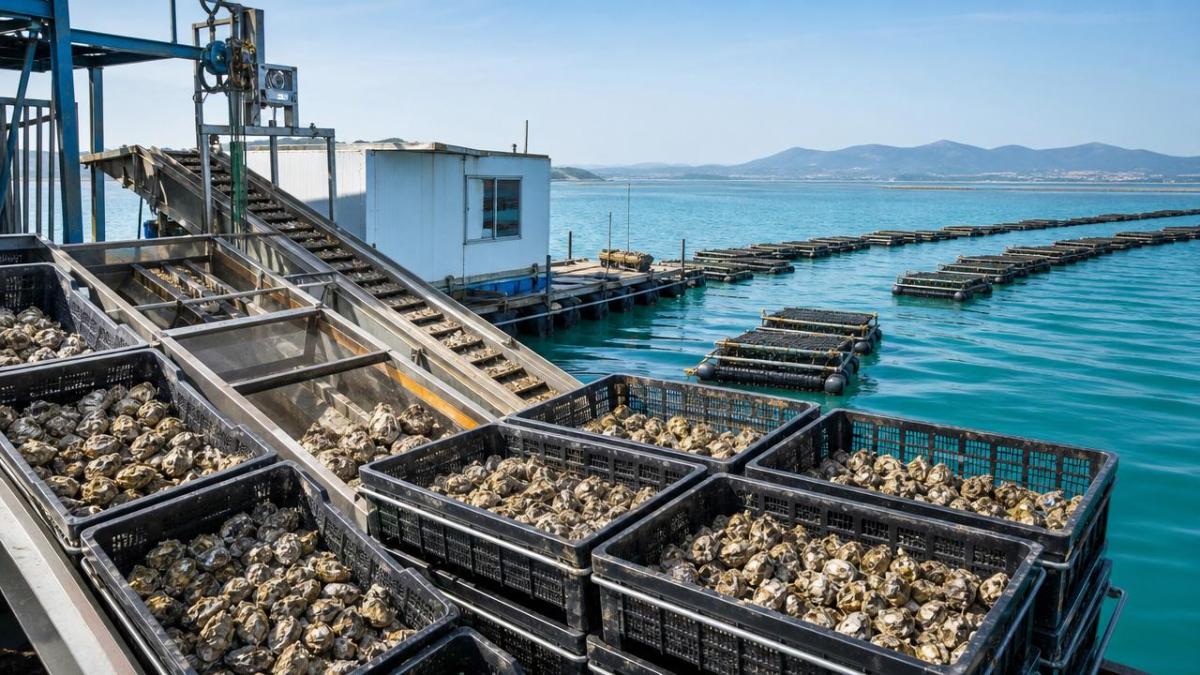
Harvest consistency is not identical in every production environment. Intertidal farms, floating systems, high-energy coasts, and sheltered bays all create different mechanical demands on oyster farming equipment.
A cage, basket, tumbler, grader, or lifting system that performs well in calm water may create losses in strong current. Likewise, equipment built for low-density operations may fail under intensive rotation schedules.
The key question is practical: does the equipment maintain stable oyster size, shell quality, survival rate, and handling efficiency under the site’s actual workload?
That is why oyster farming equipment should be assessed through a scenario lens. Growth biology, wave exposure, labor skill, maintenance access, and harvest frequency all affect final consistency.
Scenario 1: Intertidal farms need rugged oyster farming equipment for repeatable handling
Intertidal operations rely on regular exposure, tidal access, and repeated manual or mechanized handling. In this scenario, equipment durability directly affects batch stability and working rhythm.
If baskets deform, mesh openings widen, or hinges corrode early, stocking density changes over time. That leads to uneven spacing, shell damage, and irregular growth rates.
Good oyster farming equipment for intertidal use usually prioritizes:
- UV-resistant polymers or marine-grade metal components
- Stable latch systems that tolerate frequent opening
- Predictable drainage and sediment release
- Uniform tray geometry for stacking and transport
The core judgment point is whether the equipment keeps identical growing conditions across the farm. When units age unevenly, harvest size variation usually widens within one production cycle.
Scenario 2: Floating systems depend on equipment balance, buoyancy, and access speed
Floating farms face another challenge. Oyster farming equipment must remain stable under changing loads while allowing frequent flipping, cleaning, and grading with minimal stress on the stock.
Poor buoyancy design can create inconsistent water flow between units. Some oysters receive better feeding conditions, while others face crowding or sediment accumulation.
In floating systems, harvest consistency often improves when equipment supports:
- Even flotation under full and partial biomass loads
- Quick access for routine turning or shaking
- Low-stress transfer during grading cycles
- Secure mooring connection points
Where access time is long, maintenance delays increase. That usually means fouling accumulates faster, shell shape becomes less uniform, and harvest scheduling becomes harder to predict.
Scenario 3: High-energy sites test the structural limits of oyster farming equipment
Open-water and exposed coastal sites can deliver excellent growth. However, they also amplify mechanical stress and raise the cost of inconsistency.
At these sites, weak oyster farming equipment causes more than breakage. It can disrupt stocking patterns, detach lines, increase escape risk, and force unplanned harvests before target size.
The central evaluation point is not only peak strength. Fatigue resistance matters just as much. Repeated impact, torsion, and abrasion often create hidden wear before visible failure appears.
For exposed locations, consistent output usually requires engineered tolerance in frames, clips, ropes, and connection hardware. One weak component can destabilize the entire harvest program.
Scenario 4: Intensive production needs oyster farming equipment that supports fast grading and low handling loss
High-throughput farms depend on cycle speed. Here, oyster farming equipment influences how quickly teams can sort stock, remove fouling, separate sizes, and return oysters to optimal densities.
If equipment is awkward to unload or incompatible with graders and conveyors, handling time rises sharply. Every extra transfer increases shell chipping, stress, and mortality risk.
This scenario rewards systems designed for process integration. Baskets, bags, cages, washing stations, and sorting tables should work as one controlled flow, not isolated tools.
How different scenarios change equipment priorities
What to assess before selecting oyster farming equipment
A useful review starts with operational data, not brochure claims. The same oyster farming equipment can deliver different outcomes depending on density, maintenance rhythm, and exposure profile.
Assessment should focus on these practical questions:
- Does the equipment keep water flow and stocking conditions uniform?
- Can crews clean, turn, and grade units without excessive transfer steps?
- Are wear parts easy to inspect and replace?
- Does the system match lifting capacity and vessel layout?
- Will seasonal weather expose hidden design weaknesses?
If these points are ignored, harvest variation usually appears first in labor time, then shell quality, then shipment reliability. Equipment selection should therefore be tied to measurable farm performance indicators.
Common misjudgments that reduce harvest consistency
A frequent mistake is choosing oyster farming equipment based only on initial purchase price. Lower-cost units may create higher annual cost through breakage, extra labor, and inconsistent grading results.
Another mistake is treating all farm zones as identical. Equipment that suits nursery stages may not support grow-out performance or final harvest handling.
Some operations also overlook compatibility between equipment and data tracking. Without clear batch identification, it becomes difficult to link variation to specific cages, bags, or maintenance intervals.
There is also a tendency to underestimate ergonomic design. When opening, lifting, or stacking is awkward, routine care gets delayed, and inconsistency spreads across production lots.
Scenario-based recommendations for more reliable results
To improve harvest consistency, oyster farming equipment should be matched to operating conditions through staged testing and clear performance benchmarks.
- Run pilot comparisons between equipment types on the same seed cohort.
- Record growth spread, mortality, fouling load, and handling time.
- Inspect deformation, fastener wear, and mesh integrity after weather events.
- Align container sizes with grading, washing, and transport equipment.
- Review total lifecycle cost, not only acquisition cost.
Where scaling is planned, standardization matters. Consistent unit dimensions, repair parts, and workflow layouts help maintain output predictability as farm area and stocking volumes increase.
Next steps for evaluating oyster farming equipment with confidence
The impact of oyster farming equipment on harvest consistency is measurable when reviewed through real production scenarios. The strongest systems are those that support uniform growth, controlled handling, and dependable harvest timing.
A practical next step is to map site conditions, seasonal workload, and process flow before comparing equipment options. Then test candidate systems against failure points that most often disrupt consistent harvests.
For technical publishing environments focused on primary industries, this scenario-based approach creates stronger evidence, better operational visibility, and more credible decision support around oyster farming equipment.
Related Intelligence
- Commercial FishingWhat Should You Check in a Fishery Equipment Maintenance Contract?What should I look for in a fishery equipment maintenance contract? Explore coverage, response times, costs, records, safety, and biosecurity essentials.
- Commercial FishingDo commercial fishing vessels with hybrid diesel-electric propulsion reduce fuel cost per kg landed by more than 12%?Commercial fishing vessels with hybrid diesel-electric propulsion *can* cut fuel cost per kg landed by >12%—but only under precise operational and infrastructure conditions. Discover the real ROI.
- Commercial FishingHow to Choose Oyster Processing Equipment for Capacity, Hygiene, and Labor EfficiencyOyster processing equipment guide: compare capacity, hygienic design, and labor efficiency to build a reliable, scalable line and make smarter buying decisions.
The Morning Broadsheet
Daily chemical briefings, market shifts, and peer-reviewed summaries delivered to your terminal.
