

The Authority in Global Agricultural Chemistry & Bio-Resources
What to check before buying mussel ropes wholesale
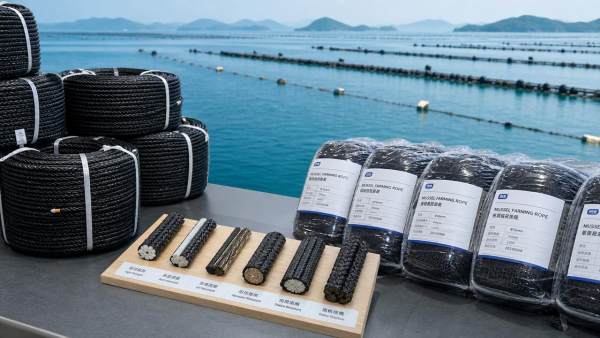
Before committing to mussel ropes wholesale, quality and safety teams need to verify far more than price and availability. Rope material, tensile strength, biofouling resistance, traceable sourcing, and compliance with aquaculture standards all directly affect harvest efficiency and operational risk. A careful pre-purchase checklist helps buyers prevent premature failure, reduce contamination concerns, and secure consistent performance across demanding marine environments.
For procurement, QA, and HSE personnel in aquaculture operations, mussel rope selection is rarely a simple commodity purchase. A rope failure during a 12–24 month grow-out cycle can trigger stock loss, retrieval costs, contamination exposure, and unplanned downtime across multiple longlines. In wholesale buying, the challenge is magnified because consistency between batches matters as much as the nominal specification on a data sheet.
This guide outlines what to check before approving mussel ropes wholesale orders, with a practical focus on material integrity, supplier controls, regulatory fit, and marine performance. The objective is to help quality and safety teams reduce procurement risk while supporting stable yield, safer handling, and auditable sourcing.
Why pre-purchase verification matters in mussel rope procurement
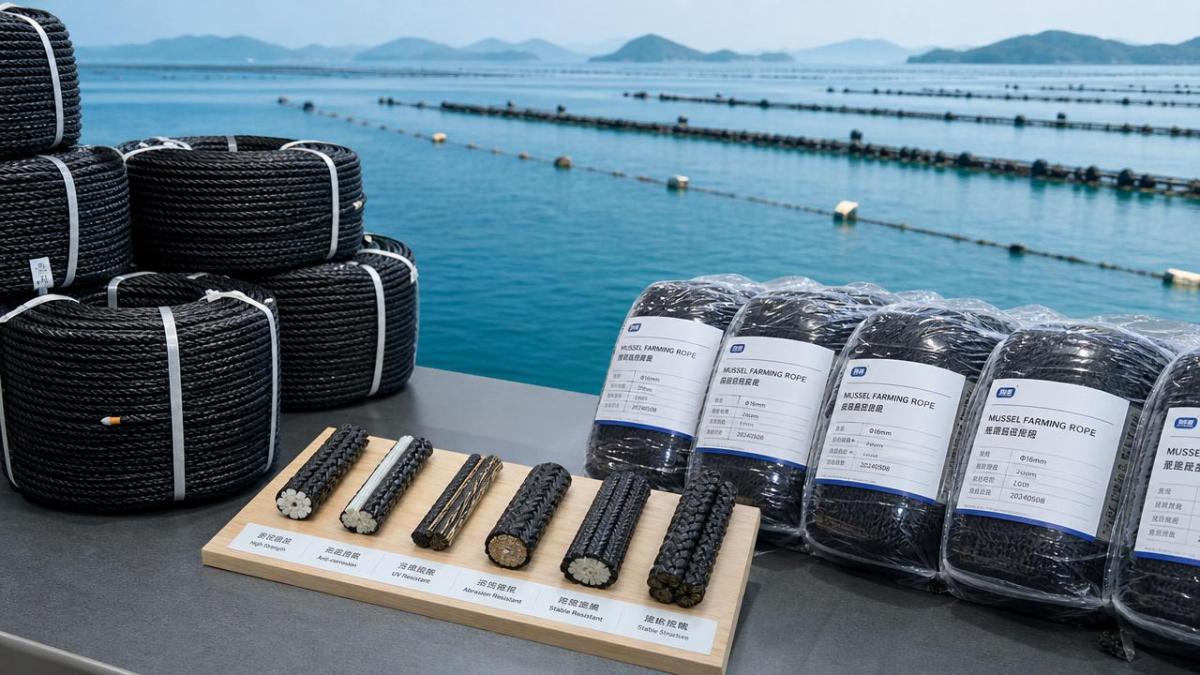
In commercial mussel farming, ropes operate under continuous exposure to saltwater, UV radiation, tidal motion, abrasion, and biological loading. Even a small variance in filament quality or rope construction can shorten service life by 20%–30% in demanding sites. For quality teams, this makes incoming specification review a control point rather than an administrative step.
Safety managers also need to consider operational handling. Wet ropes can become heavier than their dry weight by a significant margin, and loaded lines may be lifted repeatedly during seeding, inspection, and harvest. If rope elongation, splice weakness, or strand separation is not assessed in advance, crews may face elevated entanglement, snapback, or manual handling hazards.
The cost of treating ropes as a low-risk item
A low unit price can be misleading when evaluated against a full production cycle. A wholesale batch that fails 6 months earlier than expected may create replacement costs, vessel time, labor rescheduling, and biomass loss that far exceed the original savings. In most aquaculture purchasing reviews, three metrics matter most: expected service life, failure rate per batch, and total retrieval cost.
- Service life target often ranges from 12 to 36 months depending on site exposure and rope application.
- Batch-to-batch consistency should be reviewed using sample inspection from at least 3 production lots where possible.
- Incoming quality checks should confirm dimensional tolerance, construction integrity, and labeling traceability before deployment.
Key wholesale risks that QA teams should flag
The most common procurement risks in mussel ropes wholesale are not always visible in a quotation sheet. Polymer substitution, inconsistent braid density, undocumented recycled content, or weak UV stabilization can affect performance without immediate visual clues. A structured pre-buy review helps expose these issues before large-volume delivery reaches the farm.
The table below summarizes the main quality and safety checkpoints that should be reviewed before placing volume orders.
The practical takeaway is simple: for mussel ropes wholesale, procurement approval should combine laboratory-style verification with field suitability review. Price can be one factor, but it should come after material, performance, and documentation checks are complete.
Technical specifications to review before buying mussel ropes wholesale
A sound purchase decision starts with a detailed technical specification sheet. Quality teams should ask suppliers to define rope diameter, construction type, polymer family, linear density, and minimum breaking load. If a vendor cannot provide these basics in a consistent format, that alone is a procurement warning sign.
Material type and marine suitability
Common mussel rope materials include polypropylene, polyethylene, and blended synthetic fibers. Each performs differently in buoyancy, abrasion resistance, and UV tolerance. For example, buoyant ropes may support certain line configurations, while denser constructions may behave differently under submerged loading. Buyers should request clear material disclosure rather than relying on generic labels such as “marine grade.”
For safety and contamination control, it is also important to ask whether colorants, processing oils, or stabilizers are suitable for aquaculture use. If ropes will remain in contact with shellfish stock for 1–3 seasons, undocumented additives can become a compliance concern even when the rope appears structurally acceptable.
Questions worth asking the supplier
- What is the exact polymer composition and percentage blend?
- Is the rope made from virgin material, recycled content, or a mixed source?
- What UV stabilization approach is used for outdoor marine exposure?
- Are there any coatings, lubricants, or additives that should be declared to the farm?
Strength, elongation, and diameter consistency
Not every rope sold for shellfish farming performs the same under dynamic load. A stated breaking load is useful, but it should not be reviewed in isolation. QA teams should also assess elongation at working load, tolerance in rope diameter, and performance after wet conditioning. In many marine applications, a diameter variation of more than ±5% can affect compatibility with haulers, clips, and seeding equipment.
A practical benchmark is to ask for test results under both dry and wet conditions, or at least a clear statement on whether mechanical data reflect conditioned samples. This matters because ropes that seem strong in dry warehouse conditions may lose predictability after prolonged immersion and biological loading.
The following specification matrix can help buyers compare offers from multiple mussel ropes wholesale suppliers on a like-for-like basis.
When comparing bids, uniform disclosure often tells you as much about the supplier as the numbers themselves. Vendors that can define test methods, tolerances, and packaging details usually present lower documentation risk than those offering only a headline strength claim.
Biofouling resistance and surface behavior
Biofouling cannot be eliminated in open-water aquaculture, but rope design can influence how aggressively fouling builds and how difficult it is to clean. Over a 6–18 month deployment period, rough or moisture-retaining surfaces may accumulate added mass that increases lifting load and equipment wear. Buyers should ask for field-use feedback by site type: sheltered bay, moderate current, or exposed offshore conditions.
The goal is not to find a universally “best” surface, but to match texture and construction to mussel settlement needs, cleaning frequency, and harvest equipment. A rope optimized for spat retention may behave differently from one designed for easier post-growth handling.
Supplier qualification, traceability, and compliance controls
In mussel ropes wholesale purchasing, product quality and supplier reliability are inseparable. A technically acceptable rope still creates risk if the manufacturer lacks stable process control, documented raw material sourcing, or clear lot traceability. Quality and safety teams should therefore review the supplier system, not just the rope sample.
Traceability requirements for bulk rope orders
At minimum, each delivered batch should be traceable by lot number, production date, material declaration, and shipment record. For larger farms operating across several sites, it is wise to link rope lots to deployment zones so that any failure pattern can be isolated in less than 24–48 hours. This improves recall response and supports root-cause investigation.
Documentation should be checked at three stages: pre-order technical review, pre-shipment confirmation, and goods-in receiving inspection. If any stage reveals missing lot marks, mismatched roll lengths, or incomplete test papers, the batch should be quarantined until clarified.
Recommended document pack
- Product specification sheet with revision date
- Lot or batch identification list
- Raw material declaration or source statement
- Mechanical test summary for the shipment lot or representative production run
- Packing list showing coil quantity, lengths, and pallet count
Environmental and operational compliance considerations
Compliance expectations vary by market, but safety managers should confirm whether rope composition aligns with farm-level environmental policies, local aquaculture regulations, and waste handling procedures. This is especially important where plastic loss, rope fragmentation, and end-of-life disposal are under increasing scrutiny.
A strong supplier should be able to explain how it manages raw material consistency, contamination prevention, and nonconforming product control. Even if no single universal certification applies to every rope category, basic manufacturing discipline, documented inspection frequency, and transparent corrective action procedures remain essential.
Questions for supplier audits or pre-award reviews
For wholesale contracts, a short audit questionnaire can prevent expensive surprises later. Focus on 5 areas: incoming raw material verification, in-process dimensional control, mechanical testing frequency, lot segregation, and complaint handling lead time. A vendor that cannot answer these clearly may struggle during scale-up orders.
- How often are tensile and dimensional tests performed per production run?
- What is the standard response time for quality claims—48 hours, 72 hours, or longer?
- How are mixed-material or out-of-spec batches identified and isolated?
- Can the supplier provide retained samples for dispute review?
- What is the normal lead time for repeat orders: 2 weeks, 4 weeks, or more?
Field validation and receiving inspection before full deployment
Even after careful source selection, full-scale deployment should not begin without field validation. The safest approach is to trial a limited quantity under actual site conditions before committing the entire batch to production lines. A 2–5% pilot volume is often enough to reveal handling issues, abnormal stretch, or poor compatibility with local equipment.
What to inspect on arrival
Receiving inspection should be standardized and repeatable. Teams should verify packaging integrity, labeling accuracy, coil count, visible abrasion, contamination, and dimensional conformity. If the order includes multiple pallets or lots, sampling should cover more than one pallet rather than relying on the top layer of a single shipment.
A practical inspection routine includes 6 checks: confirm lot code, measure sample diameter, inspect braid or twist uniformity, review shipping paperwork, check for odor or residue, and isolate damaged coils. These actions usually take less than 60 minutes for a moderate shipment and can prevent weeks of operational disruption.
The checklist below can be adapted into an incoming quality form for mussel ropes wholesale deliveries.
The most effective receiving programs combine physical inspection with documentation control. This reduces the chance that a conforming-looking rope with poor traceability enters the production system unnoticed.
Pilot testing under real marine conditions
Before rolling out across all lines, deploy trial ropes in representative conditions for at least one exposure window that reflects your operation—often 4–12 weeks for initial handling assessment and longer for performance tracking. Monitor abrasion points, growth attachment, fouling burden, and compatibility with winches or harvesting gear.
If the pilot shows unusual stretch, shedding, or difficult cleaning behavior, the issue should be documented against lot number and application point. This creates evidence for supplier dialogue and helps determine whether the problem lies in product design, site mismatch, or deployment method.
Common buying mistakes and smarter procurement decisions
Many avoidable failures in mussel ropes wholesale stem from procurement shortcuts rather than extreme site conditions. The most common mistake is buying to nominal diameter alone. Two ropes with the same listed size may differ substantially in polymer quality, construction density, and working performance over an 18-month cycle.
Mistake 1: Accepting incomplete technical data
If a quotation lists only rope size, color, and price, buyers do not have enough information to compare offers reliably. At minimum, ask for four data groups: material composition, mechanical properties, dimensional tolerances, and lot traceability details. Missing information should reduce supplier confidence, not be treated as a minor omission.
Mistake 2: Skipping pilot use to save time
Pilot testing can feel slow when seasonal deployment windows are tight, but skipping it often creates larger delays later. A short 2-site or 3-line validation program is usually faster than replacing nonconforming rope after installation across an entire farm block.
Mistake 3: Overlooking end-of-life and waste handling
Safety and environmental teams should ask what happens when ropes are retired. Disposal, recycling, and damaged rope segregation all affect operating compliance. Wholesale orders should include a plan for storage, damaged stock control, and end-of-service removal, especially where local marine debris expectations are becoming stricter.
A smarter approval framework
A strong buying decision usually follows a 5-step path: define site-specific requirements, prequalify suppliers, compare technical disclosures, trial in the field, and release volume orders only after receiving inspection criteria are agreed. This approach helps quality and safety teams move from reactive problem solving to controlled procurement planning.
For organizations sourcing mussel ropes wholesale at scale, the best results come from aligning procurement, farm operations, and QA around the same acceptance rules. That alignment reduces disputes, protects crew safety, and improves consistency from seeding to harvest.
Choosing mussel ropes wholesale is ultimately a risk-management decision as much as a purchasing one. Material transparency, mechanical performance, fouling behavior, traceability, and receiving inspection all deserve structured review before a bulk order is approved. For quality control and safety leaders, a disciplined checklist can prevent early failure, protect marine operations, and support more reliable long-cycle production.
If your team is evaluating rope suppliers, planning a new farm block, or tightening procurement controls for aquaculture consumables, now is the right time to standardize your approval criteria. Contact us to discuss technical publishing opportunities, procurement-focused content support, or to learn more solutions for informed industrial aquaculture sourcing.
Related Intelligence
- Commercial FishingWhat Should You Check in a Fishery Equipment Maintenance Contract?What should I look for in a fishery equipment maintenance contract? Explore coverage, response times, costs, records, safety, and biosecurity essentials.
- Commercial FishingDo commercial fishing vessels with hybrid diesel-electric propulsion reduce fuel cost per kg landed by more than 12%?Commercial fishing vessels with hybrid diesel-electric propulsion *can* cut fuel cost per kg landed by >12%—but only under precise operational and infrastructure conditions. Discover the real ROI.
- Commercial FishingHow to Choose Oyster Processing Equipment for Capacity, Hygiene, and Labor EfficiencyOyster processing equipment guide: compare capacity, hygienic design, and labor efficiency to build a reliable, scalable line and make smarter buying decisions.
The Morning Broadsheet
Daily chemical briefings, market shifts, and peer-reviewed summaries delivered to your terminal.
