

The Authority in Global Agricultural Chemistry & Bio-Resources
FDA Updates Aquaculture Drug Residue Testing Guidance
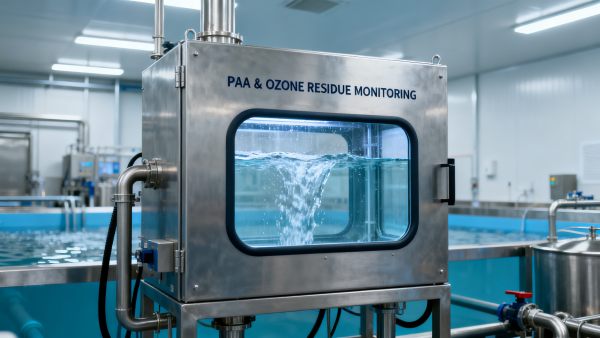
FDA released an updated Aquaculture Drug Residue Testing Guidance on May 19, 2026 — a regulatory shift with immediate implications for U.S. and global exporters of farmed seafood, particularly those operating recirculating aquaculture systems (RAS) or engaged in commercial fishing supply chains. The revision introduces new analytical requirements and certification mandates that directly affect market access, compliance timelines, and operational transparency.
Event Overview
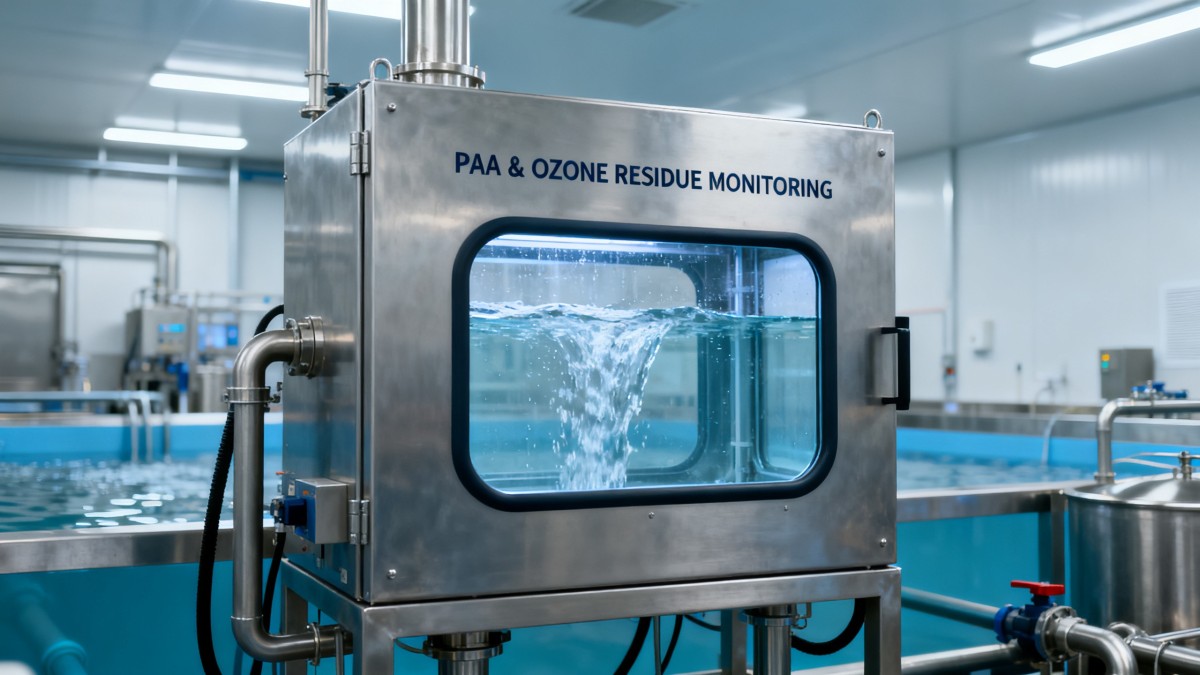
On May 19, 2026, the U.S. Food and Drug Administration (FDA) published the revised Aquaculture Drug Residue Testing Guidance. This version explicitly adds water treatment agents used in RAS — including peracetic acid (PAA) and ozone disinfection by-products — to the list of substances subject to mandatory residue screening for imported aquaculture products. Exporters must now submit both Good Manufacturing Practice (GMP) production records and Hazard Analysis and Critical Control Points (HACCP) hazard analysis documentation as part of pre-clearance submissions. Facilities failing to meet these dual-certification requirements risk placement on the FDA’s ‘Import Alert List’, resulting in increased examination rates and significant customs delays.
Industries Affected
Commercial fishing exporters: Though traditionally focused on wild-caught species, many commercial fishing entities now operate integrated supply chains involving post-harvest aquaculture finishing or value-added processing. Under the new guidance, any entity exporting seafood products that have undergone aquaculture-related handling — including holding, grading, or anti-microbial treatment in RAS-adjacent infrastructure — falls within scope. Impact manifests as expanded documentation burdens, potential rejections at port of entry, and higher third-party audit costs.
Raw material procurement firms: Buyers sourcing live or processed fish from RAS farms — especially those supplying U.S. importers — must now verify upstream compliance with GMP+HACCP dual certification before contracting. Failure to do so exposes them to downstream liability, shipment holds, and reputational exposure. Procurement due diligence now requires reviewing not only farm-level HACCP plans but also chemical usage logs and water treatment validation reports.
Processing and packaging manufacturers: Facilities that apply antimicrobial rinses, surface treatments, or chilled storage using RAS-derived water systems are now subject to residue testing scrutiny. The guidance does not exempt secondary processors; rather, it treats any facility introducing regulated compounds during post-harvest handling as part of the ‘aquaculture drug use chain’. This expands traceability obligations and may necessitate reformulation of wash solutions or process redesign.
Supply chain service providers: Logistics operators, certification bodies, and lab testing vendors face intensified demand for GMP-aligned documentation support and validated residue assay services targeting PAA degradation products (e.g., acetic acid, hydrogen peroxide) and ozone reaction intermediates (e.g., bromate, formaldehyde). Service differentiation will increasingly hinge on demonstrable experience with RAS-specific chemistry and FDA audit readiness protocols.
Key Focus Areas and Recommended Actions
Verify RAS water treatment agent registration status
Not all PAA or ozone-based formulations are pre-approved for food-contact use in aquaculture. Exporters must confirm whether their specific product is listed under FDA’s Inventory of Approved Aquaculture Drugs — and whether its application method aligns with approved label claims. Off-label use triggers automatic noncompliance.
Align GMP records with actual RAS operational parameters
GMP documentation must reflect real-time water flow rates, contact times, dosing concentrations, and temperature conditions — not generic templates. FDA inspectors are trained to cross-check logbook entries against sensor data and maintenance records. Discrepancies between stated and observed practices constitute critical audit findings.
Integrate water treatment residues into HACCP hazard analysis
HACCP plans must now identify PAA residuals, ozone by-products, and associated organohalogen compounds as potential chemical hazards at receiving, holding, and processing steps. Critical limits must be established based on FDA’s latest screening thresholds — not internal quality standards — and validated through accredited laboratory testing.
Editorial Perspective / Industry Observation
Analysis shows this update reflects a broader FDA pivot toward ‘system-level’ regulation — moving beyond finished-product testing to scrutinize inputs, infrastructure, and environmental controls across the entire production ecosystem. Observably, the inclusion of RAS-specific chemistries signals recognition that technological intensification in aquaculture carries distinct residue risks previously unaddressed in guidance. From an industry perspective, this is less about tightening enforcement on legacy practices and more about establishing baseline expectations for next-generation farming platforms. Current trends suggest similar expansions may follow in EU and Canadian frameworks — making early alignment strategically advantageous.
Conclusion
This guidance does not represent a sudden barrier, but rather a formal codification of emerging regulatory logic: control over chemical inputs in closed-loop systems is inseparable from food safety assurance. For exporters, the takeaway is not increased restriction per se — but a clearer, more granular definition of what constitutes credible control. Rational adaptation hinges on treating GMP and HACCP not as standalone certifications, but as interlocking evidence streams validating system integrity.
Source Attribution
U.S. FDA, Aquaculture Drug Residue Testing Guidance, Final Version, Issued May 19, 2026 (FDA-2026-GUIDE-04). Available at: https://www.fda.gov/food/guidance-regulation-fda-food-regulations/aquaculture-drug-residue-testing-guidance.
Additional technical annexes on PAA and ozone by-product screening methodologies remain pending publication — to be monitored closely through FDA’s Industry Guidance Updates feed.
Related Intelligence
- Commercial FishingWhat Should You Check in a Fishery Equipment Maintenance Contract?What should I look for in a fishery equipment maintenance contract? Explore coverage, response times, costs, records, safety, and biosecurity essentials.
- Commercial FishingDo commercial fishing vessels with hybrid diesel-electric propulsion reduce fuel cost per kg landed by more than 12%?Commercial fishing vessels with hybrid diesel-electric propulsion *can* cut fuel cost per kg landed by >12%—but only under precise operational and infrastructure conditions. Discover the real ROI.
- Commercial FishingHow to Choose Oyster Processing Equipment for Capacity, Hygiene, and Labor EfficiencyOyster processing equipment guide: compare capacity, hygienic design, and labor efficiency to build a reliable, scalable line and make smarter buying decisions.
The Morning Broadsheet
Daily chemical briefings, market shifts, and peer-reviewed summaries delivered to your terminal.
