

The Authority in Global Agricultural Chemistry & Bio-Resources
China's Feed Additives Export Up 12.7% YoY in April 2026
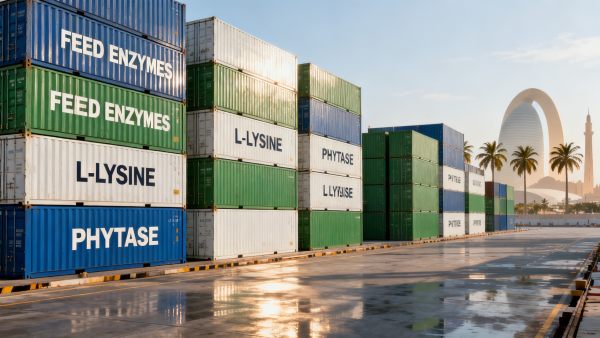
China’s feed additives exports reached 143,000 metric tons in April 2026 — a 12.7% year-on-year increase — driven by commissioning of new commercial feed pellet plants in Southeast Asia and the Middle East, according to China’s General Administration of Customs. This development signals heightened demand from overseas feed manufacturers for food-grade enzymes and high-purity amino acids, making it particularly relevant for export-oriented enzyme producers, amino acid suppliers, international feed ingredient distributors, and supply chain service providers serving emerging feed markets.
Event Overview
According to official statistics released by China’s General Administration of Customs, China exported 143,000 metric tons of feed additives in April 2026 (April 1–30), representing a 12.7% increase compared to April 2025. Among key product categories, phytase for feed use rose by 18.4%, protease by 15.2%, and lysine by 13.9%. The growth coincides with the operational ramp-up of newly built commercial feed pellet facilities across Southeast Asia and the Middle East, which are generating firm procurement demand for stable, food-grade enzymes and high-purity amino acid raw materials.
Industries Affected
Export-Oriented Enzyme Manufacturers
These companies face increased order volume for phytase and protease, especially formulations certified to food-grade stability standards. The impact manifests as tighter production scheduling, higher demand for quality documentation (e.g., ISO 22000, FAMI-QS), and pressure on lead times for export shipments.
Amino Acid Producers (Especially Lysine-Focused)
Producers supplying high-purity lysine experience elevated inquiry volumes and order intake from regional feed compounders. The impact centers on inventory planning for export-grade specifications, logistics coordination for temperature- or humidity-sensitive shipments, and compliance with destination-market labeling requirements.
International Feed Ingredient Distributors
Distributors serving Southeast Asian and Middle Eastern markets see accelerated replenishment cycles and rising customer expectations for technical support (e.g., enzyme dosing guidance, compatibility testing). The impact includes greater reliance on supplier technical data sheets and need for localized regulatory interpretation support.
Supply Chain & Logistics Service Providers
Freight forwarders, customs brokers, and cold-chain logistics partners handling feed enzyme or amino acid consignments observe higher shipment frequency to ports such as Laem Chabang (Thailand), Tanjung Pelepas (Malaysia), and Jebel Ali (UAE). The impact appears in increased documentation review volume, stricter adherence to import permit timelines, and more frequent requests for Certificate of Origin and health certificates.
What Enterprises and Practitioners Should Monitor and Do Now
Track official trade policy updates from target markets
Monitor announcements from ASEAN member states and Gulf Cooperation Council (GCC) countries regarding feed additive registration requirements, maximum residue limits, or changes to import licensing procedures — especially as new feed pellet facilities scale up operations.
Focus on three priority categories and two regions
Prioritize operational readiness for phytase, protease, and lysine exports; allocate internal resources to support sales and logistics activities targeting Southeast Asia and the Middle East specifically — not broad ‘emerging markets’ generally.
Distinguish between policy signals and actual order conversion
Recognize that plant commissioning announcements do not guarantee immediate, sustained order flow. Verify order status through confirmed purchase orders and shipping instructions — not press releases or project milestones alone.
Pre-validate documentation and logistics capacity
Confirm validity of existing export certifications (e.g., GMP, ISO, FAMI-QS) for target markets; pre-qualify freight capacity and customs brokerage partners for containerized, time-bound shipments to key regional ports ahead of anticipated Q3 2026 demand peaks.
Editorial Perspective / Industry Observation
Observably, this 12.7% export gain reflects early-stage demand traction — not yet a structural shift — tied directly to discrete infrastructure milestones (i.e., newly commissioned feed pellet plants). Analysis shows the growth is concentrated in specific enzyme and amino acid subcategories aligned with pelleted feed formulation needs, rather than broad-based across all feed additive types. From an industry perspective, it is better understood as a near-term procurement signal triggered by regional capacity expansion, rather than evidence of long-term market share gains or pricing power shifts. Continued monitoring is warranted because sustained order flow depends on operational stability of those new plants — including their raw material sourcing consistency and local regulatory compliance performance over the next 6–9 months.
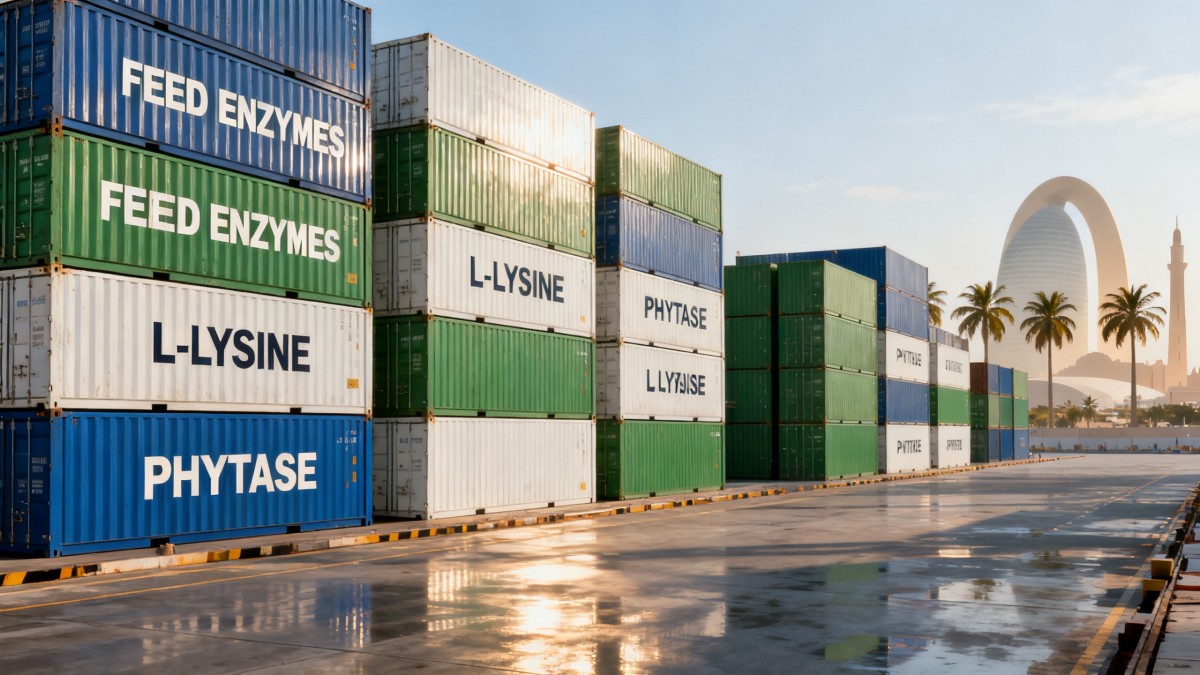
In summary, the April 2026 export data point highlights a timely, geographically focused demand pulse for select feed enzyme and amino acid products — one rooted in tangible infrastructure deployment rather than macroeconomic trends. It should be interpreted not as a generalized market upturn, but as a specific, time-bound opportunity requiring precise operational alignment with regional feed manufacturing rollout schedules.
Source: General Administration of Customs of the People’s Republic of China (official April 2026 trade statistics).
Noted for ongoing observation: Actual order fulfillment rates and repeat purchase behavior from newly commissioned feed pellet facilities in Southeast Asia and the Middle East beyond April 2026.
Related Intelligence
- Commercial Feed PelletHow to Build a Sanitary Feed Production Plan That Reduces Cross-ContaminationSanitary feed production planning: reduce cross-contamination with smarter sequencing, validated flushing, material segregation, and traceable sanitation controls.
- Commercial Feed PelletFeed Pellet Mill Sourcing: How to Vet Suppliers for Capacity, Quality, and SupportFeed pellet mill sourcing made smarter: vet suppliers for proven capacity, pellet quality, lifecycle cost, factory controls, commissioning, and reliable after-sales support.
- Commercial Feed PelletFeed Production System Price Trends: Cost Drivers and Budgeting for New LinesFeed production systems price trend insights: compare cost drivers, automation, utilities, compliance, and total ownership costs to budget smarter for new feed lines.
The Morning Broadsheet
Daily chemical briefings, market shifts, and peer-reviewed summaries delivered to your terminal.
