

The Authority in Global Agricultural Chemistry & Bio-Resources
Why feed & grain processing technology affects feed quality
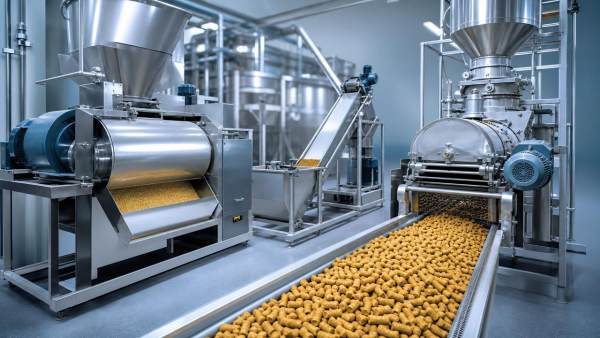
Feed & Grain processing technology shapes feed safety long before animals consume the final ration. It affects particle size, nutrient retention, moisture control, pellet strength, and microbial risk.
When processing parameters drift, feed quality becomes inconsistent. That inconsistency can reduce performance, raise waste, and create compliance issues across agricultural and industrial production systems.
This guide explains why Feed & Grain processing technology matters, which process steps influence quality most, and how to evaluate systems for better control.
What does Feed & Grain processing technology actually control?
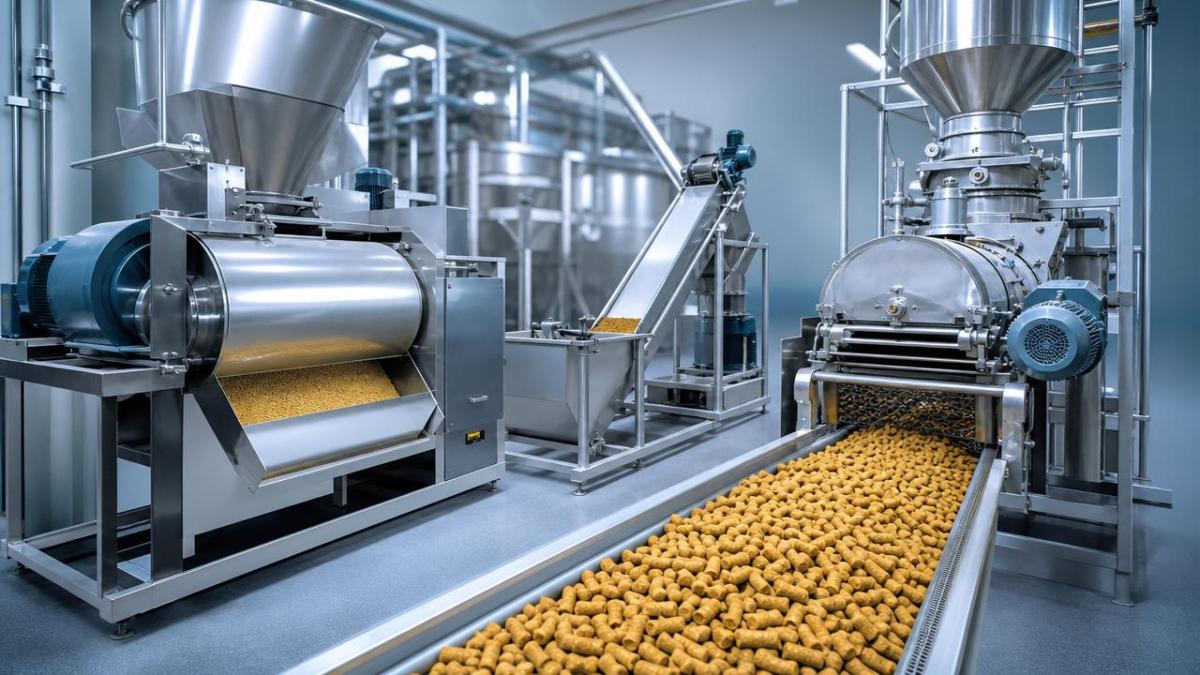
Feed & Grain processing technology is more than machinery. It is the combined control of grinding, batching, mixing, conditioning, pelleting, cooling, drying, and screening.
Each step changes the physical and chemical condition of ingredients. Small deviations in one stage often create larger problems downstream.
For example, coarse grinding can reduce digestibility. Overheating can damage heat-sensitive vitamins. Poor cooling can trap moisture and shorten shelf life.
In practical terms, Feed & Grain processing technology controls four quality foundations:
- nutritional uniformity across every batch
- physical durability during transport and storage
- biological safety against pathogens and spoilage
- documented compliance with quality standards
That is why process precision is central to feed quality, not a secondary operational detail.
Why do milling and particle size have such a strong effect on feed quality?
Particle size is one of the first major quality variables. It influences digestibility, mixing behavior, pellet formation, and ingredient separation.
If particles are too large, nutrient access can decline. If particles are too fine, dust increases and handling losses become more likely.
Uniform grinding helps every later step work better. Mixers distribute ingredients more evenly. Conditioners transfer heat more consistently. Pellet mills compress material with fewer weak spots.
Feed & Grain processing technology should therefore support repeatable size distribution, not only high throughput.
Key milling checkpoints
- screen selection matched to formula goals
- hammer or roll condition monitored regularly
- particle size testing by batch or shift
- dust management integrated with sanitation
A common mistake is chasing finer grind without measuring its effect on energy use, heat buildup, and pellet performance.
How do mixing, conditioning, and thermal treatment improve safety and consistency?
Mixing determines whether micro-ingredients, additives, and nutrients are evenly distributed. Even a well-designed formula fails if one batch is poorly blended.
Inconsistent mixing can create nutrient gaps or concentration spikes. That risk matters more when formulations include enzymes, medications, trace minerals, or specialty ingredients.
Conditioning adds moisture and heat before pelleting or extrusion. This step softens particles, activates starch changes, and supports stronger pellet formation.
Thermal treatment also helps control pathogens. Correct time, temperature, and moisture profiles can reduce microbial load and support safer feed production.
However, excessive heat can degrade amino acids, vitamins, and some functional compounds. Feed & Grain processing technology must balance kill-step effectiveness with nutrient protection.
Best-practice focus areas
- Validate mixer uniformity with routine testing.
- Control steam quality and conditioner residence time.
- Record thermal profiles for traceability.
- Review nutrient losses after major parameter changes.
What role do pelleting, cooling, and drying play in product integrity?
Pelleting improves handling, reduces ingredient segregation, and often enhances consumption efficiency. Yet pellet quality depends heavily on upstream and downstream control.
If the mash enters the die with poor conditioning, pellets may crack or generate excess fines. If the die is worn, density and shape can become inconsistent.
Cooling is equally critical. Fresh pellets leave the press warm and moist. Without proper cooling, condensation and mold risk rise quickly during storage.
Drying is especially important in specialty applications and some grain systems. Stable moisture levels protect shelf life and reduce caking or microbial growth.
Feed & Grain processing technology must manage all three stages as one quality chain. A durable pellet is not enough if moisture remains unsafe.
How does Feed & Grain processing technology support compliance and contaminant control?
Regulatory pressure is growing across feed, grain, biochemical, and primary processing sectors. Quality systems now require more than final product testing.
Modern Feed & Grain processing technology supports preventive control through monitoring, sanitation design, batch traceability, and data capture.
Critical hazards may include Salmonella, mycotoxins, cross-contact, metal fragments, chemical residues, or moisture-driven spoilage. Process design influences each one.
Examples include magnetic separation before grinding, validated heat treatment, cleanable conveyors, and automated alarms when moisture or temperature moves outside target ranges.
Documentation matters as much as hardware. Recorded settings, calibration logs, and lot tracking make audits faster and corrective action more credible.
Common compliance benefits
- clearer HACCP or preventive control validation
- better response to deviations and recalls
- more reliable sanitation verification
- stronger alignment with FDA, GMP, and export expectations
How can you judge whether a processing system is truly optimized?
A high-capacity line is not automatically a high-quality line. Optimization should be measured against repeatability, safety, waste reduction, and product outcomes.
Start by reviewing where quality losses occur most often. Frequent fines, nutrient variation, moisture complaints, or sanitation delays usually indicate process imbalance.
Then compare equipment capability with formula complexity. Specialty feeds and functional additives often need tighter control than commodity blends.
The best Feed & Grain processing technology combines mechanical reliability with measurable control points. Without data, optimization claims remain assumptions.
What mistakes most often reduce feed quality despite good equipment?
Many quality failures come from process discipline, not equipment age alone. Strong systems still fail when calibration, maintenance, and validation are weak.
The most frequent mistakes include changing formulations without adjusting settings, skipping moisture checks, and treating throughput as the only performance target.
Another common error is ignoring ingredient variability. Seasonal grain changes, oil content shifts, and different storage conditions alter process behavior.
Digital monitoring helps, but only if operators review trends and act early. A sensor alone does not improve feed quality.
Practical reminders
- revalidate settings after ingredient or formula changes
- connect maintenance schedules to quality metrics
- test pellets, moisture, and uniformity routinely
- treat sanitation as part of process design
Feed & Grain processing technology has a direct effect on feed quality because every stage changes safety, uniformity, and physical stability. Better control produces better outcomes.
The next useful step is to map the full process, identify the most sensitive quality points, and compare current performance against measurable targets.
With disciplined monitoring and optimized Feed & Grain processing technology, feed operations can reduce risk, improve consistency, and support more reliable production across the broader primary industries chain.
Related Intelligence
- Commercial Feed PelletHow to Build a Sanitary Feed Production Plan That Reduces Cross-ContaminationSanitary feed production planning: reduce cross-contamination with smarter sequencing, validated flushing, material segregation, and traceable sanitation controls.
- Commercial Feed PelletFeed Pellet Mill Sourcing: How to Vet Suppliers for Capacity, Quality, and SupportFeed pellet mill sourcing made smarter: vet suppliers for proven capacity, pellet quality, lifecycle cost, factory controls, commissioning, and reliable after-sales support.
- Commercial Feed PelletFeed Production System Price Trends: Cost Drivers and Budgeting for New LinesFeed production systems price trend insights: compare cost drivers, automation, utilities, compliance, and total ownership costs to budget smarter for new feed lines.
The Morning Broadsheet
Daily chemical briefings, market shifts, and peer-reviewed summaries delivered to your terminal.
