

The Authority in Global Agricultural Chemistry & Bio-Resources
Brazil Implements Visa-Free Entry for Chinese Business Travelers
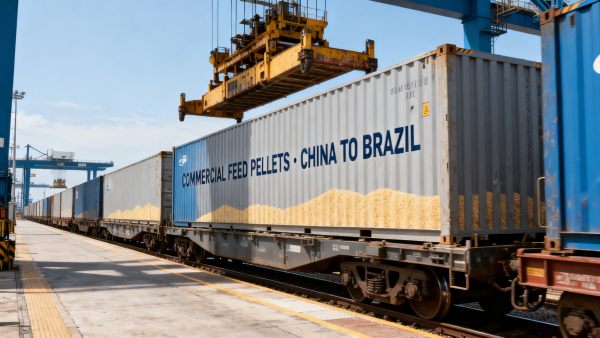
Brazil’s implementation of visa-free entry for Chinese business travelers on May 10, 2026, marks a procedural shift with tangible implications for exporters of Commercial Feed Pellets targeting the South American market. The policy directly affects feed manufacturing firms, international trade service providers, and supply chain stakeholders engaged in technical validation, factory audits, and contract finalization with Brazilian importers.
Event Overview
On May 11, 2026, the Brazilian Ministry of Foreign Affairs announced that, effective May 10, 2026, Chinese citizens traveling for business purposes are exempt from visa requirements when entering Brazil. Eligible travelers—including senior executives from Chinese feed enterprises—may enter without a visa upon presentation of a formal invitation letter and stay for up to 90 days. This measure is confirmed as officially in force as of the stated date, based on the ministry’s public statement.
Industries Affected by Segment
Direct Exporters of Commercial Feed Pellets
These enterprises face reduced friction in pre-contract engagement. Prior to the policy, arranging visa appointments, document processing, and consular review added significant lead time to technical discussions and on-site verification. With visa-free access, scheduled visits for product demonstrations, quality assurance reviews, and compliance alignment can now be initiated more responsively.
Feed Manufacturing & Quality Assurance Providers
Manufacturers supporting export-oriented feed pellet production may experience accelerated demand validation cycles. Factory audits—often required by Brazilian importers or regulatory bodies—can now be conducted within shorter planning windows. This may influence internal resource allocation for audit readiness, documentation standardization (e.g., ISO, GMP, or local sanitary certifications), and multilingual technical briefing preparation.
International Trade Support & Logistics Service Providers
Freight forwarders, customs brokers, and certification agencies serving China–Brazil feed trade may observe increased request volume for time-sensitive services: expedited phytosanitary certificate processing, bilingual labeling compliance checks, and port-of-entry documentation coordination. The compressed decision timeline implies tighter synchronization between commercial agreement signing and shipment scheduling.
What Relevant Enterprises or Practitioners Should Monitor and Act On
Track official implementation guidance from both sides
While the exemption is confirmed, practical execution details—including accepted invitation letter formats, permissible business activities under the waiver, and entry point requirements—remain subject to interpretation by Brazilian immigration authorities. Companies should monitor updates issued by the Brazilian Consulate General in China and the Chinese Ministry of Commerce’s outbound trade advisories.
Align internal processes with the new 68-day procurement cycle benchmark
Analysis shows the average procurement decision cycle for Commercial Feed Pellets in this corridor is now estimated at 68 days, down from 112 days. Exporters should review internal timelines for quotation response, sample dispatch, third-party lab testing turnaround, and contract legal review to ensure alignment with this revised expectation.
Distinguish policy intent from operational readiness on the ground
Observably, the visa waiver removes one administrative barrier—but does not alter import regulations, sanitary standards, or tariff classifications in Brazil. Enterprises must continue verifying product registration status with the Brazilian Ministry of Agriculture (MAPA) and confirming importer licensing validity prior to shipment.
Prepare for higher-frequency, shorter-notice business travel
From an operational standpoint, companies may need to adjust travel protocols: pre-authorizing frequent traveler profiles, maintaining updated digital copies of company registration documents and invitation templates, and designating staff trained in Brazilian feed import requirements to accompany technical visits.
Editorial Perspective / Industry Observation
This development is better understood as a logistical enabler rather than a market-access expansion. It does not lower tariffs, waive technical barriers, or guarantee increased demand—it simply reduces latency in human-mediated commercial steps. Analysis shows its primary value lies in improving predictability and reducing uncertainty in cross-border negotiation cadence. Current observation suggests it functions more as a signal of bilateral administrative alignment than as an immediate growth catalyst. Continued monitoring is warranted, particularly regarding whether similar waivers extend to other agri-input categories or whether Brazil introduces parallel facilitation measures for cargo clearance or regulatory approval pathways.
Conclusion
For Commercial Feed Pellet exporters engaging Brazil, the visa exemption represents a measurable reduction in procedural drag—not a structural shift in market opportunity. Its significance is operational, not strategic. It should be interpreted as a window to optimize existing engagement workflows, not as an indicator of imminent demand surge or regulatory liberalization. Enterprises are advised to treat it as a timing calibration tool, not a market entry trigger.
Information Sources
Main source: Official announcement by the Brazilian Ministry of Foreign Affairs, published May 11, 2026.
Note: Implementation details—including acceptable invitation formats, scope of permitted business activities, and potential exclusions—are still being clarified and require ongoing observation.
Related Intelligence
- Commercial Feed PelletHow to Build a Sanitary Feed Production Plan That Reduces Cross-ContaminationSanitary feed production planning: reduce cross-contamination with smarter sequencing, validated flushing, material segregation, and traceable sanitation controls.
- Commercial Feed PelletFeed Pellet Mill Sourcing: How to Vet Suppliers for Capacity, Quality, and SupportFeed pellet mill sourcing made smarter: vet suppliers for proven capacity, pellet quality, lifecycle cost, factory controls, commissioning, and reliable after-sales support.
- Commercial Feed PelletFeed Production System Price Trends: Cost Drivers and Budgeting for New LinesFeed production systems price trend insights: compare cost drivers, automation, utilities, compliance, and total ownership costs to budget smarter for new feed lines.
The Morning Broadsheet
Daily chemical briefings, market shifts, and peer-reviewed summaries delivered to your terminal.
