

The Authority in Global Agricultural Chemistry & Bio-Resources
IMO Updates Carbon Footprint Rules for Marine Aeration & Water Tech
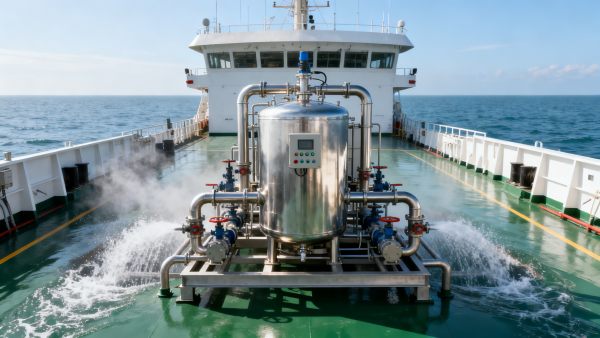
On 10 May 2026, the International Maritime Organization (IMO) adopted Resolution MEPC.387(81), amending the Guidelines for Life Cycle Assessment of Shipboard Water Treatment Equipment. The revision introduces mandatory carbon footprint reporting requirements for aeration and water treatment equipment used on vessels—targeting export compliance, supply chain transparency, and decarbonization accountability across global maritime markets.
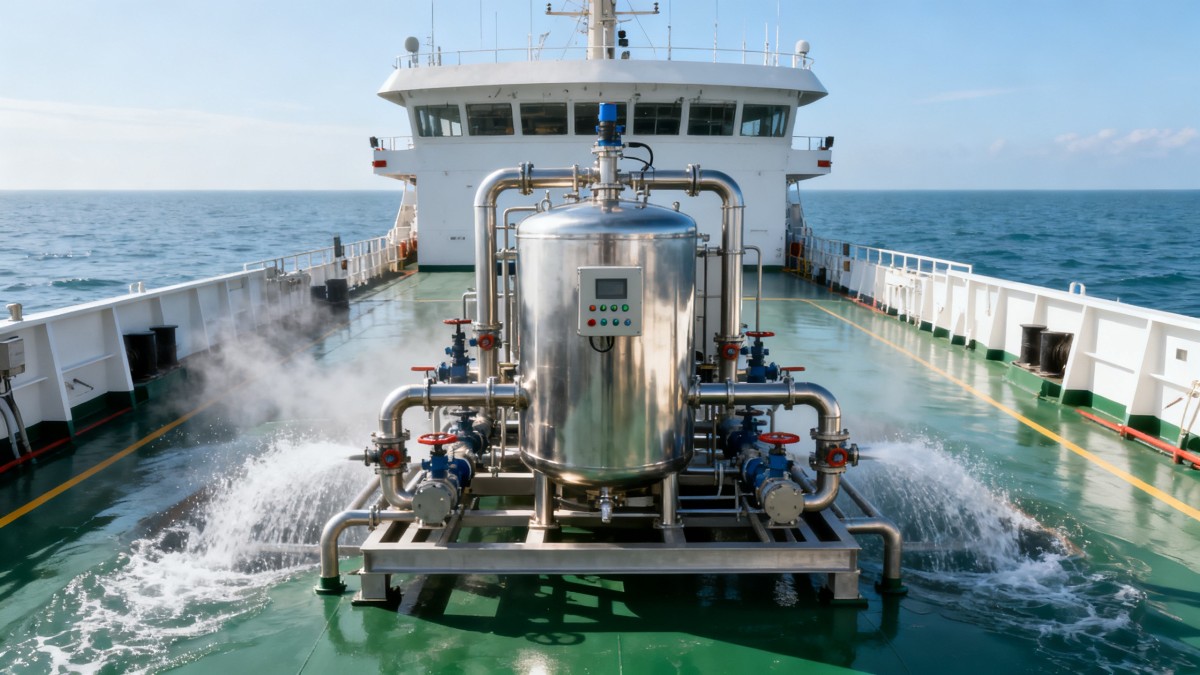
Event Overview
The IMO formally issued Resolution MEPC.387(81) on 10 May 2026. It revises the Guidelines for Life Cycle Assessment of Shipboard Water Treatment Equipment, specifying that all aeration and water treatment equipment exported to IMO contracting states must be accompanied by a verified Life Cycle Assessment (LCA) report from an accredited third party—DNV or Lloyd’s Register (LR)—effective 1 January 2027. The LCA must cover four stages: raw material extraction, manufacturing and transport, operational energy use, and end-of-life recovery or disposal. Chinese exporters are explicitly advised to initiate preparation of Environmental Product Declarations (EPDs) in advance.
Industries Affected
This regulatory update impacts multiple segments along the marine environmental technology value chain—not as uniform pressure, but with differentiated exposure and timing.
Direct Exporters (OEMs & Trading Companies)
Export-oriented manufacturers and trading firms supplying aeration or water treatment systems to IMO member states face immediate compliance risk. From 2027, customs clearance and type approval in key markets—including EU, South Korea, Japan, and Singapore—will require validated LCA documentation. Non-compliance may result in shipment delays, rejection at port, or loss of tender eligibility for vessel retrofit or newbuild contracts.
Raw Material Suppliers
Suppliers of stainless steel, titanium alloys, polymer membranes, and specialized electrodes now face upstream data requests. Buyers will increasingly demand primary emission factors, traceable sourcing certifications (e.g., low-carbon steel declarations), and supplier-level EPD readiness. This shifts negotiation leverage toward environmentally transparent vendors—and raises due diligence costs for smaller suppliers lacking LCA capacity.
Equipment Manufacturers (System Integrators & Assemblers)
Manufacturers integrating components into certified aeration units must re-evaluate bill-of-materials (BOM) transparency and internal energy accounting. Operational-phase emissions—especially electricity consumption during continuous aeration cycles—now require real-world duty-cycle validation, not just nameplate ratings. Retrofitting legacy production lines with energy metering or switching to low-GWP refrigerants (where applicable) may become necessary for full LCA alignment.
Supply Chain Service Providers
LCA verification bodies, EPD program operators (e.g., IBU, EPD International), and logistics partners offering green transport documentation (e.g., verified biofuel bunkering logs, ISO 14083-compliant freight reports) stand to gain new service demand. Conversely, conventional certification agencies without LCA accreditation capability may see declining relevance unless they expand scope through partnerships or internal upskilling.
Key Focus Areas & Recommended Actions
Initiate LCA scoping with accredited providers before Q4 2026
DNV and LR have confirmed limited capacity for marine equipment LCAs in early 2027. Early scoping—including defining system boundaries, selecting functional units (e.g., kg O₂ delivered per kWh), and identifying critical hotspots—reduces timeline risk. Pilot assessments on best-selling models are advisable.
Prioritize EPD development aligned with ISO 14040/14044 and EN 15804
While not yet mandatory under MEPC.387(81), EPDs serve as the foundational document for LCA verification and are increasingly required in public procurement. Chinese exporters should engage EPD program operators familiar with both GB/T 33761 and international Type III EPD rules to avoid rework.
Map and engage Tier-2 material suppliers on emission data sharing
Over 60% of cradle-to-gate emissions for marine aeration units stem from materials. Manufacturers should formalize data-sharing protocols with foundries, extruders, and membrane fabricators—including contractual clauses enabling periodic updates to emission factors based on grid mix or process changes.
Editorial Perspective / Industry Observation
Observably, this amendment marks a structural shift—not merely a reporting add-on. Unlike previous IMO guidance focused on end-of-pipe emissions (e.g., NOx, SOx), MEPC.387(81) embeds climate accountability into product design and procurement logic. Analysis shows that fewer than 12% of Chinese marine equipment exporters currently hold externally verified LCAs; the gap suggests a 12–18 month lead time for systemic readiness. More critically, the rule treats ‘water treatment’ and ‘aeration’ as unified functional categories—despite differing energy intensities—potentially compressing margins for lower-efficiency technologies unless innovation accelerates.
Conclusion
This update signals that carbon literacy is no longer optional for marine environmental tech suppliers—it is becoming a condition of market access. While compliance deadlines appear distant, the data infrastructure, supplier engagement, and cross-functional coordination required are already time-bound. For the industry, the regulation is less about penalty avoidance and more about recalibrating competitiveness around verifiable sustainability performance.
Source Attribution & Ongoing Monitoring
Official source: IMO MEPC.387(81), adopted 10 May 2026, published via IMO Circular Letter No. 4525. Additional reference: DNV Guidance Note “LCA for Marine Water Systems” (Issue 2.1, June 2026); LR Rule Note RN-0187 (July 2026).
Areas under active review: potential extension to non-aeration auxiliary systems (e.g., ballast water treatment, ozone generators); alignment discussions with EU ETS maritime scope and upcoming FuelEU Maritime enforcement timelines.
Related Intelligence
- Aeration & Water TechHow Water Treatment Research Guides Technology Selection for Industrial Wastewater ProjectsWater treatment research guides smarter industrial wastewater technology selection. Learn how to assess variable streams, pilot risks, compare process trains, and reduce compliance costs.
- Aeration & Water TechSelecting Solids Filtration for Aquaculture: Flow Rates, Loading, and Fish WelfareSolids filtration aquaculture guide: compare flow rates, peak loading, capture performance, maintenance, and fish welfare to choose a reliable system.
- Aeration & Water TechWhat RO water treatment systems deliver consistent 98% salt rejection at 25°C with feed TDS over 3,000 ppm?RO water treatment systems that deliver proven 98% salt rejection at 25°C with >3,000 ppm TDS—engineered for API synthesis, aquaculture & grain processing.
The Morning Broadsheet
Daily chemical briefings, market shifts, and peer-reviewed summaries delivered to your terminal.
