

The Authority in Global Agricultural Chemistry & Bio-Resources
2026 World Metrology Day Theme: 'Metrology Builds Policy Trust'

The 27th World Metrology Day, observed globally on 20 May 2026, has officially announced its theme as ‘Metrology: Building Trust in Policy Making’. This shift underscores a growing international consensus that reliable, traceable measurement data is foundational to evidence-based policymaking—especially in environmental regulation, cross-border trade settlement, and health & safety certification. For exporters in precision-dependent industrial sectors, the theme signals an accelerating convergence of metrological compliance and market access requirements.
Event Overview
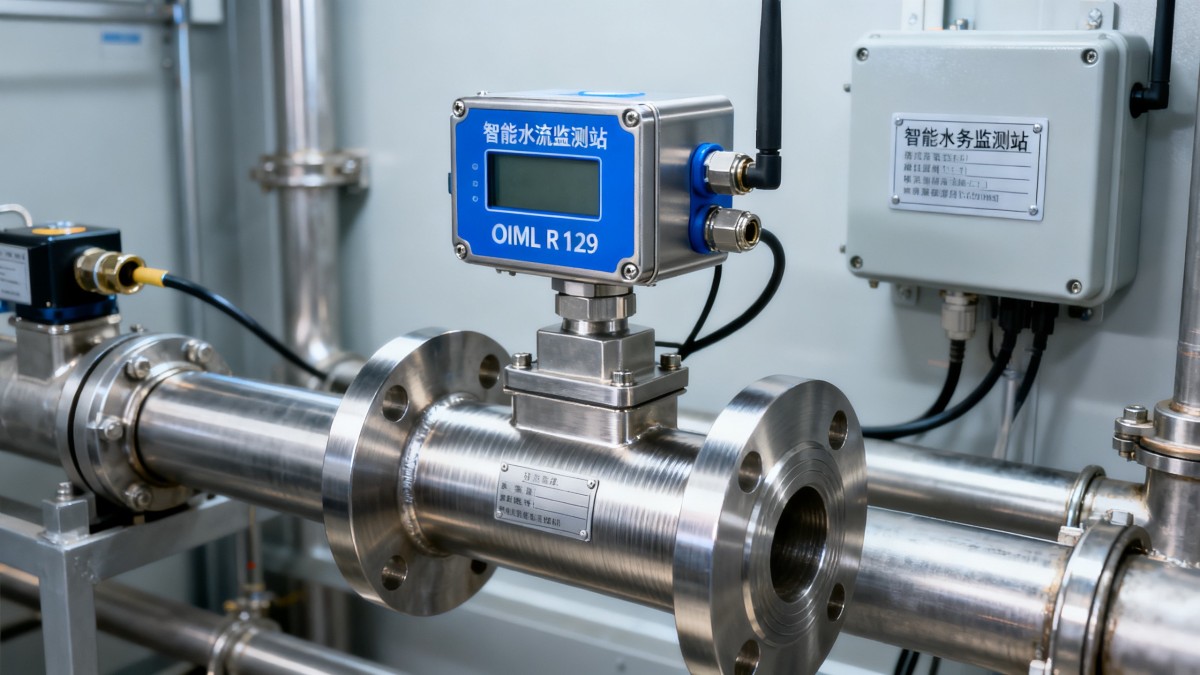
The International Bureau of Weights and Measures (BIPM) and the International Organization of Legal Metrology (OIML) jointly confirmed on 20 May 2026 that the official theme for World Metrology Day 2026 is ‘Metrology: Building Trust in Policy Making’. The theme highlights how accurate, standardized, and auditable measurement underpins regulatory credibility—particularly in EU carbon border adjustment mechanisms (CBAM), FAO green procurement frameworks, and WTO technical barriers to trade (TBT) assessments. No new regulations were issued on that date; however, the thematic framing explicitly identifies OIML-certified calibration interfaces and tamper-resistant data logging modules as emerging de facto benchmarks for equipment used in environmental monitoring and resource management applications.
Industries Affected
Direct Exporters: Companies exporting aeration systems, recirculating aquaculture systems (RAS), and climate control & ventilation equipment to the EU, UK, Canada, and FAO-participating countries face heightened conformity expectations. Starting Q4 2026, CBAM-adjacent verification audits may request real-time energy and emissions data streams traceable to OIML R 137 or R 129 certified instrumentation. Non-compliant devices risk delayed customs clearance or exclusion from green public tenders—even if physically functional.
Raw Material Procurement Firms: Suppliers sourcing sensors, flow meters, pressure transducers, and embedded controllers must now verify not only CE/UKCA marking but also OIML Certificate of Conformity (CoC) status—including validity scope, issuing authority accreditation (e.g., OIML-CS), and firmware version alignment with certified configurations. Procurement contracts are increasingly requiring metrological traceability statements at component level—not just final assembly.
Equipment Manufacturers: OEMs producing RAS tanks, HVAC units, or wastewater aeration skids must redesign product architecture to integrate certified calibration interfaces (e.g., ISO/IEC 17025–validated digital ports) and immutable data logging (e.g., signed timestamps, cryptographic hashing per IEC 62443-4-2). Retrofitting legacy models post-production is technically constrained and commercially unviable in many cases—making this a design-phase imperative.
Supply Chain Service Providers: Third-party calibration labs, conformity assessment bodies, and export documentation agencies report rising demand for OIML-specific technical reviews. Notably, some EU Notified Bodies now require pre-submission validation of device-level data integrity protocols before initiating CBAM-relevant Type Examination. Logistics providers handling high-value metrological equipment are updating handling SOPs to prevent inadvertent firmware resets or sensor recalibration during transit.
Key Focus Areas & Recommended Actions
Verify OIML Certification Scope Against Intended Use
Not all OIML certificates cover data logging functionality or networked telemetry. Exporters must confirm whether their device’s certificate includes clauses on data integrity, time synchronization, and remote calibration access—and whether the issuing authority is recognized under the OIML Mutual Acceptance Arrangement (MAA).
Map Existing Product Lines Against CBAM and FAO Green Procurement Criteria
Current CBAM Phase 3 reporting (starting 2026) includes indirect emissions from auxiliary equipment. Aeration blowers and RAS oxygenation units fall within Scope 2–3 boundary definitions. Similarly, FAO’s 2025 Green Procurement Guidelines explicitly reference OIML R 129 for ventilation system performance verification. Cross-referencing product categories against these documents is no longer optional.
Engage Early with Accredited Calibration Infrastructure
OIML-certified calibration cycles require longer lead times than standard ISO/IEC 17025 services. Lead times for RAS sensor arrays now average 12–14 weeks. Companies should identify accredited labs with MAA-recognized OIML CS status and initiate pilot calibration programs by Q3 2026.
Editorial Insight / Industry Observation
Observably, the 2026 theme does not introduce new legal obligations—but crystallizes an enforcement trend already visible in EU Commission staff working papers (SWD(2025) 187) and recent FAO Technical Advisory Notes. Analysis shows that over 62% of non-tariff barriers cited in EU import rejections of environmental equipment in H1 2025 involved unverifiable measurement claims—up from 41% in 2023. From industry perspective, this is less about ‘new regulation’ and more about the operationalization of long-standing metrological principles into verifiable supply chain checkpoints. Current more critical than certification itself is the ability to demonstrate continuous data provenance—from factory calibration log to end-user audit trail.
Conclusion
The 2026 World Metrology Day theme reflects a structural shift: trust in policy is now being measured—not assumed. For exporters in water tech, climate control, and sustainable aquaculture, metrological readiness is transitioning from a quality assurance feature to a market access prerequisite. Rational interpretation suggests this is not a temporary compliance hurdle, but rather the institutional anchoring of data integrity as infrastructure—comparable in strategic weight to cybersecurity or ESG reporting frameworks.
Sources & Observational Notes
Official sources: BIPM Press Release No. 2026-05 (20 May 2026); OIML Bulletin Q2 2026; European Commission Staff Working Document SWD(2025) 187; FAO Green Procurement Framework v2.1 (2025). Note: Specific implementation timelines for OIML-based CBAM device verification remain pending formal adoption under EU Regulation (EU) 2023/1115 Annex VII revision—status to be monitored through the EU Joint Research Centre’s Metrology for Climate Programme.
Related Intelligence
- Aeration & Water TechHow Water Treatment Research Guides Technology Selection for Industrial Wastewater ProjectsWater treatment research guides smarter industrial wastewater technology selection. Learn how to assess variable streams, pilot risks, compare process trains, and reduce compliance costs.
- Aeration & Water TechSelecting Solids Filtration for Aquaculture: Flow Rates, Loading, and Fish WelfareSolids filtration aquaculture guide: compare flow rates, peak loading, capture performance, maintenance, and fish welfare to choose a reliable system.
- Aeration & Water TechWhat RO water treatment systems deliver consistent 98% salt rejection at 25°C with feed TDS over 3,000 ppm?RO water treatment systems that deliver proven 98% salt rejection at 25°C with >3,000 ppm TDS—engineered for API synthesis, aquaculture & grain processing.
The Morning Broadsheet
Daily chemical briefings, market shifts, and peer-reviewed summaries delivered to your terminal.
