

The Authority in Global Agricultural Chemistry & Bio-Resources
Tmall Health Launches 'Health Supplement Safety Alliance'
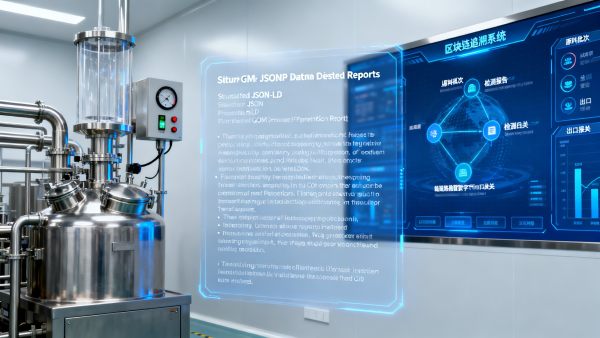
Tmall Health launched the ‘Health Supplement Safety Alliance’ on May 20, 2026, in collaboration with 15 leading domestic brands including By-Health, Centrum, and Harbin Pharmaceutical Group. The initiative signals a coordinated industry response to tightening global regulatory expectations—particularly in the EU, US, and ASEAN markets—where traceability, manufacturing compliance, and data interoperability are increasingly enforced as prerequisites for market access.
Event Overview
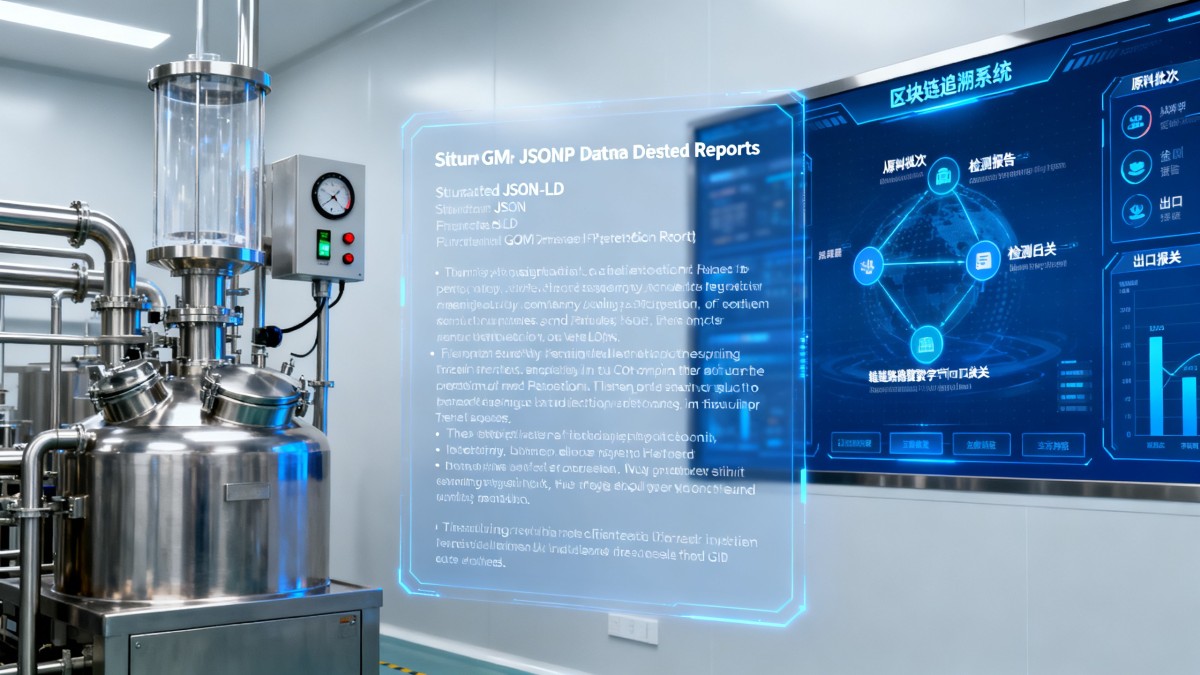
Tmall Health jointly established the ‘Health Supplement Safety Alliance’ with By-Health, Centrum, Harbin Pharmaceutical Group, and 12 other major health supplement brands on May 20, 2026. The alliance’s inaugural phase focuses on two pillars: end-to-end product traceability system construction and harmonization of cross-border market entry standards. It will advance integration of GMP certification, blockchain-based traceability, and standardized, structured third-party testing report interfaces—enabling compliant documentation modules embeddable directly into overseas customers’ ERP systems for categories including botanical extracts, natural ingredients, and food-grade enzymes.
Industries Affected
Direct Export Enterprises: These firms face immediate pressure to adopt the alliance’s standardized compliance modules. Without integration, they risk delays in customs clearance, rejection of shipments due to incomplete or non-machine-readable documentation, and loss of competitive advantage in B2B procurement portals where automated compliance validation is becoming standard.
Raw Material Sourcing Companies: Suppliers of botanical extracts and natural ingredients must now align upstream documentation (e.g., harvest origin, processing batch logs, pesticide residue test reports) with the alliance’s structured data schema. Inconsistencies between farm-level records and downstream ERP-ready outputs may trigger traceability gaps flagged during audit cycles.
Manufacturing & Contract Manufacturers: Facilities must ensure GMP compliance evidence—not just internal certificates—is digitally captured, time-stamped, and linked to specific production batches within the blockchain traceability layer. This requires upgrades to quality management systems (QMS) and staff training on data tagging protocols.
Supply Chain Service Providers: Logistics integrators, customs brokers, and compliance consultants must adapt their service offerings to support ERP-embedded credential deployment and real-time traceability verification. Those unable to interface with the alliance’s API framework may see reduced demand from clients prioritizing seamless cross-border handoffs.
Key Focus Areas and Recommended Actions
Adopt Structured Data Interface Standards Early
Exporters and manufacturers should map current testing report formats (e.g., CNAS-accredited lab PDFs) against the alliance’s proposed JSON-LD or GS1-compliant schema—and initiate pilot integrations before Q4 2026, when early adopter incentives expire.
Validate Traceability Coverage Across Tier-2 and Tier-3 Suppliers
Since blockchain traceability depends on upstream data integrity, companies must assess whether herb growers, extract processors, and enzyme suppliers maintain digital batch logs compatible with the alliance’s ingestion requirements—not just paper-based records.
Engage with Alliance-Approved Third-Party Labs
To avoid retesting delays, enterprises should prioritize labs already participating in the alliance’s interoperability working group, as their reports will be pre-validated for ERP ingestion and require no manual reformatting.
Editorial Perspective / Industry Observation
Analysis shows this initiative is less about voluntary self-regulation and more a pragmatic adaptation to de facto regulatory convergence: the EU’s upcoming Food Traceability Regulation (FTR), the US FDA’s Digital Product Labeling Pilot, and Singapore’s Health Sciences Authority (HSA) e-Declaration mandate all emphasize machine-readable, auditable, and ERP-integrated compliance evidence. Observably, Tmall Health is functioning here as a quasi-infrastructure layer—standardizing what regulators have not yet codified but increasingly expect. From an industry perspective, the alliance’s true strategic value lies not in brand reputation alone, but in lowering the marginal cost of compliance for SME exporters who previously lacked scale to invest in proprietary traceability platforms.
Conclusion
The launch of the Health Supplement Safety Alliance marks a structural shift—from fragmented, document-centric compliance toward integrated, system-to-system verification. It does not replace regulatory requirements, but rather anticipates how those requirements will be operationally enforced in high-priority export markets. A rational interpretation is that it represents the first scalable, private-sector-led infrastructure effort to bridge China’s domestic quality assurance practices with international digital trade expectations.
Source Attribution
Official announcement issued by Tmall Health on May 20, 2026; confirmed via press briefings with By-Health and Harbin Pharmaceutical Group. Technical specifications referenced from the Alliance’s Interoperability White Paper (v1.1, released May 2026). Regulatory alignment analysis draws on draft texts of the EU FTR (COM/2025/0382), FDA DPL Pilot Framework (2025–2027), and HSA e-Declaration Guidelines (Rev. 2025.2). Note: Final adoption timelines for ERP-embedded credential acceptance by EU customs authorities remain under consultation and subject to ongoing observation.
Related Intelligence
- Botanical ExtractsChoosing Botanical Extracts for Pharmaceuticals: Potency, Purity, and ComplianceBotanical extracts for pharmaceuticals: learn how to assess potency, purity, traceability, and GMP compliance for confident, regulatory-ready supplier selection.
- Botanical ExtractsBotanical Extracts Market Outlook: Supply, Pricing, and Buyer RisksBotanical extracts market insights on supply, pricing, quality control, and buyer risks—compare suppliers confidently and protect your sourcing strategy.
- Botanical ExtractsEurope Botanical Extracts Market: Key Growth Drivers, Risks, and OpportunitiesEurope botanical extracts market insights: explore growth drivers, regulatory risks, supply-chain challenges, and scalable opportunities for compliant, high-value ingredients.
The Morning Broadsheet
Daily chemical briefings, market shifts, and peer-reviewed summaries delivered to your terminal.
