

The Authority in Global Agricultural Chemistry & Bio-Resources
CDEPE 2026 Opens in Chengdu, Accelerating Green Tech Export
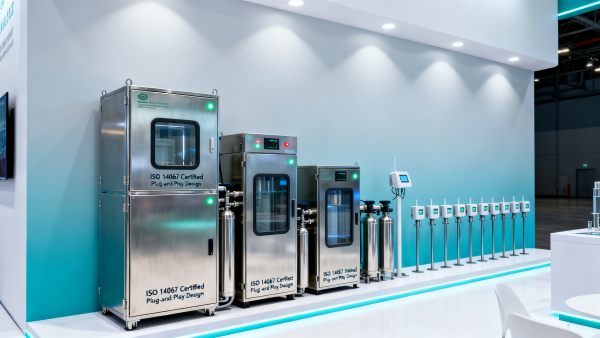
The 2026 Chengdu International Environmental Protection Expo (CDEPE 2026) opened on May 20, 2026, marking a timely inflection point for China’s environmental technology sector amid tightening global decarbonization mandates and rising overseas procurement demand—particularly from Southeast Asia, the Middle East, and Latin America. The event signals intensified policy alignment between domestic green industrial upgrading and outbound market access support mechanisms.
Event Overview
CDEPE 2026 was held in Chengdu from May 20 to 22, 2026. It focused on water treatment, air pollution control, solid waste resource recovery, smart water management, and industrial decarbonization. A total of 300 Chinese green technology enterprises participated, including Geneco Environment, Schröder Industrial Group, and Luheng Environment. Concurrent events included the ‘Israel Smart Water Technology Seminar’ and the Chengdu–Deyang–Meishan–Ziyang Equipment Manufacturing Surface Treatment Supply-Demand Matching Conference. The expo explicitly opened technical adaptation and project implementation channels for importers and EPC contractors from Southeast Asia, the Middle East, and Latin America.
Industries Affected
Direct Trade Enterprises: Export-oriented environmental equipment and solution providers face expanded market entry opportunities—but also heightened pressure to meet region-specific certification, language-localized documentation, and after-sales service infrastructure requirements. The expo’s dedicated procurement matchmaking with overseas buyers directly lowers customer acquisition costs, yet increases urgency around compliance readiness.
Raw Material Procurement Enterprises: Suppliers of high-performance membranes, corrosion-resistant alloys, sensor components, and low-carbon catalysts are seeing upstream demand signals shift toward export-grade specifications (e.g., ISO 14067-compliant EPDs, REACH-conformant chemistries). This may accelerate qualification timelines and require earlier engagement with foreign regulatory frameworks.
Manufacturing Enterprises: OEMs and system integrators involved in water treatment skids, flue gas scrubbers, or modular waste-to-energy units must now align production planning with dual-track standards: domestic GB/T benchmarks and international performance thresholds (e.g., EU BAT conclusions, U.S. EPA MACT). The expo’s emphasis on ‘project落地’ implies growing demand for factory-integrated commissioning support—not just hardware supply.
Supply Chain Service Providers: Logistics firms specializing in oversized environmental equipment, customs brokers with green tariff classification expertise, and technical translation/localization vendors are experiencing increased inquiry volume—especially for Spanish, Arabic, and Bahasa Indonesia language pairs. However, capacity remains fragmented, suggesting near-term bottlenecks in cross-border technical handover.
Key Focus Areas and Recommended Actions
Verify Regional Regulatory Pathways Before Engagement
Attendees should not assume ‘open access’ equals harmonized approval. For example, Israeli smart water protocols referenced in the seminar differ significantly from ASEAN’s ASEAN Harmonized Standard for IoT-enabled metering. Firms must map target-market conformity assessment routes—including third-party verification bodies accepted locally—prior to initiating buyer dialogues.
Prioritize Modular & Scalable System Designs
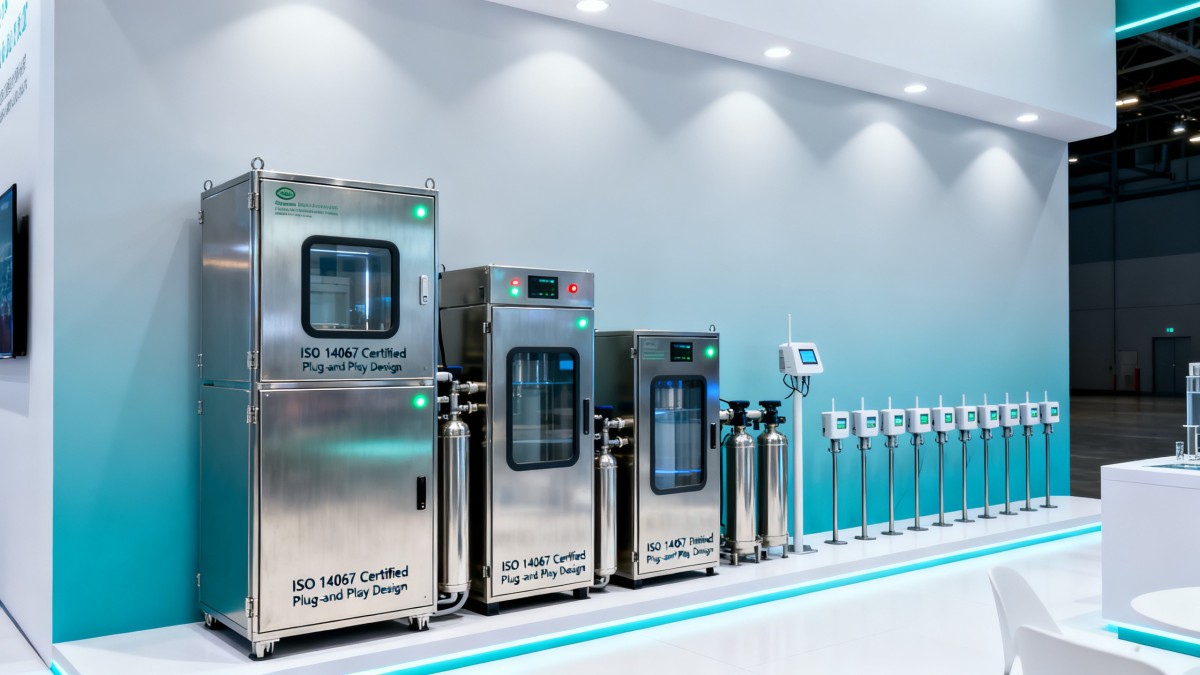
Feedback from Southeast Asian and Latin American delegations emphasized preference for plug-and-play, containerized solutions with remote diagnostics. Companies should assess whether their current product architecture supports rapid configuration for varying grid voltages, water quality baselines, or local maintenance skill levels.
Engage Early with Local Implementation Partners
The Chengdu–Deyang–Meishan–Ziyang surface treatment matching session highlighted that overseas projects increasingly require joint ventures or technology licensing—not just equipment sales. Manufacturers should identify qualified regional partners during the expo’s B2B sessions rather than post-event outreach.
Editorial Perspective / Industry Observation
Observably, CDEPE 2026 reflects a structural pivot: Chinese environmental tech is transitioning from ‘policy-driven domestic deployment’ to ‘market-driven global integration’. Analysis shows this shift is not merely about export volume—it’s about redefining value capture points along the lifecycle: from hardware sale → installation supervision → performance-based O&M contracts → data-as-a-service. What’s notable is the absence of broad-based financial incentives announced at the event; instead, emphasis fell on operational enablers (e.g., standardized technical dossiers, multilingual engineering support pools). This suggests policymakers now view market access as a coordination challenge—not a subsidy gap.
Conclusion
CDEPE 2026 does not signal a sudden opening of overseas markets, but rather the institutionalization of a more systematic, standards-aware pathway for green technology export. For industry participants, the takeaway is not ‘more orders’, but ‘higher readiness thresholds’. Success will depend less on product novelty and more on interoperability discipline, regulatory foresight, and localized delivery capability.
Source Attribution
Official announcements from Chengdu Municipal Bureau of Ecology and Environment and CDEPE Organizing Committee (May 2026); confirmed participant list published on cdepe-expo.com; session agendas and bilateral MOU summaries released via Sichuan Provincial Department of Commerce. Note: Specific procurement volumes, contract values, and foreign delegation attendance figures remain pending official release and are under continuous observation.
Related Intelligence
- Aeration & Water TechHow Water Treatment Research Guides Technology Selection for Industrial Wastewater ProjectsWater treatment research guides smarter industrial wastewater technology selection. Learn how to assess variable streams, pilot risks, compare process trains, and reduce compliance costs.
- Aeration & Water TechSelecting Solids Filtration for Aquaculture: Flow Rates, Loading, and Fish WelfareSolids filtration aquaculture guide: compare flow rates, peak loading, capture performance, maintenance, and fish welfare to choose a reliable system.
- Aeration & Water TechWhat RO water treatment systems deliver consistent 98% salt rejection at 25°C with feed TDS over 3,000 ppm?RO water treatment systems that deliver proven 98% salt rejection at 25°C with >3,000 ppm TDS—engineered for API synthesis, aquaculture & grain processing.
The Morning Broadsheet
Daily chemical briefings, market shifts, and peer-reviewed summaries delivered to your terminal.
