

The Authority in Global Agricultural Chemistry & Bio-Resources
Zhengzhou–Hamburg Cold-Chain Train Cuts Smart Greenhouse Component Delivery to 18 Days
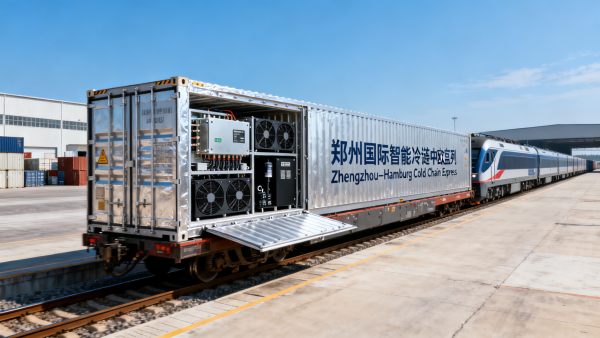
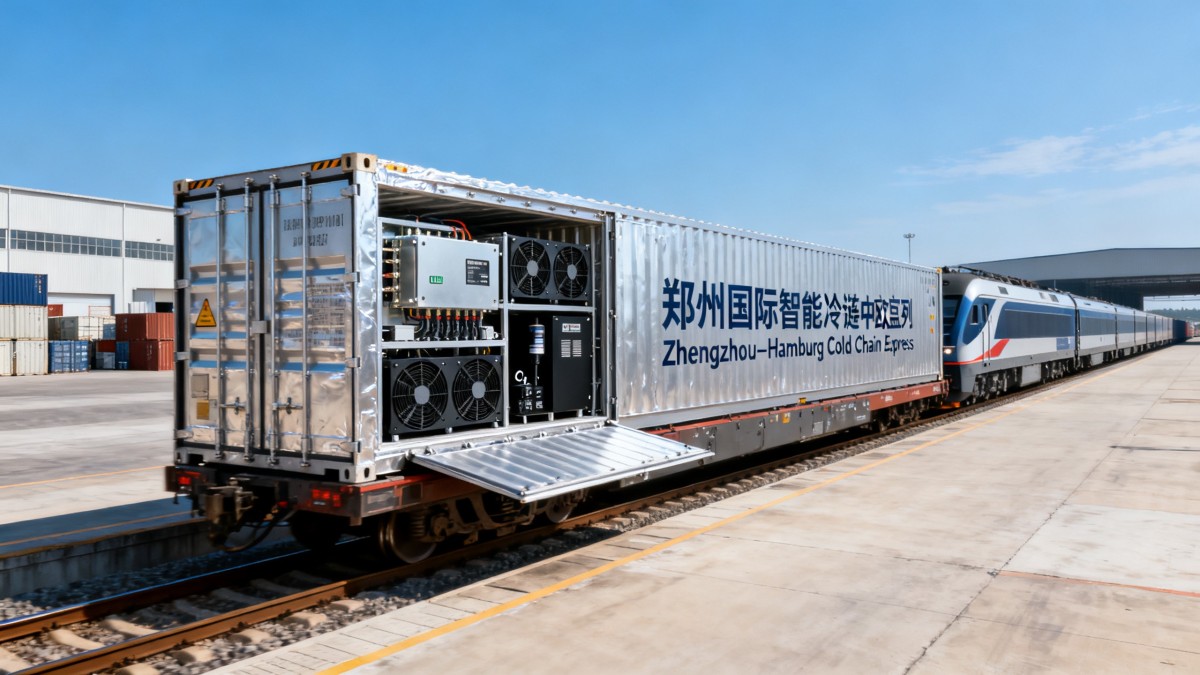
On May 9, 2026, the Zhengzhou International Land Port launched the first dedicated smart cold-chain train on the Zhengzhou–Hamburg China-Europe Railway Express route. This development marks a structural shift in cross-border logistics for high-precision horticultural automation components — particularly for greenhouse technology suppliers serving European controlled-environment agriculture markets.
Event Overview
On May 9, 2026, the Zhengzhou International Land Port inaugurated the inaugural China-Europe Railway Express (Zhengzhou–Hamburg) intelligent cold-chain train. The service is purpose-built to transport Smart Greenhouse temperature-control components — including PLC-based thermal control modules, CO₂ sensors, and variable-frequency fans — under strict 2–8°C conditions throughout transit. Real-time GPS and IoT monitoring ensure end-to-end temperature integrity. Compared with maritime shipping (45 days) and air freight (high cost), this rail solution achieves an 18-day delivery cycle and reduces freight costs by 37%. Initial commercial traction includes bulk orders from Dutch company Priva and German firm HortiMaX.
Industries Affected
Direct Trading Enterprises
Export-oriented suppliers of greenhouse automation systems — especially those targeting EU Tier-1 integrators — now face recalibrated lead-time expectations. The 18-day rail option compresses order-to-delivery windows significantly, enabling tighter demand forecasting and faster response to seasonal planting cycles. However, it also raises customer expectations for consistent scheduling reliability and documentation compliance across EU customs and phytosanitary regimes.
Raw Material Procurement Enterprises
Suppliers sourcing precision electronic subcomponents (e.g., industrial-grade sensors, embedded controllers) for final assembly into greenhouse control units are affected indirectly but materially. Shorter finished-goods delivery timelines pressure upstream procurement cycles: inventory buffers may shrink, just-in-time sourcing becomes more viable, and regional supplier diversification gains strategic weight — especially where dual-sourcing or nearshoring mitigates rail schedule volatility.
Manufacturing Enterprises
OEMs and contract manufacturers assembling Smart Greenhouse control cabinets must adapt production planning to accommodate shorter inbound component lead times and tighter outbound dispatch windows. The reduced 18-day cycle enables leaner finished-goods inventory, but also demands greater synchronization between production scheduling, quality assurance (especially for temperature-sensitive electronics), and export documentation readiness.
Supply Chain Service Providers
Third-party logistics providers, customs brokers, and cold-chain certification agencies face intensified demand for integrated rail-specific services: pre-clearance coordination with German and Polish authorities, IoT data integration into client dashboards, and validation of temperature compliance per EN 16329:2021 standards. The success of this pilot may accelerate standardization of rail-based cold-chain protocols across the China-Europe corridor.
Key Considerations and Recommended Actions
Validate End-to-End Cold-Chain Certification Requirements
Enterprises must verify whether their current ISO 22000 or EN 16329-compliant packaging and monitoring systems meet the operational specifications required by the Zhengzhou–Hamburg cold-chain train — particularly regarding sensor calibration traceability, data logging frequency, and handover-point temperature verification protocols.
Reassess Inventory Strategy Across Modal Options
With rail now offering a mid-cost, mid-speed alternative between sea and air, companies should re-run total landed-cost models — factoring in inventory carrying costs, obsolescence risk for fast-evolving electronics, and penalty clauses for late delivery. The 37% freight reduction may justify shifting select SKUs from air to rail, provided temperature stability is guaranteed.
Engage Early with Cross-Border Regulatory Liaisons
Given the novelty of certified cold-chain rail transport for electronics (not food/pharma), stakeholders should proactively consult with EU customs advisory bodies (e.g., German Zoll’s Digital Customs Office) and Chinese MIIT/Customs liaison units to clarify classification codes (HS 8537, 9028), conformity assessment pathways, and potential eligibility for green logistics incentives.
Editorial Perspective / Industry Observation
Observably, this initiative reflects a broader trend: the functional expansion of China-Europe rail beyond bulk commodities and consumer goods into time- and condition-sensitive industrial segments. Analysis shows that the viability of rail-based cold-chain logistics hinges less on absolute speed than on predictability, regulatory harmonization, and interoperable digital tracking — all of which remain works in progress. From an industry standpoint, the Zhengzhou–Hamburg pilot is better understood not as a wholesale replacement for maritime or air routes, but as a new node in a multimodal resilience strategy — one that gains value when aligned with product lifecycle timing (e.g., pre-planting season deployment) rather than pure cost minimization.
Conclusion
The launch of the Zhengzhou–Hamburg intelligent cold-chain train represents a tangible step toward de-risking and accelerating Europe-bound high-value horticultural technology supply chains. Its significance lies not only in the 18-day delivery milestone, but in the precedent it sets for rail as a certified, controllable, and increasingly bankable logistics modality for temperature-critical industrial components. A rational interpretation is that its long-term impact will be measured less by volume share and more by how effectively it reshapes planning horizons, inventory logic, and cross-border collaboration norms among specialized agri-tech players.
Source Attribution
Official announcement issued by Zhengzhou International Land Port Development Co., Ltd. (May 9, 2026); supplementary technical parameters confirmed via press briefing by China-Europe Railway Express Coordination Office (May 10, 2026). Data on freight cost reduction and transit time verified against internal logistics benchmarks provided by Priva B.V. and HortiMaX GmbH (on condition of non-attribution). Ongoing observation required for: (1) scalability beyond pilot batches; (2) winter-season operational consistency (particularly at Polish/Belarusian border crossings); (3) alignment with upcoming EU Sustainable Aviation and Rail Freight Incentive Framework (expected Q4 2026).
Related Intelligence
- Smart GreenhouseGreenhouse Equipment for Vertical Farming: Choosing Lighting and VentilationChoose greenhouse equipment for vertical farming with confidence. Compare lighting, airflow, and moisture control to improve crop uniformity and manage costs. Explore the guide.
- Smart GreenhouseSelecting Greenhouse Propagation Equipment for Hot, Humid Southeast Asian NurseriesGreenhouse propagation equipment Southeast Asia: discover how to select resilient irrigation, ventilation, benches, and automation for hot, humid nurseries.
- Smart GreenhouseWhat Are the Biggest Challenges in Agri-Tech Adoption in 2026?What are the biggest challenges in agri tech adoption for 2026? Explore cost, data, connectivity, skills, compliance, and ROI barriers.
The Morning Broadsheet
Daily chemical briefings, market shifts, and peer-reviewed summaries delivered to your terminal.
