

The Authority in Global Agricultural Chemistry & Bio-Resources
Zhengzhou–Hamburg China-Europe Railway Launches Cold-Chain Express
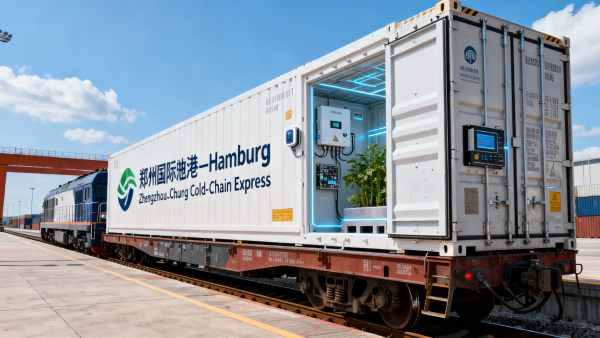
On May 17, 2026, the Zhengzhou–Hamburg China-Europe Railway launched its first fully temperature-controlled cold-chain express train, dedicated to transporting high-value-added agricultural equipment—including precision climate-control modules, PLC controllers, and sensors for smart greenhouses. This development is particularly relevant for EU-based importers of agricultural technology, greenhouse EPC contractors, and distribution partners—marking a notable shift in delivery reliability, regulatory traceability, and thermal stability for sensitive agri-tech cargo.
Event Overview
On May 17, 2026, the Zhengzhou–Hamburg route of the China-Europe Railway initiated its inaugural end-to-end cold-chain express service. The train carries intelligent greenhouse climate-control components, programmable logic controllers (PLCs), and environmental sensors. It maintains precise temperature control between –25°C and +15°C throughout transit, integrates IoT-based real-time monitoring, and applies a ‘single declaration, full-journey clearance’ customs facilitation model. According to publicly released information, this service reduces delivery time by 62% compared to conventional maritime shipping and improves temperature stability by over threefold versus standard rail freight.
Industries Affected
Direct Trading Enterprises
EU-based importers of Chinese-made greenhouse automation systems are directly impacted: the new service enhances delivery predictability and simplifies compliance documentation through unified customs handling. The shortened lead time—from an average of ~47 days by sea to just 18 days—enables tighter inventory planning and faster response to seasonal demand cycles in horticultural projects.
Greenhouse EPC Contractors
Engineering, procurement, and construction (EPC) firms executing turnkey greenhouse projects in Europe face reduced schedule risk. With guaranteed thermal integrity and traceable condition data across the entire journey, contractors gain stronger contractual leverage in performance guarantees and commissioning timelines—especially for climate-sensitive installations requiring certified environmental histories.
Distribution & Channel Partners
Specialized distributors handling high-margin agri-tech components now operate under improved stock-turn dynamics. The consistent 18-day delivery window supports just-in-time replenishment models and reduces working capital tied up in extended ocean-transit inventories. However, it also raises expectations for downstream order responsiveness and after-sales technical readiness.
What Relevant Enterprises or Practitioners Should Monitor and Do Now
Track official expansion signals beyond the initial pilot
Current information confirms only the launch of the *first* cold-chain train on the Zhengzhou–Hamburg corridor. Analysis shows that frequency, capacity allocation, and potential extension to other origin/destination pairs (e.g., Chengdu–Rotterdam or Xi’an–Warsaw) remain unconfirmed. Stakeholders should monitor announcements from China State Railway Group and Hamburg Port Authority for operational scale-up indicators.
Validate thermal specifications and documentation requirements per shipment
The service advertises –25°C to +15°C control and IoT-monitored conditions—but exact tolerances, calibration standards, and acceptable deviation thresholds are not yet published. From an industry perspective, shippers should request written confirmation of temperature logging intervals, data accessibility formats (e.g., PDF reports vs. API access), and liability clauses for thermal excursions before committing high-value consignments.
Assess integration with existing customs and logistics workflows
While the ‘single declaration, full-journey clearance’ model is cited, its practical implementation depends on harmonization between Chinese export controls, EU import regulations (including phytosanitary and CE marking verification), and transit-country procedures. Current more appropriate action is to conduct a dry-run coordination exercise with freight forwarders experienced in both EU agri-tech imports and China-Europe rail filings—prior to scaling commercial volumes.
Prepare for upstream supply chain synchronization
A compressed 18-day door-to-door cycle demands tighter alignment between component manufacturing, pre-shipment conditioning, packaging validation, and loading schedules. Observation shows that delays at origin consolidation points—not transit itself—pose the greatest risk to schedule adherence. Firms should review internal handover SLAs with Tier-1 suppliers and verify cold-chain packaging certification (e.g., ISTA 3A or equivalent) well in advance.
Editorial Perspective / Industry Observation
This initiative is best understood not as an immediate replacement for maritime or air freight, but as a targeted infrastructure upgrade addressing a specific bottleneck: the reliable, compliant, and time-bound movement of thermally sensitive agri-tech hardware into EU markets. Analysis shows it reflects growing institutional attention to high-value niche segments within the broader China-Europe rail ecosystem—moving beyond bulk commodities and low-margin consumer goods. Observably, it signals a maturing phase where rail operators prioritize service differentiation through vertical integration (e.g., combining physical transport with IoT telemetry and customs orchestration), rather than competing solely on price or speed alone. For the sector, sustained attention is warranted—not because the model is already widely replicable, but because its success may catalyze similar specialized corridors for pharmaceuticals, lab equipment, or EV battery components in coming years.
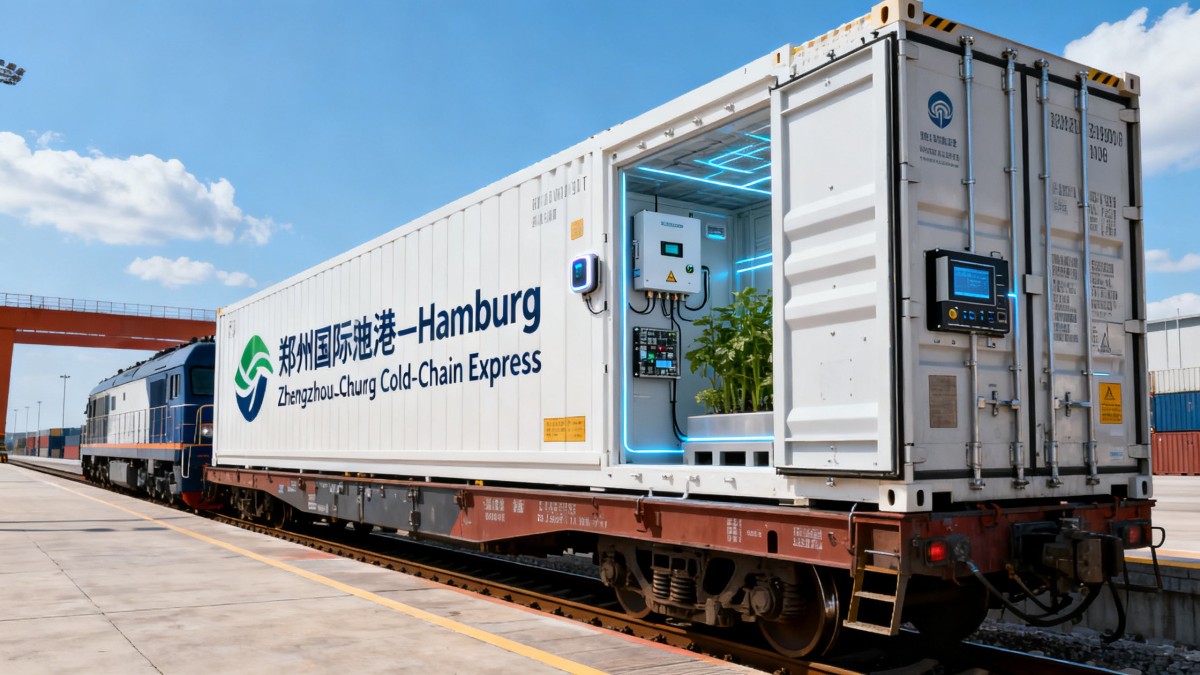
In summary, the Zhengzhou–Hamburg cold-chain express introduces a materially shorter, more controllable, and better-documented pathway for select high-value agri-tech exports—but its current scope remains narrow and operationally nascent. It is more accurately interpreted as an early-stage capability demonstration than a broadly deployable logistics solution. Stakeholders should treat it as a test case: valuable for benchmarking, scenario planning, and supplier engagement—but not yet a default channel for volume shipments without due diligence on scalability, consistency, and regulatory execution.
Source: Official announcement issued on May 17, 2026, by China Railway Zhengzhou Group Co., Ltd. and Hamburg Port Authority (joint press release).
Note: Frequency, tariff structure, and eligibility criteria for future trains remain under observation and have not been formally disclosed.
Related Intelligence
- Smart GreenhouseGreenhouse Equipment for Vertical Farming: Choosing Lighting and VentilationChoose greenhouse equipment for vertical farming with confidence. Compare lighting, airflow, and moisture control to improve crop uniformity and manage costs. Explore the guide.
- Smart GreenhouseSelecting Greenhouse Propagation Equipment for Hot, Humid Southeast Asian NurseriesGreenhouse propagation equipment Southeast Asia: discover how to select resilient irrigation, ventilation, benches, and automation for hot, humid nurseries.
- Smart GreenhouseWhat Are the Biggest Challenges in Agri-Tech Adoption in 2026?What are the biggest challenges in agri tech adoption for 2026? Explore cost, data, connectivity, skills, compliance, and ROI barriers.
The Morning Broadsheet
Daily chemical briefings, market shifts, and peer-reviewed summaries delivered to your terminal.
