

The Authority in Global Agricultural Chemistry & Bio-Resources
Vietnam’s QCVN 01-19:2026 Enters Force for Agrochemicals
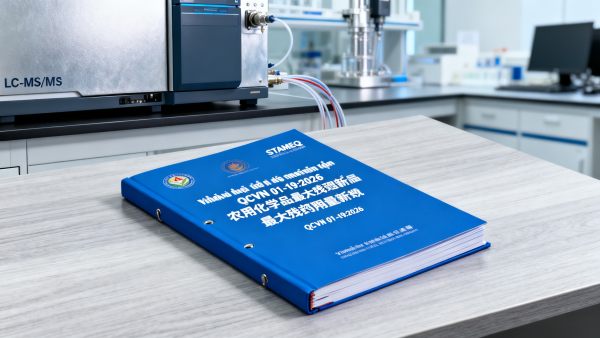
On May 17, 2026, Vietnam’s Standardization, Metrology and Quality Authority (STAMEQ) officially enforced QCVN 01-19:2026 — the updated National Technical Regulation on Maximum Residue Limits (MRLs) for pesticides. This regulation directly impacts agrochemical exporters, particularly those from China supplying rice and vegetables to the Vietnamese market, due to new analytical requirements and expanded residue limits.
Event Overview
Effective May 17, 2026, STAMEQ mandated full compliance with QCVN 01-19:2026. The regulation introduces MRLs for 12 active ingredients—including chlorfenapyr and fluazinam—in rice and vegetables, and for the first time requires exporters to submit LC-MS/MS dual-channel validation reports issued by laboratories accredited under Vietnam’s National Accreditation Scheme (VILAS). Non-compliant shipments face port rejection or destruction.
Industries Affected
Direct Exporters
Companies exporting agrochemicals or pesticide-treated agricultural commodities into Vietnam must now align registration dossiers and customs documentation with the new MRL thresholds and analytical reporting format. Impact manifests in delayed clearance, increased testing costs, and higher risk of non-conformance during official inspections.
Formulation & Manufacturing Firms
Manufacturers supplying formulated products containing the newly regulated active ingredients (e.g., chlorfenapyr, fluazinam) must verify whether their current quality control protocols meet LC-MS/MS dual-channel validation standards. Process adjustments may be needed to support compliant batch-level residue traceability.
Supply Chain & Compliance Service Providers
Third-party labs, regulatory consultants, and logistics intermediaries supporting Vietnam-bound agrochemical trade are affected by the requirement for VILAS-accredited LC-MS/MS testing. Demand is rising for services capable of delivering validated, jurisdictionally accepted analytical reports — not just standard residue screening.
Key Focus Areas and Recommended Actions
Monitor official technical guidance from STAMEQ and Vietnam’s Ministry of Health
While QCVN 01-19:2026 is in force, supplementary implementation notes — such as acceptable LC-MS/MS method parameters, sample preparation protocols, or transitional provisions — may be issued. Stakeholders should track updates via STAMEQ’s official portal and Vietnam’s National Agency of Standards and Quality (TCVN).
Prioritize verification of high-volume export items against the 12 newly regulated active ingredients
Analysis shows that chlorfenapyr and fluazinam are widely used in rice protection formulations exported from China. Exporters should cross-check product portfolios against the full list of 12 substances named in the regulation and assess whether existing test reports meet the dual-channel LC-MS/MS requirement.
Distinguish between regulatory mandate and operational readiness
Observably, VILAS-accredited LC-MS/MS capacity remains limited among regional labs. Companies should confirm lead times and availability of compliant testing services well ahead of shipment scheduling — rather than assuming standard lab turnaround applies.
Update internal quality assurance workflows to include dual-channel validation documentation
Current more suitable practice is to integrate LC-MS/MS dual-channel report generation into batch release procedures — including raw material sourcing records, formulation logs, and stability data — to ensure audit-ready traceability for Vietnamese authorities.
Editorial Perspective / Industry Observation
This regulation is better understood as an enforcement signal — not merely a technical update. From an industry perspective, it reflects Vietnam’s broader shift toward harmonizing its MRL framework with Codex Alimentarius benchmarks and strengthening post-market surveillance. Analysis suggests the LC-MS/MS requirement targets detection sensitivity for low-level migration, indicating heightened scrutiny of cumulative exposure risks. While the regulation is now effective, its real-world impact will depend on inspection frequency, laboratory capacity scaling, and consistency in customs enforcement — all of which remain subject to observation over the coming months.
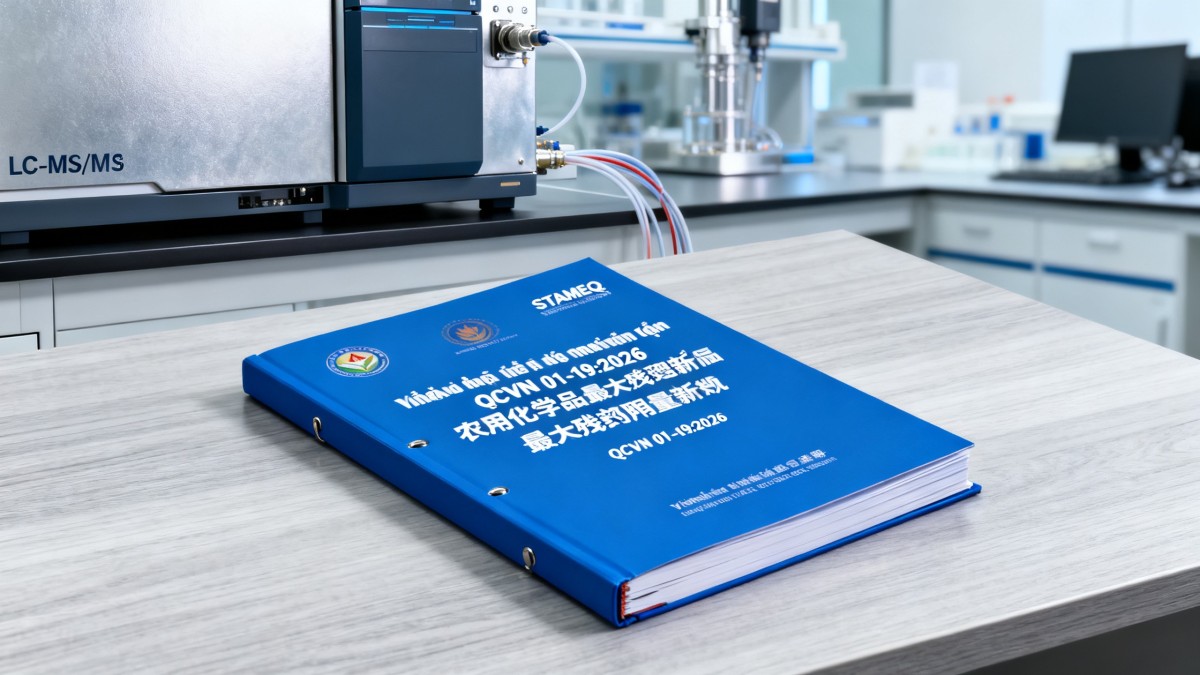
Conclusion: QCVN 01-19:2026 marks a procedural inflection point for agrochemical trade into Vietnam — elevating analytical rigor and documentation expectations. It is not a broad-based ban or market restriction, but a targeted calibration of compliance infrastructure. Current interpretation should emphasize preparedness over panic: the regulation sets a new baseline for evidence quality, not an unattainable threshold.
Source: Standardization, Metrology and Quality Authority (STAMEQ), Vietnam — Official Announcement dated May 17, 2026. Note: Implementation details regarding LC-MS/MS method validation criteria and transitional arrangements remain under observation and are not yet publicly specified.
Related Intelligence
- AgrochemicalsWhat Are the Main Risks of Non-Transparent Agricultural Supply Chains?what are the main risks of non transparent agri supply chains? Explore traceability, compliance, contamination, disruption, and cost risks—plus practical controls.
- AgrochemicalsGrain Production: Key Practices for Improving Yield While Protecting Soil HealthGrain production strategies to improve yield, protect soil health, manage nutrients, reduce compaction, and build resilient fields for lasting results.
- AgrochemicalsHow Do New FDA Rules Affect Agri-Chemical Sourcing Strategies?How do new FDA rules impact agri chemical sourcing strategies? Explore practical supplier screening, traceability, contaminant control, and risk-based compliance steps.
The Morning Broadsheet
Daily chemical briefings, market shifts, and peer-reviewed summaries delivered to your terminal.
