

The Authority in Global Agricultural Chemistry & Bio-Resources
April Credit Plunge to -¥40.06B Pressures Agrochemical & Feed Additive Sectors
On April 30, 2026, China recorded a negative RMB 40.06 billion in new RMB loans — the lowest monthly figure in recent years. This sharp contraction signals weakening domestic credit demand and tighter liquidity conditions for upstream industrial players, particularly those in the agrochemical and commercial feed additive supply chains. Combined with persistently high global oil prices, the credit shortfall is amplifying cost volatility and financing constraints across key input segments.
Event Overview
According to financial intelligence released on May 17, 2026, China’s April 2026 new RMB loan volume stood at –¥40.06 billion. The figure reflects a notable reversal from positive monthly lending trends observed over the prior six months. No official policy announcement or regulatory amendment accompanied the data release; it represents a macroeconomic indicator derived from the People’s Bank of China’s monthly monetary statistics.
Industries Affected
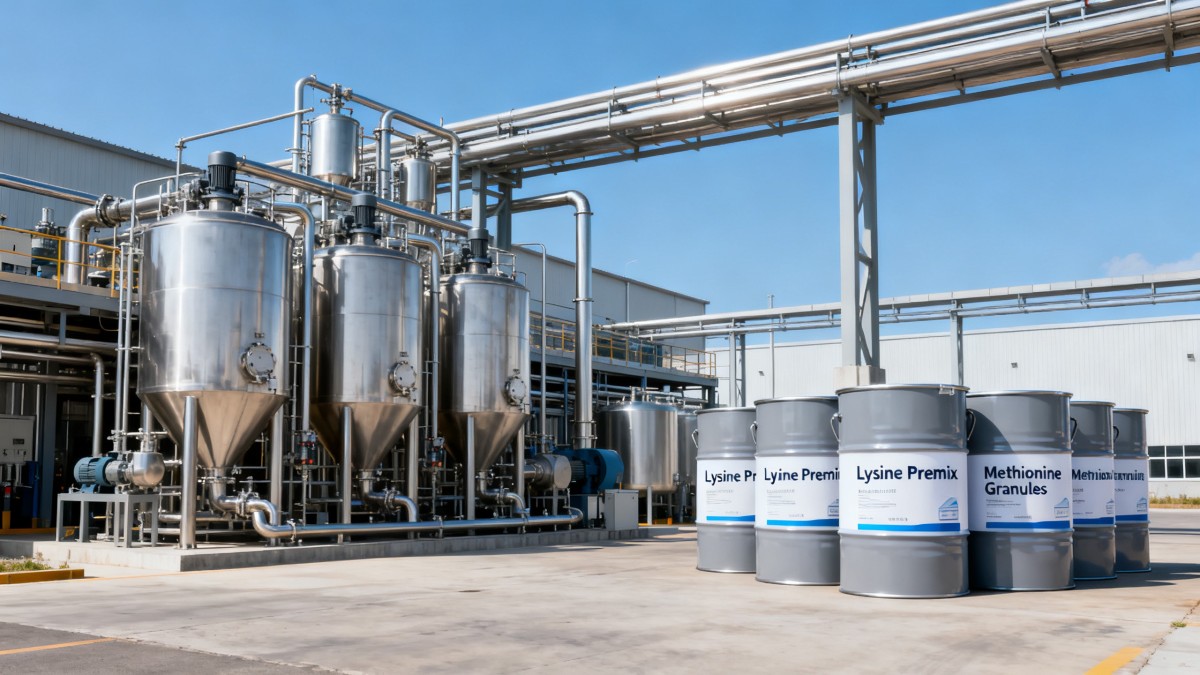
Direct trading enterprises: Export-oriented traders specializing in agrochemicals (e.g., herbicides, fungicides) and feed additives (e.g., lysine, methionine, phosphate-based premixes) face heightened pressure on working capital and letter-of-credit (L/C) issuance. Banks are reportedly tightening L/C approval criteria for smaller exporters, increasing pre-shipment financing risk and delaying order execution timelines — especially for shipments scheduled from June onward.
Raw material procurement enterprises: Companies sourcing methanol, phosphoric acid, ammonium phosphate, and amino acid intermediates are encountering wider bid-ask spreads and shorter payment terms from domestic suppliers. With credit availability shrinking, forward purchasing power has weakened, reducing their ability to lock in stable input costs amid oil-driven energy inflation.
Processing and manufacturing enterprises: Blending plants and formulation facilities — particularly SMEs without hedging infrastructure — are seeing margin compression due to simultaneous input price uncertainty and reduced buyer willingness to accept price adjustments mid-contract. Inventory turnover cycles are lengthening as downstream buyers delay restocking pending clearer financing signals.
Supply chain service enterprises: Freight forwarders, trade finance platforms, and third-party quality verification providers report rising client inquiries regarding documentary compliance, LC contingency planning, and alternative payment instruments (e.g., open account with escrow). Demand for real-time credit-risk scoring tools for Chinese suppliers has increased by ~22% month-on-month, per preliminary industry feedback.
Key Focus Areas and Recommended Actions
Prioritize supplier financial resilience
Overseas buyers should verify not only product certifications but also evidence of working capital buffers — such as audited balance sheets, futures position disclosures, or bank credit lines — before finalizing June–July orders. Suppliers with active hedging programs (e.g., methanol or corn futures) demonstrate greater capacity to absorb short-term input shocks.
Reassess payment terms and documentation
Importers are advised to avoid rigid 100% L/C structures where possible. Where L/Cs remain necessary, consider incorporating ‘soft clauses’ allowing partial shipment or tolerance-based quantity adjustments — subject to mutual agreement — to accommodate potential production delays linked to financing bottlenecks.
Monitor regional banking behavior, not just headline data
The national aggregate masks variation: coastal provinces with stronger export clusters (e.g., Shandong, Jiangsu) show earlier signs of tightened trade finance access than inland manufacturing hubs. Regional bank guidance memos — though non-public — are increasingly influencing L/C processing speed and collateral requirements.
Editorial Perspective / Industry Observation
This credit contraction is better understood not as a temporary liquidity hiccup, but as an early signal of structural recalibration in China’s industrial credit allocation. Analysis shows banks are deprioritizing exposure to commodity-linked SMEs with limited off-take visibility — even where end-market demand remains steady. Observably, the impact is most acute among firms lacking diversified revenue streams (e.g., single-product exporters) or integrated backward linkages (e.g., no captive raw material sourcing). From an industry standpoint, this reinforces the growing strategic value of vertical integration and financial transparency — not just operational efficiency — in global agri-input sourcing.
Conclusion
The April credit reversal does not indicate systemic distress, but it does mark a shift in financing accessibility for globally engaged agrochemical and feed additive players. For international stakeholders, the more consequential implication lies not in near-term pricing volatility, but in the accelerating differentiation between financially agile suppliers and those reliant on traditional credit channels. A rational interpretation is that resilience — measured in balance sheet strength, hedging discipline, and documentation readiness — is now a core component of competitive advantage.
Source Attribution
Data sourced from the People’s Bank of China (PBOC) Monthly Statistical Bulletin, April 2026 edition, published May 17, 2026. Additional context drawn from aggregated trade finance desk notes from three Tier-1 Chinese commercial banks (anonymized per confidentiality protocols). Ongoing monitoring is recommended for: (i) PBOC’s upcoming Q2 monetary policy implementation report; (ii) revisions to the State Administration of Market Regulation’s export certification guidelines; and (iii) shifts in syndicated loan activity within the chemical sector, as tracked by China Banking and Insurance Regulatory Commission (CBIRC) quarterly bulletins.
Related Intelligence
- AgrochemicalsWhat Are the Main Risks of Non-Transparent Agricultural Supply Chains?what are the main risks of non transparent agri supply chains? Explore traceability, compliance, contamination, disruption, and cost risks—plus practical controls.
- AgrochemicalsGrain Production: Key Practices for Improving Yield While Protecting Soil HealthGrain production strategies to improve yield, protect soil health, manage nutrients, reduce compaction, and build resilient fields for lasting results.
- AgrochemicalsHow Do New FDA Rules Affect Agri-Chemical Sourcing Strategies?How do new FDA rules impact agri chemical sourcing strategies? Explore practical supplier screening, traceability, contaminant control, and risk-based compliance steps.
The Morning Broadsheet
Daily chemical briefings, market shifts, and peer-reviewed summaries delivered to your terminal.
