

The Authority in Global Agricultural Chemistry & Bio-Resources
SABIC Mandates Eco-Friendly Carriers for Food-Grade Enzymes Exported to Saudi Arabia
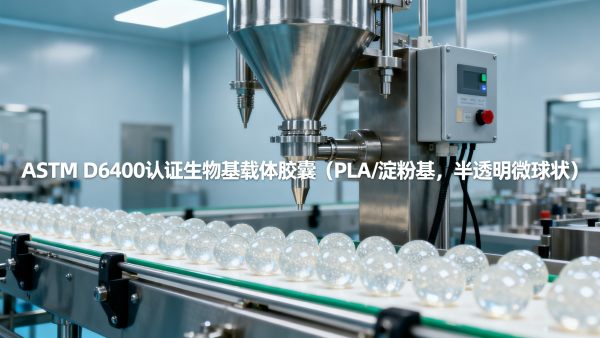
SABIC (Saudi Basic Industries Corporation) issued a mandatory notice on May 16, 2026, requiring all food-grade enzyme products—including proteases, amylases, and phytases—exported to Saudi Arabia to switch to ASTM D6400-certified bio-based carrier materials effective July 1, 2026. This development directly impacts exporters of enzyme preparations, suppliers of food contact materials, and stakeholders in the halal-certified food supply chain, particularly those based in China and other major enzyme-producing countries.
Event Overview
On May 16, 2026, SABIC formally notified global suppliers that, starting July 1, 2026, all food-grade enzyme formulations destined for the Saudi market must use carriers certified to ASTM D6400. The use of polyethylene (PE) or polypropylene (PP) microcapsules is explicitly prohibited. This requirement has been incorporated into the draft annex II of the Saudi Standards, Metrology and Quality Organization (SASO) Food Contact Materials Regulation.
Industries Affected
Direct Exporters (e.g., Chinese Enzyme Manufacturers)
These companies supply finished food-grade enzyme products to Saudi importers or halal-certified food processors. They are directly subject to the new carrier requirement and must revise formulations, conduct migration testing, and update documentation within six weeks to retain access to the Saudi halal food supply chain.
Raw Material Suppliers (e.g., Carrier & Excipient Producers)
Suppliers of encapsulation matrices—including synthetic polymers and alternative biopolymers—face revised demand patterns. The ban on PE/PP microcapsules shifts procurement toward ASTM D6400-compliant bio-based carriers, potentially affecting inventory planning, certification readiness, and technical support capacity.
Contract Manufacturers & Formulators
Third-party facilities engaged in enzyme blending, microencapsulation, or final dosage form production must adapt processes and validate new carrier systems. Their compliance depends on updated specifications from brand owners and timely access to certified raw materials.
Supply Chain & Certification Service Providers
Logistics providers handling temperature- or humidity-sensitive enzyme shipments, as well as third-party labs offering migration testing (e.g., for heavy metals or organic extractables), may see increased demand for ASTM D6400-aligned test protocols and SASO-specific documentation support.
Key Considerations and Recommended Actions for Stakeholders
Monitor Official SASO Finalization Timeline
The requirement is currently embedded in a draft SASO regulation. Stakeholders should track the official publication date and any transitional provisions or grace periods included in the final version—these may affect implementation deadlines beyond SABIC’s internal July 1, 2026, cutoff.
Prioritize Migration Testing and Documentation Updates
Third-party migration testing against food simulants (e.g., 10% ethanol, acetic acid) is required under the new carrier specification. Exporters should initiate testing immediately, as turnaround times for accredited labs often exceed three weeks—especially for multi-analyte assessments.
Distinguish Between SABIC’s Procurement Policy and Broader Regulatory Enforcement
This mandate originates from SABIC as a downstream buyer—not a national regulator. While aligned with SASO’s draft, enforcement outside SABIC’s supply chain remains uncertain. Companies supplying non-SABIC-linked Saudi food processors should verify whether their customers adopt equivalent requirements voluntarily.
Reassess Sourcing and Inventory Planning for Bio-Based Carriers
ASTM D6400-certified carriers (e.g., certain polylactic acid (PLA)- or starch-based matrices) may differ in stability, shelf life, and processing behavior versus PE/PP. Formulators should secure qualified samples, conduct compatibility trials, and adjust minimum order quantities to avoid stockouts during transition.
Editorial Perspective / Industry Observation
Observably, this SABIC directive functions less as an isolated compliance event and more as a signal of accelerating convergence between corporate sustainability mandates and national food contact material frameworks in the Gulf region. Analysis shows that while the immediate scope is limited to SABIC’s enzyme supply chain, its inclusion in the SASO draft annex suggests institutional momentum toward broader adoption. From an industry perspective, it reflects growing emphasis on upstream material traceability—not just end-product safety—in halal-aligned food systems. Current attention should focus less on whether the rule will be enforced, and more on how quickly parallel requirements may emerge across other Gulf Cooperation Council (GCC) markets or among major regional food brands.
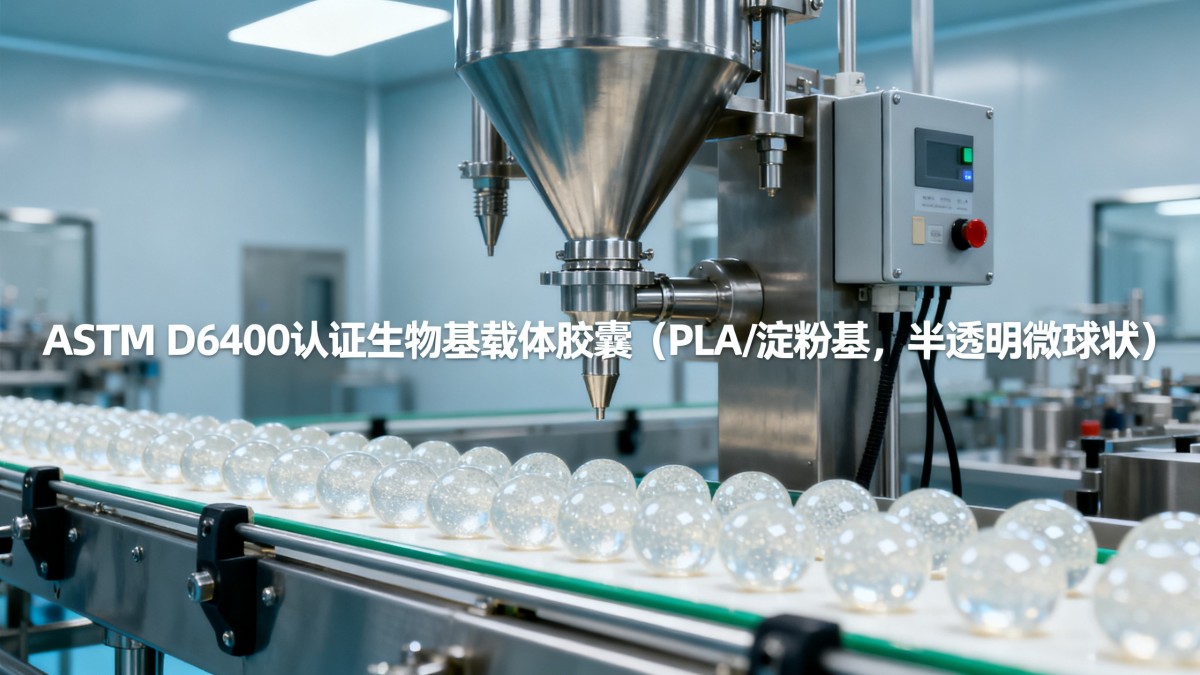
Conclusion: This policy shift underscores a tightening linkage between environmental material specifications and market access in regulated food export corridors. It does not yet constitute a universal GCC standard, but represents a concrete, enforceable benchmark with immediate operational consequences for exporters and formulators. Currently, it is best understood as a supplier-driven regulatory precursor—one demanding prompt technical response, rather than strategic repositioning at the sector level.
Source: Official SABIC supplier notice dated May 16, 2026; Draft SASO Food Contact Materials Regulation (Annex II); ASTM International Standard D6400-23, Standard Specification for Labeling of Plastics Designed to be Aerobically Composted in Municipal or Industrial Facilities.
Note: Final SASO regulation status and potential amendments remain under observation.
Related Intelligence
- Food Grade EnzymesWhat Drives Industrial Enzyme Costs? Activity, Format, and Supply Risk ExplainedIndustrial enzyme cost factors explained: compare activity, formulation, shelf life, documentation, and supply risk to reduce process costs and improve purchasing decisions.
- Food Grade EnzymesIs There a Global Standard for Biochemical Engineering Product Quality?Is there a global standard for biochemical engineering product quality? Explore GMP, ISO, traceability, and supplier checks for confident global sourcing.
- Food Grade EnzymesHow Enzymes for Cracker Formulation Improve Texture and Shelf LifeEnzymes for cracker formulation can enhance dough handling, crisp texture, and shelf life. Explore targeted enzyme strategies for consistent, high-quality crackers.
The Morning Broadsheet
Daily chemical briefings, market shifts, and peer-reviewed summaries delivered to your terminal.
