

The Authority in Global Agricultural Chemistry & Bio-Resources
APVMA Urgently Tightens RAS Water Conditioner Registration in Australia
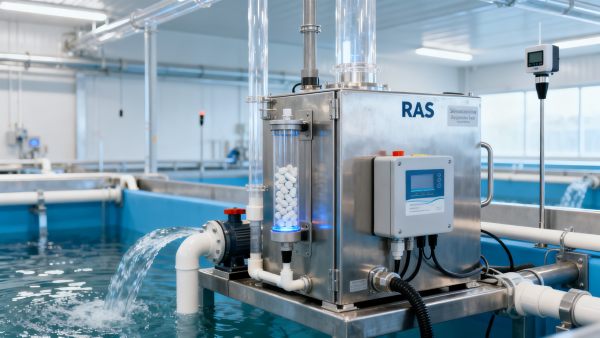
On 17 May 2026, the Australian Pesticides and Veterinary Medicines Authority (APVMA) issued an urgent notice tightening registration requirements for water conditioners specifically used in recirculating aquaculture systems (RAS), such as slow-release hydrogen peroxide tablets and ozone stabilizers. This development directly affects manufacturers, importers, and distributors of aquaculture inputs operating in or targeting the Australian market — particularly those engaged in RAS technology deployment, regulatory compliance, and aquatic health management.
Event Overview
On 17 May 2026, the APVMA published an emergency notice revising registration criteria for RAS-specific water conditioners. Under the revised requirements, applicants must now submit, in addition to standard toxicological and environmental fate data, a 36-month field efficacy validation report collected across commercial aquaculture facilities in South Australia, Queensland, and Western Australia. Core performance metrics — including pH, oxidation-reduction potential (ORP), and ammonia-nitrogen removal rate — must demonstrate variability no greater than ±8% across the entire reporting period. The revision took effect immediately and applies to all pending and new applications.
Which Subsectors Are Affected
Manufacturers of RAS Water Conditioners
These companies are directly impacted because the new requirement mandates multi-year, multi-regional field data — a significant departure from prior laboratory- or short-term trial-based submissions. Compliance now demands long-term operational collaboration with Australian farms and introduces substantial time and logistical overhead for data collection, documentation, and verification.
Importers and Distributors of Aquaculture Inputs
Entities importing or distributing RAS water conditioners into Australia must reassess product portfolios ahead of registration renewal or new listings. Products lacking the required 36-month field evidence may face delays, rejection, or suspension — affecting inventory planning, contract fulfillment, and market access timelines.
Aquaculture Technology Integrators & RAS System Providers
As end-users increasingly rely on registered, APVMA-compliant conditioners to maintain system stability and meet biosecurity standards, integrators may need to adjust equipment specifications, dosing protocols, or vendor selection criteria — especially where conditioner performance is tightly coupled with sensor feedback loops or automated control systems.
What Relevant Enterprises or Practitioners Should Focus On and How to Respond Now
Monitor official APVMA guidance for implementation clarifications
The notice is labeled “urgent” and effective immediately, but practical interpretation — e.g., acceptable data formats, definitions of “commercial facility”, or grandfathering provisions for existing registrations — remains subject to further APVMA communication. Stakeholders should subscribe to APVMA alerts and review upcoming consultation documents.
Identify which products in your portfolio require immediate data gap assessment
Focus first on products currently under review or scheduled for renewal within the next 12 months. Determine whether existing field data meets the three-region, 36-month, ±8% metric consistency threshold — and if not, initiate feasibility planning for targeted data generation or third-party validation partnerships.
Distinguish between regulatory signal and enforceable obligation
This notice reflects an enforcement priority shift, not necessarily a permanent statutory amendment. Its immediate applicability to “in-process” applications suggests APVMA intends rapid operational impact — yet formal inclusion in the Agricultural and Veterinary Chemicals Code Act regulations may follow separately. Treat this as a binding procedural requirement for submissions now, while tracking longer-term legislative developments.
Prepare for extended registration timelines and increased documentation coordination
Given the scope of required field validation, anticipate longer lead times for submissions. Begin aligning internal teams (regulatory affairs, technical services, quality assurance) and external partners (Australian trial sites, contract research organizations) early — especially to secure site access and data-sharing agreements compliant with local privacy and biosecurity rules.
Editorial Perspective / Industry Observation
Observably, this move signals APVMA’s increasing emphasis on real-world performance consistency — rather than theoretical or controlled-environment efficacy — for inputs used in high-intensity, closed-loop aquaculture systems. Analysis shows it is less a one-off adjustment and more a structural recalibration toward outcome-based regulation in aquatic production environments. From an industry perspective, it reflects growing scrutiny of chemical inputs in contexts where environmental discharge is minimal but biological sensitivity is high. Current attention should focus less on whether the rule will be relaxed and more on how quickly stakeholders can adapt field evidence frameworks to meet its geographic, temporal, and precision thresholds.
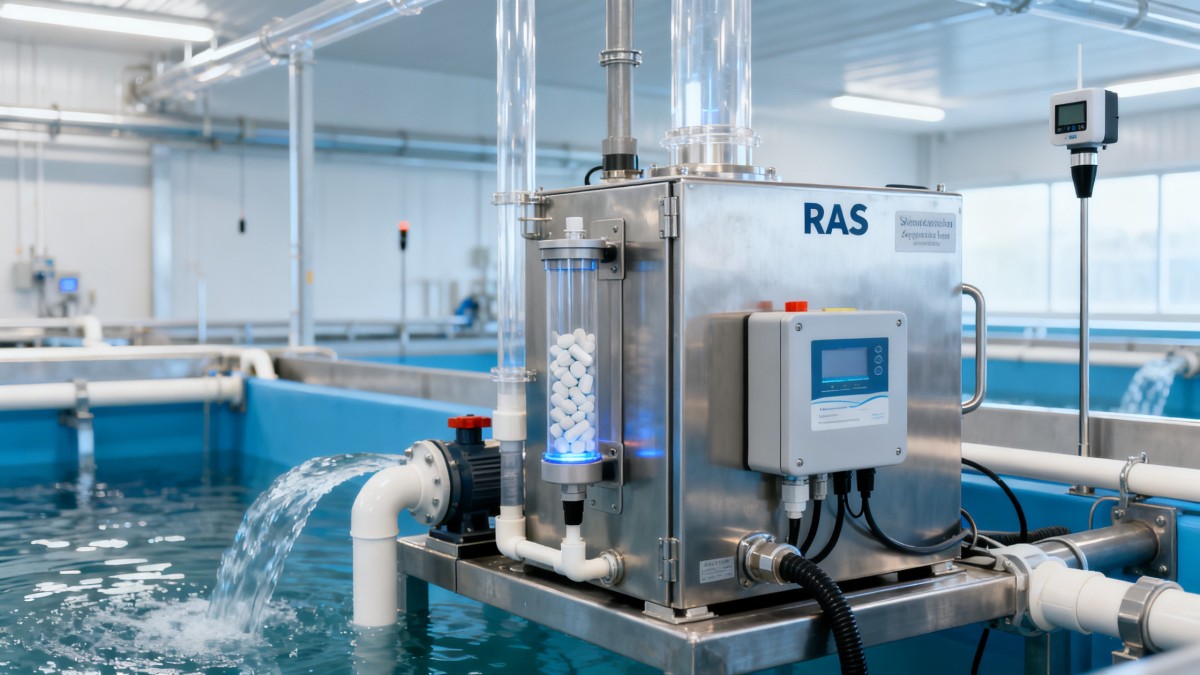
In summary, the APVMA’s 17 May 2026 notice represents a material escalation in evidentiary expectations for RAS water conditioners in Australia — shifting from lab-derived safety and efficacy to long-term, regionally diverse field performance. It is best understood not as a temporary hurdle, but as an emerging baseline for market access in a jurisdiction prioritizing ecological resilience and system-level reliability in aquaculture.
Source: Australian Pesticides and Veterinary Medicines Authority (APVMA), Emergency Notice dated 17 May 2026.
Note: Ongoing observation is recommended regarding APVMA’s publication of supporting guidance documents, interpretation FAQs, or potential amendments to the Agricultural and Veterinary Chemicals (Registration) Regulations 2019.
Related Intelligence
- RAS SystemsSustainable Aquaculture Practices That Cut Feed Waste and Protect Fish Farm Water QualitySustainable aquaculture for fish farms: reduce feed waste, protect water quality, and build resilient, efficient systems with practical strategies.
- RAS SystemsDrum Filter System Price: How Flow Rate, Micron Rating, and Automation Affect CostDrum filter system price depends on flow rate, micron rating, automation, materials, and lifecycle costs. Compare quotes confidently and choose the right system.
- RAS SystemsHow to Specify Large-Scale Fish Farming Equipment for High-Output RAS ProjectsLarge scale fish farming equipment guide for high-output RAS projects—specify tanks, filtration, oxygen, automation, and redundancy for reliable growth.
The Morning Broadsheet
Daily chemical briefings, market shifts, and peer-reviewed summaries delivered to your terminal.
