

The Authority in Global Agricultural Chemistry & Bio-Resources
FAO Endorses China's Ventilation Energy Efficiency Standard
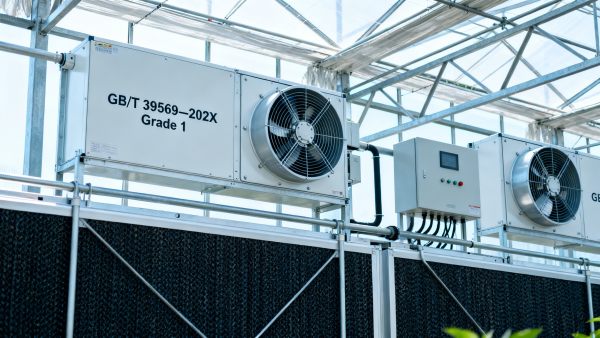
On May 16, 2026, the Food and Agriculture Organization of the United Nations (FAO) released its updated Green Procurement Guidelines for Climate Control & Ventilation (FAO/GPG-CCV/2026), marking a significant shift in international procurement norms for agricultural climate infrastructure. The guideline explicitly references China’s national standard GB/T 39569–202X — Minimum Allowable Values and Energy Efficiency Grades for Ventilation Equipment in Agricultural Facilities — as an internationally recommended benchmark. This development directly affects global agricultural infrastructure projects funded or supported by FAO, particularly across Africa and Latin America, where technical specifications for tenders are now expected to align with this guidance.
Event Overview
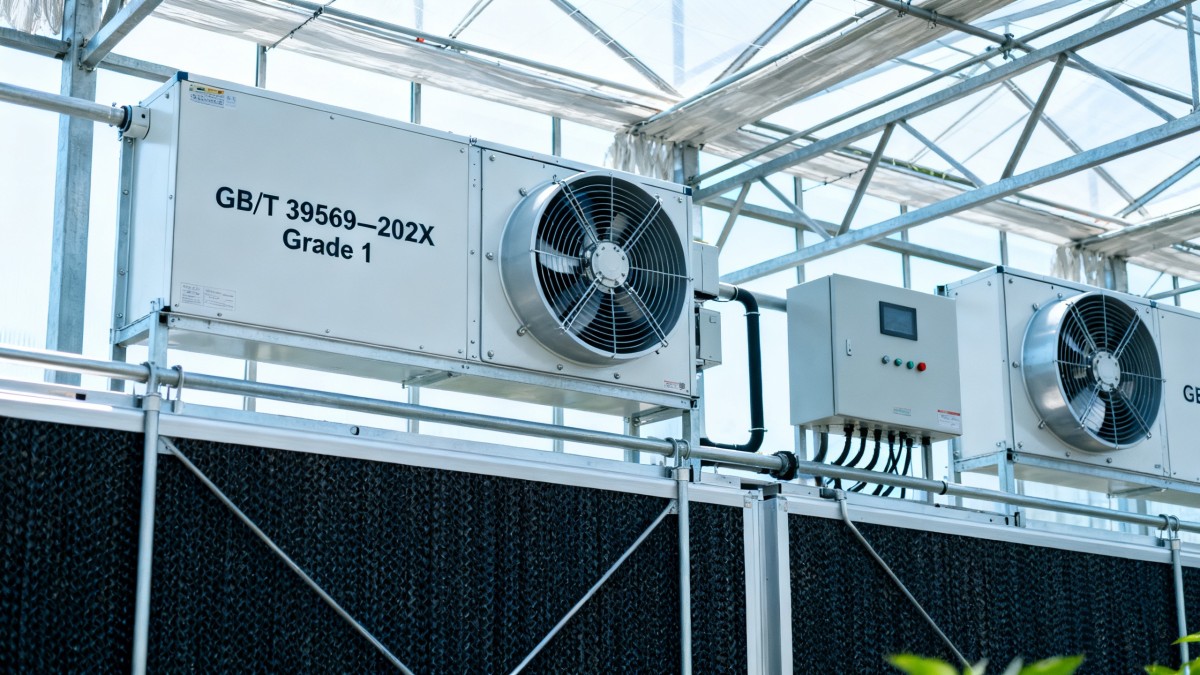
The FAO issued the Climate Control & Ventilation Green Procurement Guidelines (FAO/GPG-CCV/2026) on May 16, 2026. It is the first edition to formally list GB/T 39569–202X as an internationally recommended standard. The document advises developing-country procurement programs — especially those implemented under FAO-funded agricultural infrastructure initiatives — to prioritize equipment certified to China’s ‘Grade 1’ energy efficiency level, including axial fans, pad-fan cooling systems, and intelligent environmental control units.
Industries Affected
Direct Export Enterprises: Companies exporting ventilation equipment from China to FAO-supported markets face both opportunity and compliance pressure. As FAO-funded tenders increasingly reference Grade 1 certification as a technical eligibility criterion, exporters must ensure third-party verification against GB/T 39569–202X is available, traceable, and accepted by local procurement authorities. Bid success rates may rise for certified suppliers but decline for those lacking documentation aligned with the new guidance.
Raw Material Sourcing Firms: Suppliers of motors, aluminum extrusions, controller ICs, and evaporative cooling media used in certified systems may see demand shifts. For example, motor manufacturers supplying Tier-1 OEMs will need to verify compatibility with Grade 1 efficiency testing protocols — notably at partial-load operating points defined in GB/T 39569–202X. Absence of test-ready components could delay certification timelines for end-product manufacturers.
Equipment Manufacturing Firms: Domestic manufacturers producing fans, pad-fan systems, or integrated climate controllers must now treat GB/T 39569–202X not only as a domestic market requirement but as a de facto export gatekeeper. Re-engineering for Grade 1 compliance — such as optimizing blade aerodynamics, upgrading variable-frequency drives, or integrating real-time power monitoring — may be necessary before bidding on FAO-linked contracts.
Supply Chain Service Providers: Certification bodies accredited for GB/T 39569–202X testing, logistics firms experienced in cross-border technical documentation handling (e.g., bilingual test reports, conformity declarations), and trade advisory services specializing in FAO procurement frameworks are likely to see increased engagement. However, service providers without demonstrable experience in both Chinese energy standards and UN procurement compliance may find their relevance diminishing.
Key Considerations and Recommended Actions
Verify certification scope and validity
Manufacturers and exporters should confirm whether existing GB/T 39569–202X certifications cover the exact product models, configurations, and performance ranges cited in FAO/GPG-CCV/2026 — especially those related to seasonal energy efficiency ratio (SEER)-based evaluation and low-speed operational thresholds.
Align tender documentation with FAO terminology
Bid submissions for FAO-funded projects must explicitly reference compliance with GB/T 39569–202X *and* cite Grade 1 status using FAO’s prescribed nomenclature (e.g., “Certified to China Grade 1 per GB/T 39569–202X, as recognized in FAO/GPG-CCV/2026”). Generic claims like “high-efficiency” or “energy-saving” are insufficient.
Engage early with FAO implementing partners
Because technical specifications in country-level tenders are often drafted by local executing agencies (not FAO headquarters), proactive dialogue with FAO field offices and partner NGOs — particularly in target regions like Kenya, Colombia, and Vietnam — helps anticipate how the guideline will be operationalized in upcoming RFPs.
Editorial Perspective / Industry Observation
Analysis shows this endorsement reflects more than technical alignment — it signals growing institutional recognition of China’s role in setting interoperable sustainability benchmarks for climate-resilient agriculture. Observably, FAO’s inclusion of a national standard without requiring parallel ISO/IEC harmonization suggests increasing tolerance for regionally developed, rigorously validated metrics — provided they demonstrate transparency, repeatability, and climate-relevant performance outcomes. From an industry perspective, this move may accelerate convergence between Chinese energy labeling practices and UN sustainability procurement architecture, though divergence risks remain where GB/T 39569–202X testing conditions differ significantly from IEC 61800-9 or ISO 5801-based approaches.
Conclusion
This development does not represent a mandatory global regulation, but rather a high-impact procurement signal with cascading influence across agricultural climate technology supply chains. It is better understood not as a standalone policy shift, but as part of a broader trend toward ‘standard diplomacy’ — where technical specifications become instruments of cooperation, market access, and climate governance. For stakeholders, sustained responsiveness hinges less on regulatory reaction and more on strategic calibration between domestic certification readiness and multilateral procurement literacy.
Source Attribution
Primary source: FAO/GPG-CCV/2026, Green Procurement Guidelines for Climate Control & Ventilation, published May 16, 2026, Food and Agriculture Organization of the United Nations (https://www.fao.org/documents/card/en/c/XXXXXXX).
Referenced standard: GB/T 39569–202X, Minimum Allowable Values and Energy Efficiency Grades for Ventilation Equipment in Agricultural Facilities, Standardization Administration of the People’s Republic of China.
Note: Implementation timelines for national adoption of FAO/GPG-CCV/2026 into individual country tender templates remain subject to ongoing monitoring; FAO has not announced a mandatory compliance date.
Related Intelligence
- Climate Control & VentilationHow to Specify Modular Control Panels for Poultry House Ventilation SystemsModular control panels for poultry ventilation: learn how to specify reliable I/O, sensors, alarms, variable-speed fans, and future-ready expansion.
- Climate Control & VentilationWhat Variable Speed Insights Matter Most When Optimizing Greenhouse Ventilation?Variable speed insights reveal how fan speed affects humidity, airflow, stability, and energy use in greenhouse ventilation. Learn what to adjust first for smarter, more reliable climate control.
- Climate Control & VentilationPoultry Ventilation for Broilers: How to Balance Airflow, Temperature, and Litter QualityPoultry ventilation for broilers made practical: learn how to balance airflow, temperature, humidity, and litter quality to improve flock health, growth, and house performance.
The Morning Broadsheet
Daily chemical briefings, market shifts, and peer-reviewed summaries delivered to your terminal.
