

The Authority in Global Agricultural Chemistry & Bio-Resources
Peru IMARPE Tightens Eco-Standard for Commercial Fishing Gear
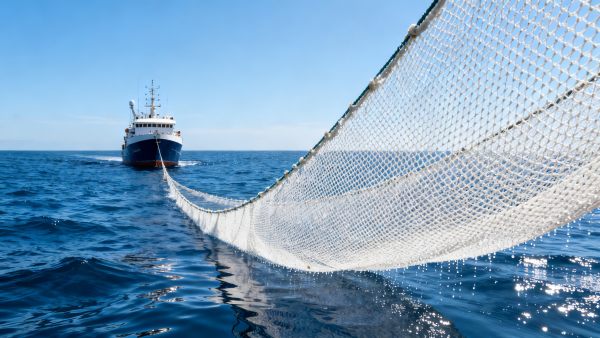
On May 17, 2026, Peru’s Institute of Marine Research (IMARPE) updated its Technical Specification for Ecological Compatibility of Offshore Fishing Gear, mandating ‘Eco-Entanglement Certification’ for all purse seines, trawl nets, and longline gear used by foreign vessels operating in Peru’s Exclusive Economic Zone. This regulatory shift directly affects Chinese fishing gear manufacturers, exporters, and vessel operators supplying or servicing the Peruvian market—and signals broader implications for global sustainable fisheries compliance frameworks.
Event Overview
On May 17, 2026, IMARPE issued an updated version of its Technical Specification for Ecological Compatibility of Offshore Fishing Gear. The revision introduces a mandatory requirement: all围网 (purse seines), 拖网 (trawls), and 延绳钓具 (longlines) deployed by vessels operating in Peru’s Exclusive Economic Zone must obtain ‘Eco-Entanglement Certification’. Certification criteria include: (1) mesh deformation rate ≤3% under simulated ocean current stress; and (2) automatic untangling time <12 seconds after single-thread breakage. Certification must be issued exclusively by IMARPE-authorized laboratories. Chinese fishing gear exporters must complete product adaptation and certification prior to port entry registration in Peru.
Industries Affected by Segment
Direct Exporters of Fishing Gear
Chinese manufacturers exporting netting systems, ropes, and assembled gear to Peru face immediate compliance requirements. Non-certified products will be denied port entry registration—effectively blocking market access. Impact manifests in delayed shipments, retooling costs, and potential contract renegotiations with Peruvian buyers or vessel operators.
Fishing Vessel Operators Using Chinese-Made Gear
Vessels registered outside Peru but fishing within its EEZ—including those chartered or managed by Chinese companies—must verify that their onboard gear meets the new standard. Failure to do so may result in operational suspension or port clearance denial during inspections. This adds a layer of pre-deployment verification previously not required.
Supply Chain Service Providers (Certification Support, Testing Labs, Logistics)
Third-party testing labs accredited by IMARPE—and logistics firms facilitating sample submission, documentation, and certification tracking—are now critical nodes. Demand for certified translation of technical dossiers, IMARPE lab coordination, and timeline-sensitive shipment planning is expected to rise. However, only IMARPE-authorized labs may issue valid certificates; non-authorized intermediaries cannot substitute this function.
What Enterprises and Practitioners Should Monitor and Do Now
Track official IMARPE implementation guidance and lab authorization updates
IMARPE has not yet published a public list of authorized laboratories or transitional timelines for existing gear in use. Enterprises should monitor IMARPE’s official website and Peru’s Ministry of Production (PRODUCE) notices for formal announcements on recognition status, grace periods, and application procedures.
Identify high-risk product categories and prioritize certification readiness
Purse seines and bottom trawls are most frequently deployed in Peru’s anchoveta fishery and carry higher entanglement risk profiles. Exporters should first assess whether their best-selling models meet the ≤3% deformation and <12-second untangling thresholds—and initiate prototype testing accordingly.
Distinguish between regulatory signal and enforceable requirement
The specification is effective as of May 17, 2026, but enforcement depends on port-level implementation capacity and inspection protocols. Analysis shows that full enforcement may be phased—especially for vessels already operating under valid permits. However, new registrations and renewals are most likely subject to immediate verification.
Prepare documentation, technical dossiers, and lab coordination workflows
Certification requires submission of material specifications, mechanical test reports, and dynamic simulation data. Exporters should compile standardized technical files in Spanish or English (as accepted by IMARPE labs), designate internal compliance liaisons, and establish direct contact with at least one IMARPE-authorized lab before initiating applications.
Editorial Perspective / Industry Observation
Observably, this update reflects a growing trend among resource-dependent coastal states to embed verifiable ecological performance criteria directly into market access rules—not just voluntary sustainability labels. From an industry perspective, it is less a one-off compliance hurdle and more a structural signal: environmental interoperability is becoming a prerequisite for trade, not a differentiator. Analysis shows that similar technical thresholds are under discussion in Chile and Ecuador, suggesting regional harmonization may follow. Current enforcement remains dependent on laboratory capacity and inspector training—so while the rule is formally in place, real-world applicability may evolve over the next 6–12 months.
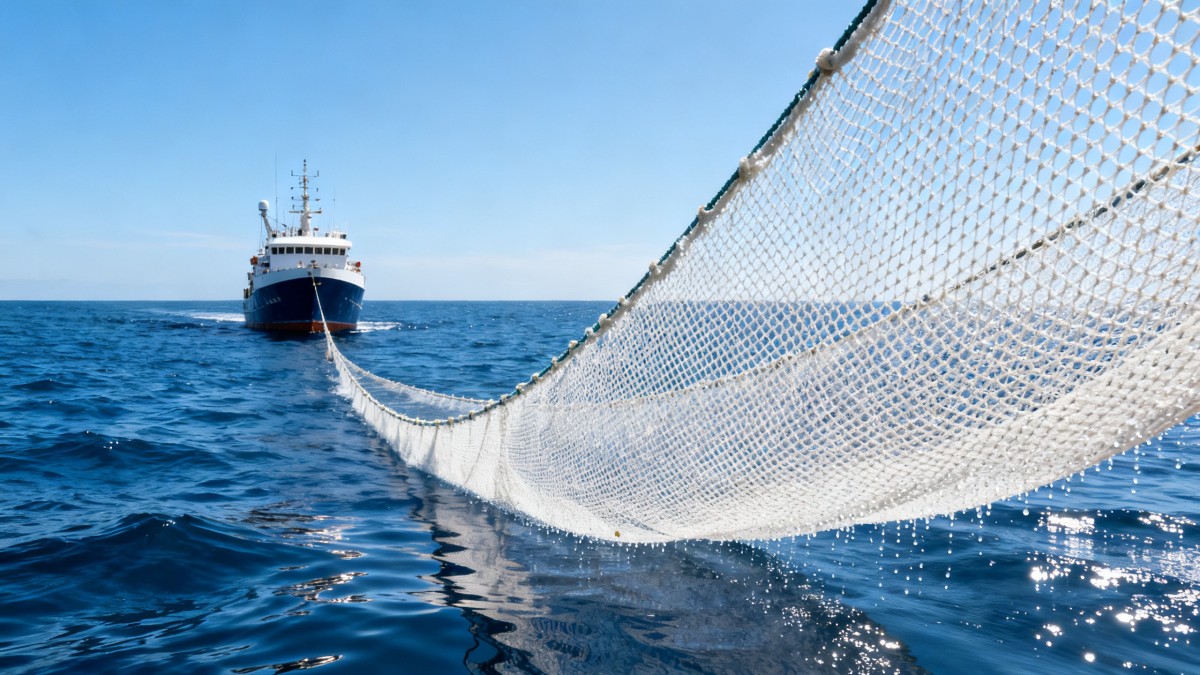
This development underscores how national fisheries research institutes—rather than trade ministries alone—are increasingly shaping technical trade barriers. For Chinese exporters, it marks a shift from product conformity (e.g., ISO standards) toward ecosystem-integrated performance validation.
Conclusion
This regulation does not represent a blanket ban or sudden market closure—but rather the institutionalization of ecological performance as a non-negotiable condition for operational access in Peru’s EEZ. It is best understood not as an isolated policy change, but as an early indicator of how marine conservation objectives are being translated into binding, testable, and enforceable technical trade conditions. Enterprises should treat it as a medium-term compliance priority requiring cross-functional alignment—not a short-term administrative task.
Source Attribution
Main source: Official notice issued by the Instituto del Mar del Perú (IMARPE), dated May 17, 2026, titled Technical Specification for Ecological Compatibility of Offshore Fishing Gear (Spanish original).
Areas requiring ongoing observation: (1) Publication of IMARPE-authorized laboratory list; (2) Clarification of enforcement timelines for vessels already operating under valid permits; (3) Acceptance criteria for third-party test reports submitted prior to IMARPE lab evaluation.
Related Intelligence
- Commercial FishingWhat Should You Check in a Fishery Equipment Maintenance Contract?What should I look for in a fishery equipment maintenance contract? Explore coverage, response times, costs, records, safety, and biosecurity essentials.
- Commercial FishingDo commercial fishing vessels with hybrid diesel-electric propulsion reduce fuel cost per kg landed by more than 12%?Commercial fishing vessels with hybrid diesel-electric propulsion *can* cut fuel cost per kg landed by >12%—but only under precise operational and infrastructure conditions. Discover the real ROI.
- Commercial FishingHow to Choose Oyster Processing Equipment for Capacity, Hygiene, and Labor EfficiencyOyster processing equipment guide: compare capacity, hygienic design, and labor efficiency to build a reliable, scalable line and make smarter buying decisions.
The Morning Broadsheet
Daily chemical briefings, market shifts, and peer-reviewed summaries delivered to your terminal.
