

The Authority in Global Agricultural Chemistry & Bio-Resources
FDA Enforces Dual GMP+DNA Verification for Botanical Extracts
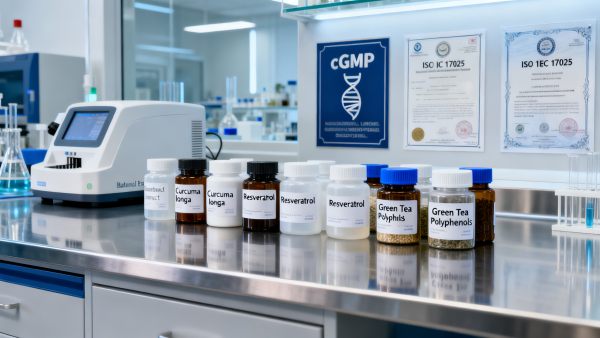
On May 17, 2026, the U.S. Food and Drug Administration (FDA) updated its Botanical Extracts Import Compliance Quick Reference List (Rev. 202605), introducing immediate, mandatory dual verification requirements for all botanical extracts entering the U.S. market—including curcumin, resveratrol, green tea polyphenols, and related products. The policy signals a sharp escalation in regulatory scrutiny of botanical ingredient integrity, directly impacting global suppliers, contract manufacturers, and brand owners reliant on plant-based actives.
Event Overview
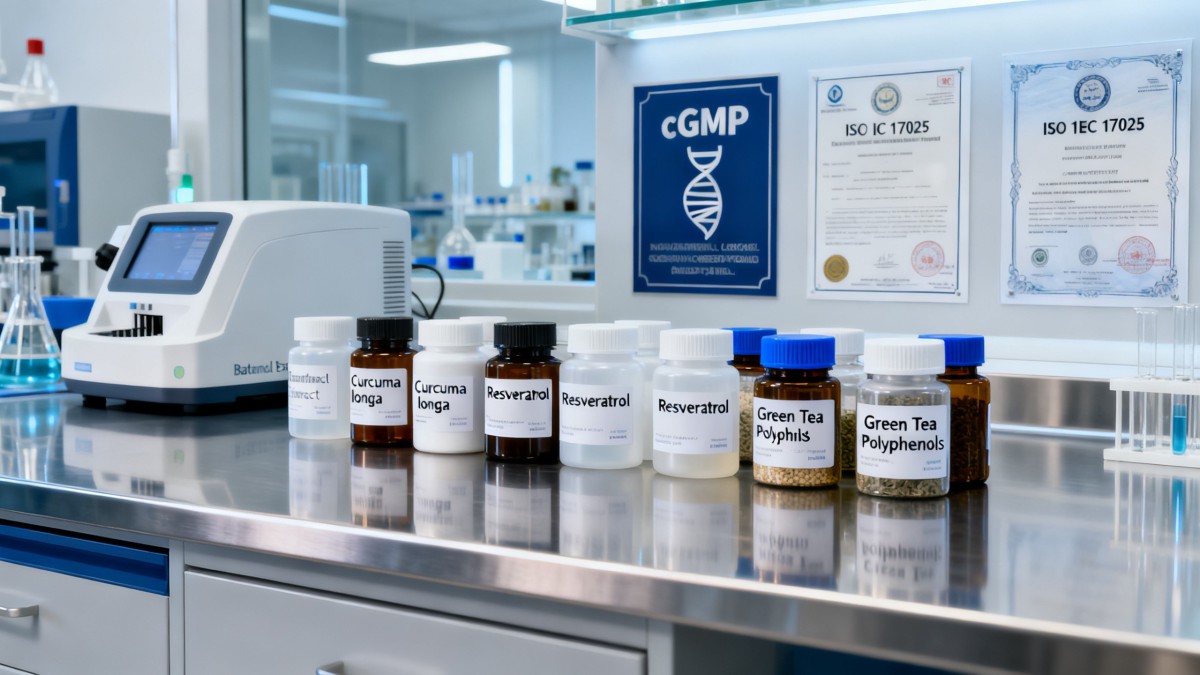
The U.S. FDA announced on May 17, 2026, the revision of its Botanical Extracts Import Compliance Quick Reference List (Rev. 202605). Effective immediately—without transition period—the update requires that every shipment of botanical extracts destined for the U.S. must concurrently satisfy two conditions: (1) the manufacturing facility holds an active FDA-registered cGMP certification under 21 CFR Part 111 for dietary supplements; and (2) each batch is accompanied by a species identification report using DNA barcoding (targeting ITS2 and psbA-trnH loci), issued by an ISO/IEC 17025-accredited laboratory. Failure to meet either condition results in classification as ‘adulterated’ and automatic detention at U.S. ports of entry.
Industries Affected
Direct Exporters & Trading Firms: Entities exporting botanical extracts from China, India, South Korea, and Latin America face immediate operational disruption. Pre-shipment documentation now requires synchronized validation of both cGMP status and batch-specific DNA reports—introducing new coordination overhead, lead-time extension, and risk of customs hold due to minor discrepancies (e.g., certificate expiration date misalignment or lab accreditation scope gaps).
Raw Material Sourcing Companies: Buyers procuring bulk botanical powders or standardized extracts must now verify supplier compliance upstream—not just at the point of sale but at the level of certified production site and traceable analytical testing. This shifts due diligence from contractual warranties to verifiable, auditable evidence, increasing sourcing lead times and raising minimum order thresholds for labs and certifiers.
Contract Manufacturers & Formulators: Facilities producing finished dietary supplements containing botanical actives are now liable for import compliance of incoming raw materials—even if they do not handle importation directly. Under FDA’s ‘responsible party’ framework, failure to validate upstream dual compliance may trigger enforcement action against the U.S.-based labeler or manufacturer, affecting facility inspection outcomes and product listing eligibility.
Supply Chain Service Providers: Third-party labs, GMP auditors, freight forwarders with regulatory support units, and digital compliance platforms face rising demand for integrated verification services—especially those offering combined cGMP readiness assessments and accredited DNA barcoding workflows. However, capacity constraints exist: fewer than 40 ISO/IEC 17025 labs globally currently list ITS2+psbA-trnH botanical authentication in their accredited scope.
Key Focus Areas & Recommended Actions
Confirm cGMP Facility Registration Status in FDA’s FURLS Database
Verify that the manufacturing site appears in FDA’s Foods Unified Registration and Listing System (FURLS) with active Part 111 registration—and cross-check the registration’s effective date and scope language to ensure it explicitly covers ‘botanical extracts used in dietary supplements.’ Do not rely solely on supplier-issued certificates.
Secure Batch-Level DNA Barcoding Reports Prior to Shipment
Require original, signed reports from ISO/IEC 17025-accredited labs specifying ITS2 and psbA-trnH amplification and sequencing results, with unambiguous species-level identification (e.g., Curcuma longa, not ‘Curcuma spp.’). Reports must include chain-of-custody documentation and reference to the exact batch number affixed to the shipped container.
Implement Dual-Compliance Documentation Protocols Internally
Update internal quality agreements and import checklists to mandate concurrent submission of (a) valid cGMP certificate + FURLS screenshot and (b) accredited DNA report—reviewed by qualified personnel prior to release for U.S. shipment. Avoid bundling or substituting documentation (e.g., ‘lab test summary’ instead of full report).
Editorial Perspective / Industry Observation
This policy is not merely a technical tightening—it reflects FDA’s strategic pivot toward forensic supply chain accountability. Analysis shows the agency is increasingly treating botanical adulteration (e.g., substitution with cheaper congeners or fillers like wheat starch) as a systemic food safety risk rather than a labeling or quality issue alone. Observably, the choice of ITS2+psbA-trnH—a marker pair validated for high discrimination among closely related species—suggests FDA anticipates targeted evasion attempts. From an industry perspective, this shift favors vertically integrated suppliers with in-house cGMP infrastructure and long-standing lab partnerships—but raises barriers for fragmented, multi-tier sourcing models common in Asia and Africa.
Conclusion
The FDA’s dual-verification mandate marks a definitive threshold in botanical regulatory maturity. It does not signal a retreat from botanical ingredients, but rather a recalibration toward demonstrable authenticity and process rigor. For stakeholders, success will hinge less on speed of response and more on structural alignment across quality systems, testing capabilities, and documentation discipline. A rational interpretation is that this standard will accelerate consolidation among compliant suppliers—and widen the performance gap between regulated and non-regulated supply chains globally.
Source Attribution & Ongoing Monitoring
Primary source: U.S. FDA, Botanical Extracts Import Compliance Quick Reference List (Rev. 202605), published May 17, 2026, accessible via FDA’s Industry Guidance Portal (https://www.fda.gov/industry/industry-guidance-documents). Also referenced: FDA Guidance for Industry: Current Good Manufacturing Practice in Manufacturing, Packaging, Labeling, or Holding Dietary Supplements (2023 revision); ISO/IEC 17025:2017 Annex A3 (testing of biological materials). Note: FDA has not yet published official FAQs or enforcement discretion guidance for transitional cases; stakeholders should monitor FDA’s Import Alerts database (IA #100-22) and forthcoming updates to the Food Safety Modernization Act (FSMA) Foreign Supplier Verification Program (FSVP) rule for potential downstream alignment.
Related Intelligence
- Botanical ExtractsChoosing Botanical Extracts for Pharmaceuticals: Potency, Purity, and ComplianceBotanical extracts for pharmaceuticals: learn how to assess potency, purity, traceability, and GMP compliance for confident, regulatory-ready supplier selection.
- Botanical ExtractsBotanical Extracts Market Outlook: Supply, Pricing, and Buyer RisksBotanical extracts market insights on supply, pricing, quality control, and buyer risks—compare suppliers confidently and protect your sourcing strategy.
- Botanical ExtractsEurope Botanical Extracts Market: Key Growth Drivers, Risks, and OpportunitiesEurope botanical extracts market insights: explore growth drivers, regulatory risks, supply-chain challenges, and scalable opportunities for compliant, high-value ingredients.
The Morning Broadsheet
Daily chemical briefings, market shifts, and peer-reviewed summaries delivered to your terminal.
