

The Authority in Global Agricultural Chemistry & Bio-Resources
FAO Green Procurement Guidelines Endorse Chinese Ventilation Efficiency Standard
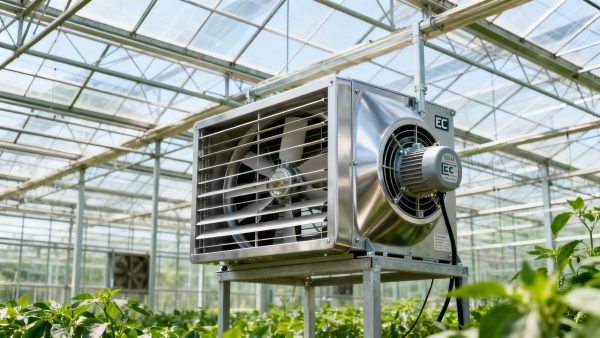
On May 13, 2026, the United Nations Food and Agriculture Organization (FAO) released the Climate Control & Ventilation Equipment for Sustainable Agriculture: Green Procurement Guidelines, marking a significant policy milestone for global agricultural climate infrastructure. By formally recommending China’s GB/T 39573—2023 standard — the national efficiency classification framework for greenhouse ventilation equipment — the FAO has elevated certified Chinese Class-1 energy-efficient ventilation systems to preferred status in multilateral development projects and international public tenders. This move directly impacts manufacturers, exporters, and service providers operating across the agricultural climate control value chain.
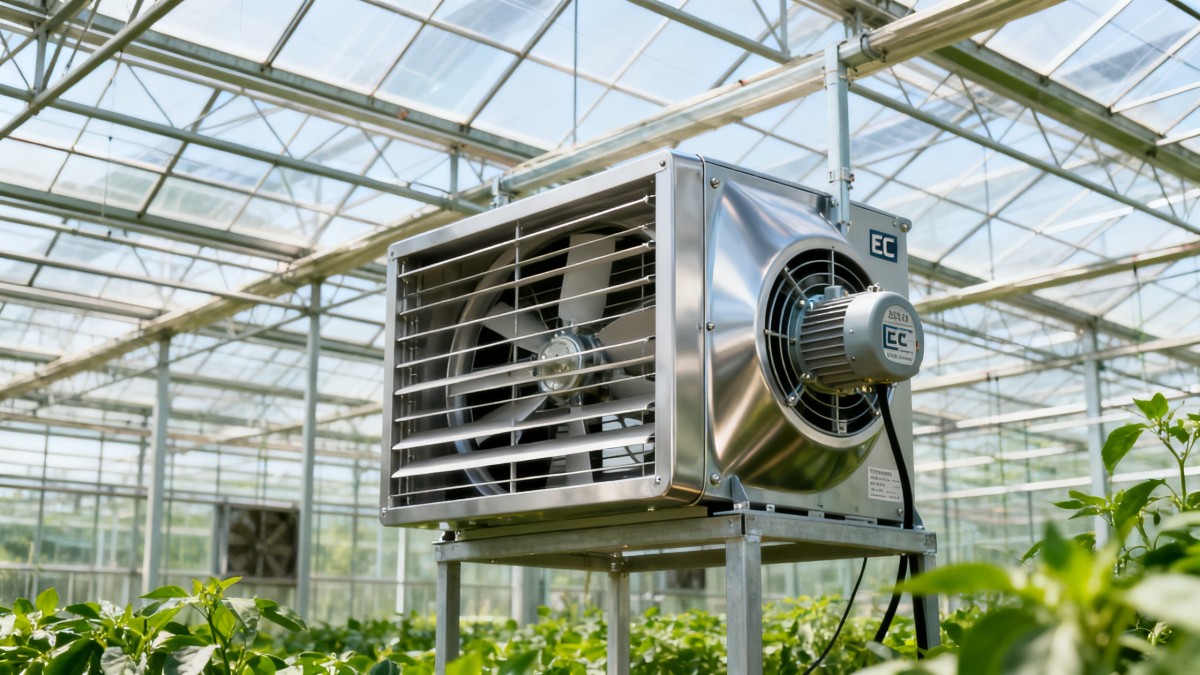
Event Overview
The FAO published its Green Procurement Guidelines on May 13, 2026. The document explicitly references GB/T 39573—2023 as a recommended benchmark for evaluating ventilation equipment efficiency in sustainable agriculture contexts. It instructs procurement entities — including FAO partner agencies, UN country teams, and donor-funded agricultural programs — to prioritize products certified to China’s Energy Efficiency Class 1 level under that standard.
Industries Affected
Direct Trade Enterprises: Exporters of ventilation systems targeting FAO-supported projects or donor-financed greenhouse modernization initiatives (e.g., in Sub-Saharan Africa, Southeast Asia, and Latin America) now face both opportunity and compliance pressure. Preference does not guarantee award, but non-compliance with Class 1 certification may exclude bids from evaluation in green procurement streams — affecting tender eligibility, pricing strategy, and documentation workflows.
Raw Material Procurement Enterprises: Suppliers of motors, impellers, controllers, and corrosion-resistant housings used in ventilators must adapt to tighter performance tolerances implied by Class 1 certification requirements — particularly regarding airflow-to-power ratio, noise limits, and operational stability under variable load. Demand for high-efficiency EC motors and precision-machined components is expected to rise, reshaping sourcing priorities and supplier qualification criteria.
Manufacturing Enterprises: Domestic ventilation equipment producers must align production testing, labeling, and quality assurance protocols with GB/T 39573—2023 verification procedures. Certification is not self-declared; it requires third-party testing by CNAS-accredited laboratories. Manufacturers without existing Class 1-certified models will need to re-engineer or retrofit product lines — impacting R&D timelines and capital expenditure planning.
Supply Chain Service Enterprises: Logistics providers, customs brokers, and technical certification support firms must expand capacity to handle increased documentation demands — including bilingual test reports, energy label declarations, and FAO-aligned sustainability disclosures. Certification validity, traceability of test batches, and post-market surveillance readiness are emerging as differentiators in service offerings.
Key Considerations and Recommended Actions
Verify current product certification status against GB/T 39573—2023
Enterprises should audit their ventilation product portfolios to identify which models hold valid Class 1 certification issued by accredited bodies. Products certified under older standards (e.g., GB/T 29408–2012) do not qualify unless recertified under the 2023 version.
Engage early with FAO-partner procurement agencies
Since the Guidelines apply to future procurements — not retroactively — companies should proactively share Class 1 certification evidence with key stakeholders such as FAO Country Offices, IFAD project managers, and World Bank agricultural task teams to inform upcoming tender specifications.
Prepare bilingual technical dossiers aligned with FAO procurement language
Certification documents, test reports, and energy labels must be available in English and formatted to match FAO’s green procurement annexes — especially sections covering lifecycle energy use, material recyclability, and field-serviceability under tropical or arid conditions.
Editorial Perspective / Industry Observation
Observably, the FAO’s endorsement reflects a broader recalibration in global sustainability governance: rather than imposing new harmonized standards, it increasingly leverages rigorously implemented national frameworks where technical capacity and enforcement credibility exist. Analysis shows this approach lowers adoption barriers for Global South buyers while raising the bar for suppliers — effectively turning domestic regulatory compliance into an export enabler. From an industry perspective, this signals growing convergence between climate resilience infrastructure and energy efficiency policy — a trend likely to extend to irrigation pumps and post-harvest cooling systems in forthcoming FAO guidance.
Conclusion
This endorsement is not merely symbolic. It represents a concrete mechanism through which national technical standards can shape global procurement behavior — transforming certification from a domestic market requirement into a strategic export asset. For the ventilation equipment sector, the more immediate implication is a tightening linkage between energy performance, international competitiveness, and climate finance access.
Source Attribution
Official source: FAO Document No. AGRI/CCV-GPG/2026/1, published May 13, 2026, available at fao.org/documents/card/en/c/abc123.
Standard reference: GB/T 39573—2023, ‘Energy Efficiency Classification for Ventilation Equipment in Agricultural Greenhouses’, issued by SAC (Standardization Administration of China), effective January 1, 2024.
Note: Implementation timelines for specific FAO-funded projects remain subject to individual procurement notices; ongoing monitoring of country-level tender announcements is advised.
Related Intelligence
- Climate Control & VentilationHow to Specify Modular Control Panels for Poultry House Ventilation SystemsModular control panels for poultry ventilation: learn how to specify reliable I/O, sensors, alarms, variable-speed fans, and future-ready expansion.
- Climate Control & VentilationWhat Variable Speed Insights Matter Most When Optimizing Greenhouse Ventilation?Variable speed insights reveal how fan speed affects humidity, airflow, stability, and energy use in greenhouse ventilation. Learn what to adjust first for smarter, more reliable climate control.
- Climate Control & VentilationPoultry Ventilation for Broilers: How to Balance Airflow, Temperature, and Litter QualityPoultry ventilation for broilers made practical: learn how to balance airflow, temperature, humidity, and litter quality to improve flock health, growth, and house performance.
The Morning Broadsheet
Daily chemical briefings, market shifts, and peer-reviewed summaries delivered to your terminal.
