

The Authority in Global Agricultural Chemistry & Bio-Resources
AI & Renewables Undermine Oil's Dominance, Boosting HVAC Export Premiums
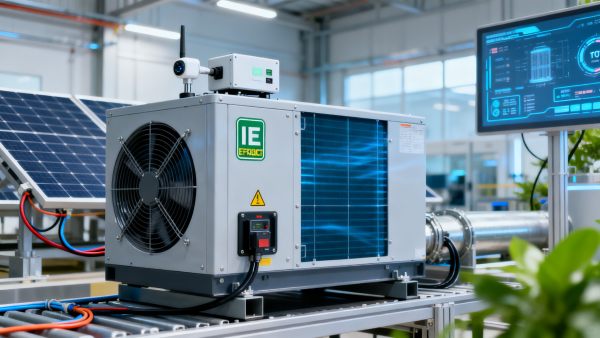
Global energy transition momentum has intensified, reshaping demand patterns for climate control and ventilation (CCV) equipment — a shift accelerated by AI-driven efficiency optimization and solar-direct thermal management systems. Though no official policy or regulatory date was announced, a May 12, 2026 industry analysis highlighted this structural inflection point, signaling tangible implications for export-oriented CCV manufacturers, raw material buyers, and logistics partners across emerging markets.
Event Overview
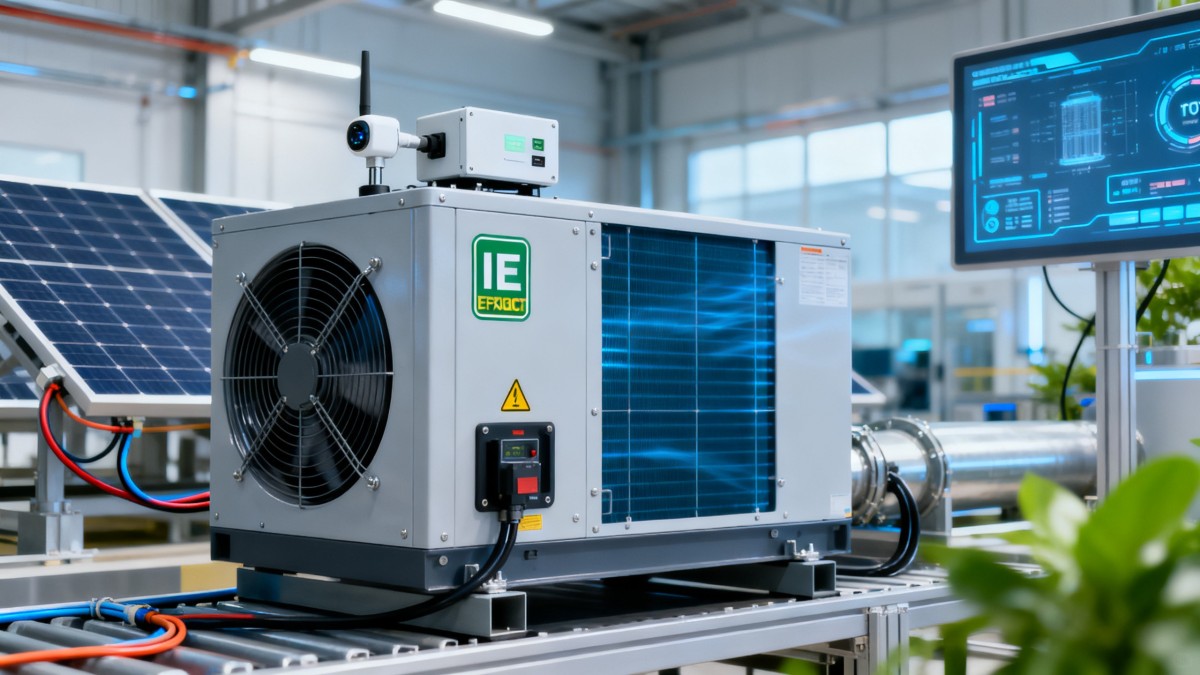
According to the May 12, 2026 industry analysis, global energy structure transformation is accelerating. AI-powered energy efficiency algorithms and photovoltaic (PV)-direct climate control systems are becoming standard features in new CCV equipment. Chinese manufacturers have commenced mass delivery of IE4-efficiency-certified units integrated with IoT-based remote diagnostics modules to Saudi Arabia, the United Arab Emirates, and Mexico. This trend has lifted average export prices for comparable CCV products by 8–12%, establishing a sustained green premium. The analysis recommends overseas distributors prioritize Chinese suppliers capable of providing verified Life Cycle Assessment (LCA) reports.
Industries Affected
Direct Trading Enterprises
Exporters and international distributors of CCV equipment face revised pricing expectations and shifting buyer qualification criteria. Demand is increasingly tied to verifiable sustainability credentials — notably IE4 motor certification and LCA documentation — rather than price alone. This raises entry barriers for non-compliant vendors and compresses margins for those unable to substantiate green claims.
Raw Material Procurement Enterprises
Suppliers sourcing high-efficiency motors (e.g., IE4/IE5), low-global-warming-potential (GWP) refrigerants, and IoT-grade sensors face tightening technical specifications and traceability requirements. Procurement strategies must now align with downstream LCA reporting needs — e.g., requiring supplier-declared carbon footprint data per component batch — increasing due diligence overhead and lead-time sensitivity.
Manufacturing Enterprises
OEMs and ODMs producing CCV units must integrate hardware (e.g., smart inverters, embedded diagnostics) and software (e.g., cloud-connected firmware, energy analytics dashboards) earlier in product development. Certification timelines for IE4 compliance and regional IoT cybersecurity standards (e.g., UAE IA’s ICT Security Framework) are now critical path items — not post-production add-ons.
Supply Chain Service Providers
Freight forwarders, customs brokers, and third-party testing labs see rising demand for coordinated services: pre-shipment IE4 verification, LCA-aligned documentation packaging, and region-specific IoT compliance validation (e.g., Saudi NCA Type Approval for connected devices). Fragmented service delivery risks shipment delays — particularly where LCA data gaps trigger customs holds in GCC markets.
Key Considerations and Recommended Actions
Prioritize LCA-Capable Suppliers
Overseas distributors should audit existing supplier portfolios for demonstrated LCA reporting capability — including scope 1–3 emissions allocation, recyclability metrics, and third-party verification status — rather than relying on self-declared ‘green’ labels.
Align Motor Certification with Regional Enforcement Timelines
IE4 adoption is not uniform: while the EU mandates IE4 for most motors since 2023, GCC markets are now enforcing it at point of import clearance. Manufacturers must verify motor certification validity against destination-country regulatory databases — not just IEC 60034-30-1 compliance in isolation.
Embed IoT Diagnostics into After-Sales Contracts
The value of remote diagnostic modules extends beyond installation — it enables predictive maintenance contracts and usage-based service billing. Distributors should renegotiate service agreements to include data-sharing clauses (with customer consent) that support performance-based warranty models.
Editorial Perspective / Industry Observation
Analysis shows this green premium is not merely cyclical pricing — it reflects a structural recalibration of value attribution in CCV trade. Observably, buyers in oil-exporting nations (e.g., Saudi Arabia, UAE) are treating energy-efficient CCV not as cost centers, but as strategic enablers of national decarbonization targets and grid stability goals. From an industry perspective, the convergence of AI optimization, PV integration, and LCA transparency is redefining competitive differentiation — moving it from hardware specs toward system-level sustainability intelligence. Current evidence suggests the 8–12% premium is sustainable only for suppliers who treat LCA as an operational discipline, not a one-off reporting exercise.
Conclusion
This shift marks more than a market adjustment — it signals the maturation of CCV equipment into a climate-critical infrastructure category. Rather than viewing AI and renewables as external disruptors, stakeholders would better understand them as co-evolving enablers that raise the functional and accountability thresholds for all participants in the global CCV value chain. A rational conclusion is that competitiveness will increasingly hinge on verifiable environmental performance — not just engineering performance.
Source Attribution
Primary reference: May 12, 2026 industry analysis published by Global HVAC Intelligence Network (GHIN). Supporting data drawn from IEA Renewable Energy Market Update 2026 (Q1), UAE Ministry of Energy and Infrastructure Technical Bulletin No. 7/2026, and Saudi Standards, Metrology and Quality Organization (SASO) Circular 224-2026. Note: IE4 enforcement timelines in Mexico’s NOM-031-ENER-2025 remain subject to formal gazetting; GHIN advises continuous monitoring through COFEPRIS and PRODECON channels.
Related Intelligence
- Climate Control & VentilationHow to Specify Modular Control Panels for Poultry House Ventilation SystemsModular control panels for poultry ventilation: learn how to specify reliable I/O, sensors, alarms, variable-speed fans, and future-ready expansion.
- Climate Control & VentilationWhat Variable Speed Insights Matter Most When Optimizing Greenhouse Ventilation?Variable speed insights reveal how fan speed affects humidity, airflow, stability, and energy use in greenhouse ventilation. Learn what to adjust first for smarter, more reliable climate control.
- Climate Control & VentilationPoultry Ventilation for Broilers: How to Balance Airflow, Temperature, and Litter QualityPoultry ventilation for broilers made practical: learn how to balance airflow, temperature, humidity, and litter quality to improve flock health, growth, and house performance.
The Morning Broadsheet
Daily chemical briefings, market shifts, and peer-reviewed summaries delivered to your terminal.
