

The Authority in Global Agricultural Chemistry & Bio-Resources
Where aquaculture & fishery investment risks often begin
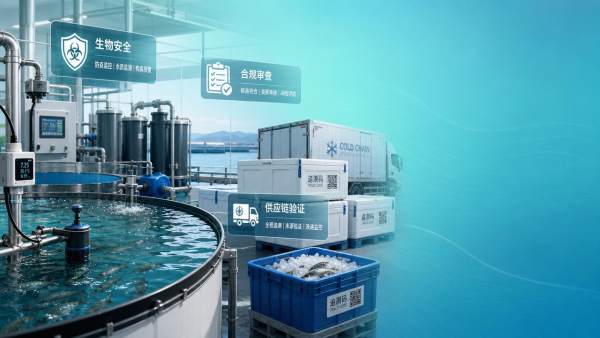
In aquaculture & fishery, investment risk rarely starts with market volatility alone. It usually begins earlier, inside technical assumptions, weak supplier evidence, and poorly scoped compliance obligations. When capital is committed before those details are tested, cost overruns, biological losses, and underperforming assets become far more likely. For any organization assessing quaculture & Fishery projects, the first layer of protection is a disciplined checklist that exposes hidden risk before contracts are signed.
Why checklist-based judgment matters in quaculture & Fishery investment
Aquaculture & fishery projects combine biology, engineering, utilities, logistics, feed inputs, and environmental controls. That mix creates risk across several systems at once, not just within one budget line.
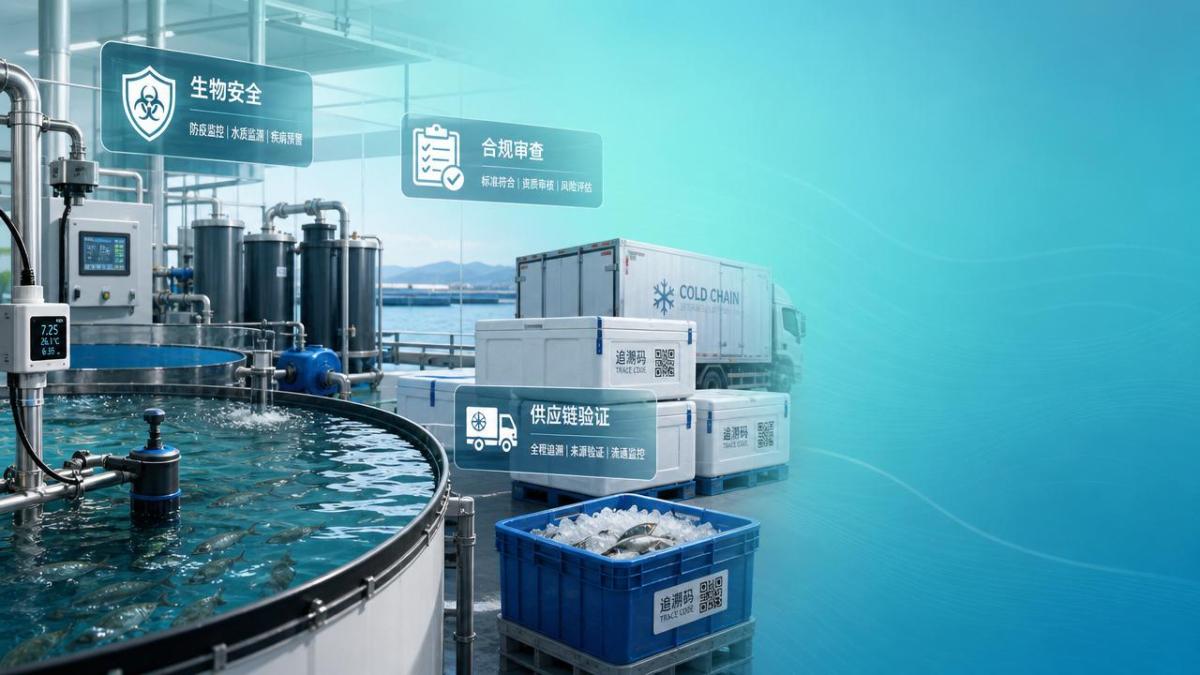
A checklist reduces blind spots. It forces technical verification before financial approval, especially where vendor claims, site conditions, and local regulations do not align cleanly.
This approach is especially relevant in integrated primary industries, where procurement choices affect operating margins, sustainability reporting, and downstream supply continuity over several years.
Core checklist: where aquaculture & fishery investment risks often begin
- Verify biological assumptions before reviewing revenue models. Check stocking density, survival rate, feed conversion ratio, growth cycle, disease history, and water quality dependencies against site-specific evidence.
- Audit supplier data at source. Request commissioning records, reference installations, maintenance logs, energy consumption curves, and failure reports instead of relying on brochure specifications.
- Map full compliance costs early. Include permits, effluent treatment, biosafety controls, traceability systems, residue monitoring, and environmental reporting in the total capital plan.
- Stress-test utility requirements. Confirm power quality, backup generation, oxygen delivery, pumping redundancy, and water intake resilience under peak seasonal and emergency operating conditions.
- Review feed and input security. Assess supplier concentration, ingredient volatility, cold-chain needs, additive quality, and import dependency that may disrupt biological performance or margin stability.
- Measure disease exposure pathways. Examine broodstock sourcing, quarantine protocols, vaccination strategy, pathogen screening, and biosecurity zoning across hatchery, grow-out, and harvest stages.
- Validate site engineering assumptions. Test soil conditions, salinity variation, drainage design, corrosion risk, storm exposure, and carrying capacity before finalizing layout or pond construction.
- Examine data visibility standards. Ensure sensors, SCADA, laboratory testing, and batch traceability can produce decision-grade records, not fragmented operational snapshots.
- Model logistics beyond harvest. Include live transport, processing bottlenecks, ice availability, export timing, and sanitary handling limits when estimating marketable output.
- Link contract terms to performance reality. Tie milestones, warranties, spare parts, and training obligations to measurable technical outcomes instead of generic delivery language.
Scenario notes across common quaculture & Fishery investment models
Land-based recirculating aquaculture systems
RAS projects often appear attractive because of water efficiency and high production control. However, they concentrate failure risk inside oxygenation, filtration, power continuity, and sensor accuracy.
In this quaculture & Fishery segment, underestimated energy demand and weak alarm response design can turn minor technical faults into major biomass losses within hours.
Coastal cage farming
Cage systems are exposed to weather, current speed, fouling pressure, escape risk, and marine permit restrictions. Site hydrodynamics matter more than optimistic production spreadsheets.
Early aquaculture & fishery risk often appears when mooring design, net maintenance intervals, and disease transfer from neighboring sites are not built into the original feasibility review.
Inland ponds and semi-intensive systems
Pond investments can look simpler, yet they carry hidden exposure through seepage, water exchange constraints, sediment buildup, and inconsistent aeration performance.
For quaculture & Fishery projects in emerging production zones, the biggest early error is assuming local infrastructure can support stable feed delivery, diagnostics, and post-harvest handling.
Capture fishery modernization and cold-chain upgrades
Fishery investments are not limited to farming assets. Vessel equipment, refrigeration systems, and traceability platforms can fail financially if land-side handling remains inefficient.
In aquaculture & fishery value chains, returns improve only when harvest timing, grading, storage, and compliance documentation work as one integrated operating system.
Frequently overlooked risk triggers
Hidden commissioning gaps
Equipment may be delivered on time but never tuned for real biological loads. Performance shortfalls often originate during startup, not during later routine operations.
Compliance treated as a paperwork phase
Permits, discharge thresholds, and food safety controls influence design from the beginning. If addressed too late, redesign costs can materially damage project economics.
Insufficient spare parts planning
Critical pumps, blowers, sensors, and dosing units require replacement logic. In remote quaculture & Fishery operations, lead time risk can exceed the original equipment price concern.
Training underestimated in budget models
Modern aquaculture & fishery systems depend on procedure discipline. Without structured training, advanced assets are operated manually, inconsistently, and below design performance.
Traceability disconnected from operations
Data systems often satisfy reporting needs but fail operationally. If batch, feed, treatment, and mortality records are not connected, root-cause analysis becomes unreliable.
Practical execution steps before approving capital
- Run a technical due diligence review separate from the commercial proposal, and compare vendor assumptions with independent biological and engineering benchmarks.
- Build a three-case model covering normal, stressed, and failure conditions, including mortality spikes, power disruption, delayed permits, and feed cost escalation.
- Require site visits or audited evidence from comparable installations using similar species, density, climate conditions, and utility constraints.
- Translate compliance obligations into line-item costs, operating procedures, and reporting responsibilities before purchase orders are issued.
- Define acceptance tests for water quality control, uptime, energy draw, alarm performance, and staff training outcomes before commissioning begins.
These actions strengthen decision quality across aquaculture & fishery projects and reduce the chance that early optimism becomes long-term operational drag.
Conclusion and next-step action guide
Where quaculture & Fishery investment risks often begin is rarely a mystery after the fact. The early warning signs are usually visible in unverified technical data, narrow budgeting, and incomplete compliance planning.
A stronger path is straightforward. Start with a checklist, challenge every key assumption, and connect biology, engineering, and regulation inside one approval process.
Before moving forward, assemble a document set that includes site data, supplier evidence, utility assessments, permit mapping, and scenario-based operating costs. That single step creates a more resilient foundation for any aquaculture & fishery investment.
Related Intelligence
- RAS SystemsSustainable Aquaculture Practices That Cut Feed Waste and Protect Fish Farm Water QualitySustainable aquaculture for fish farms: reduce feed waste, protect water quality, and build resilient, efficient systems with practical strategies.
- RAS SystemsDrum Filter System Price: How Flow Rate, Micron Rating, and Automation Affect CostDrum filter system price depends on flow rate, micron rating, automation, materials, and lifecycle costs. Compare quotes confidently and choose the right system.
- RAS SystemsHow to Specify Large-Scale Fish Farming Equipment for High-Output RAS ProjectsLarge scale fish farming equipment guide for high-output RAS projects—specify tanks, filtration, oxygen, automation, and redundancy for reliable growth.
The Morning Broadsheet
Daily chemical briefings, market shifts, and peer-reviewed summaries delivered to your terminal.
