

The Authority in Global Agricultural Chemistry & Bio-Resources
How to shortlist agri & forestry machinery manufacturers
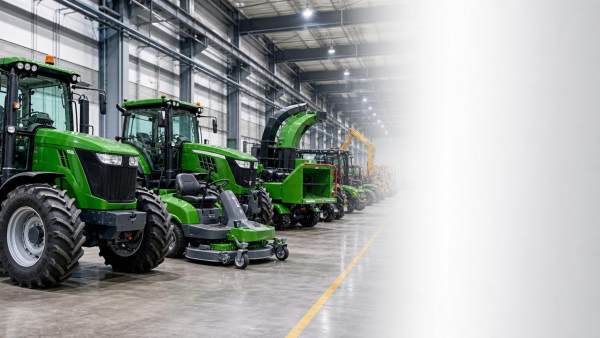
Shortlisting Agri & Forestry machinery manufacturers is no longer just about comparing catalogs or prices. For dealers, distributors, and agents, the right partner must demonstrate product reliability, regulatory readiness, after-sales capability, and long-term supply consistency. This guide outlines the key criteria that help procurement-focused intermediaries identify manufacturers with the technical strength and commercial credibility to support sustainable market growth.
What dealers should evaluate first when shortlisting manufacturers
The core search intent behind evaluating Agri & Forestry machinery manufacturers is practical supplier selection. Readers want a clear way to reduce sourcing risk and identify manufacturers that can support profitable, long-term channel growth.
For distributors and agents, the first question is not simply who makes the widest product range. It is which manufacturer can deliver dependable machines, stable lead times, documentation, and support that protects your reputation in market.
A weak manufacturing partner can create expensive downstream problems. These include parts shortages, warranty disputes, inconsistent product quality, and compliance gaps that make sales more difficult with commercial farms, contractors, or government buyers.
That is why shortlisting should begin with a business-fit screen. Before comparing specifications, confirm whether the supplier is truly structured to support channel partners rather than only direct sales or one-off export orders.
Start with channel fit, not just product fit
Many Agri & Forestry machinery manufacturers offer technically capable equipment, but not all are suitable for distributor-led growth. A good shortlist begins by testing whether the manufacturer’s go-to-market model aligns with your territory strategy.
Look at how the company works with dealers in existing export markets. Do they grant territorial clarity, protect pricing discipline, and provide commercial support, or do they bypass intermediaries when direct opportunities appear?
Ask whether they have a documented dealer program. Serious manufacturers usually define onboarding standards, minimum order frameworks, marketing support, spare parts expectations, and escalation processes for warranty or technical claims.
You should also assess their openness to market development. If your role includes building awareness, organizing demonstrations, or training end users, the supplier should contribute assets, technical staff, and co-branded materials.
Manufacturers that treat distribution as a strategic channel usually show better long-term discipline. They are more likely to invest in partner success, maintain stable relationships, and support demand generation rather than chasing short-term shipment volume.
Assess product reliability through evidence, not brochures
Catalog claims are easy to produce. Reliable evidence is harder to fake. When comparing Agri & Forestry machinery manufacturers, focus on the proof behind durability, performance, and maintenance intervals across real operating conditions.
Ask for model-level test data, field performance records, and references from markets with comparable crop, soil, climate, or timber conditions. Machines that perform well in one region may not suit your target applications without adaptation.
For agricultural machinery, pay attention to engine performance, fuel efficiency, hydraulic stability, transmission reliability, and compatibility with common implements. For forestry equipment, stress structural durability, safety systems, and performance under heavy load cycles.
Spare parts wear rates matter almost as much as machine purchase price. A lower-cost unit can become commercially unviable if bearings, belts, cutting components, filters, or hydraulic seals require frequent replacement or irregular sourcing.
Also review failure-response history. Ask how the manufacturer tracks recurring defects, whether design revisions are documented, and how quickly production fixes are introduced. Mature OEMs usually have a visible quality feedback loop.
Verify manufacturing capability and consistency
Distributors often focus on the machine itself and overlook factory consistency. Yet the biggest difference between a promising supplier and a reliable one is usually process control inside the manufacturing operation.
Request information on production capacity, assembly lines, welding standards, machining capability, paint systems, testing procedures, and critical component sourcing. You want to know whether quality can remain stable as order volume increases.
It is also useful to understand how much of the machine is made in-house versus outsourced. Heavy dependence on uncontrolled subcontracting can create variation in fit, finish, delivery schedules, and replacement part compatibility.
Factory audits, virtual walkthroughs, or third-party inspections are especially valuable before entering exclusive or semi-exclusive arrangements. Even basic observations about workflow discipline, inventory control, and final inspection can reveal hidden operational risks.
If the supplier cannot explain its production controls clearly, treat that as a warning sign. Strong manufacturers are usually comfortable discussing tolerances, traceability, incoming inspection, and corrective action systems in commercial conversations.
Check compliance, certifications, and export readiness
For international channel partners, regulatory readiness is not a secondary issue. It directly affects customs clearance, customer confidence, tender eligibility, and liability exposure in the destination market.
Depending on the machinery category and destination region, ask for relevant certifications, declarations of conformity, emissions compliance records, safety documentation, and operator manuals in the required language formats.
For tractors, harvesters, sprayers, wood chippers, loaders, or forestry attachments, regulatory obligations may include engine emissions, machine guarding, noise thresholds, electrical standards, braking requirements, and labeling rules.
Do not assume every manufacturer understands market-specific compliance obligations. Some can produce acceptable machinery but lack the documentation discipline needed for repeated export transactions into regulated markets.
A supplier with strong export readiness should provide packing standards, HS code familiarity, document accuracy, serial tracking, and responsiveness when import authorities or end customers request technical clarification.
After-sales support is where channel success is won or lost
Dealers and distributors live with the consequences of every machine sold. That makes after-sales support one of the most important criteria when shortlisting Agri & Forestry machinery manufacturers.
Ask how spare parts are stocked, how quickly urgent orders are processed, and whether the manufacturer keeps service kits for fast-moving maintenance items. A great product loses value quickly if downtime is prolonged.
Technical support structure also matters. Is there a trained engineering team available for troubleshooting? Are there service manuals, exploded diagrams, video support resources, and training modules for dealer technicians?
Warranty handling is another key test. Review claim procedures, reimbursement rules, excluded conditions, and average decision times. Ambiguous warranties often create channel conflict because the distributor ends up carrying service burden and customer frustration.
The best manufacturers support the full lifecycle, not just the initial sale. They understand that reliable parts supply, field diagnostics, and service training are central to protecting machine uptime and channel credibility.
Evaluate supply chain resilience and delivery reliability
Recent disruptions have shown that manufacturing quality alone is not enough. Dealers need confidence that shipments, parts, and component availability will remain stable across seasonal demand cycles and external shocks.
Ask manufacturers about lead times for finished machines, critical imported components, and high-turnover spare parts. You should also understand whether they keep safety stock or rely on just-in-time procurement for essential assemblies.
Suppliers with concentrated dependency on one engine vendor, one gearbox source, or one export route may face greater disruption risk. This does not automatically disqualify them, but it should affect your ranking and contingency planning.
Review historical delivery performance if available. On-time shipment data, backlog trends, and production recovery after disruption can tell you more than optimistic verbal commitments made during supplier onboarding discussions.
For seasonal agricultural demand, timing failures can be especially damaging. Missing a planting or harvest window can cost your customers far more than the machine value difference between competing manufacturers.
Compare commercial terms beyond the quoted unit price
Price matters, but it is only one part of channel profitability. Dealers should compare the full commercial model behind each manufacturer before finalizing a shortlist.
Look at margin structure, payment terms, minimum order quantities, demo unit policies, exclusivity conditions, marketing support, and spare parts discounts. A slightly higher purchase price may still generate better long-term economics.
You should also estimate total landed cost, including freight, duties, packaging, pre-delivery preparation, technician training, and warranty reserve assumptions. These hidden items can significantly change supplier attractiveness.
Be careful with aggressive introductory pricing that lacks long-term stability. If the manufacturer cannot support margin consistency, future price shifts may damage distributor competitiveness or create conflict with existing customers.
Healthy channel relationships depend on transparent economics. The manufacturer should understand how you make money across equipment sales, parts, service, and repeat business rather than evaluating success only by factory shipment volume.
Use references and market signals to validate credibility
Reliable Agri & Forestry machinery manufacturers usually leave a visible footprint. References, installed base, trade fair presence, technical publications, and repeat export business can all help validate whether the supplier is truly established.
Ask for channel references from similar regions or buyer types. Conversations with existing distributors can reveal practical truths about shipment quality, communication speed, warranty behavior, and spare parts consistency.
Independent market signals also matter. Look for evidence of continued product development, stable branding, professional documentation, and responsiveness in industry forums or B2B platforms. Weak digital and technical presence can signal weak organizational maturity.
That said, do not rely only on branding strength. Some excellent mid-sized manufacturers have limited marketing sophistication but strong engineering discipline. The goal is balanced validation, not superficial image scoring.
A credible shortlist combines hard evidence from the factory, soft evidence from the market, and direct evidence from users or channel peers who have already tested the relationship.
A practical shortlisting framework for distributors and agents
To make decisions easier, use a weighted evaluation framework. Score each manufacturer across channel fit, product reliability, manufacturing control, compliance readiness, after-sales support, supply resilience, and commercial viability.
You can assign higher weight to the factors most tied to your business model. For example, a service-led distributor may prioritize spare parts and technical support, while a project-focused agent may emphasize compliance and delivery capability.
Create a three-stage filtering process. First, remove suppliers that fail basic channel or compliance requirements. Second, compare operational strength through documents, interviews, and references. Third, validate finalists through audit, sample order, or market trial.
This method prevents common mistakes such as selecting on price too early, overvaluing polished brochures, or ignoring service complexity until after market launch. A disciplined shortlist protects both revenue and reputation.
In practice, the strongest manufacturer is rarely the one with the cheapest quote or the broadest catalog. It is the one that consistently helps you sell, support, and scale with fewer avoidable risks.
Conclusion: shortlist for long-term channel performance
For dealers, distributors, and agents, shortlisting Agri & Forestry machinery manufacturers is fundamentally a risk-management and growth decision. The right partner should strengthen your market position, not create hidden operational burden.
Focus first on channel alignment, proven product reliability, factory consistency, compliance readiness, and after-sales depth. Then test supply chain resilience, commercial logic, and reference-backed credibility before making a final choice.
When evaluated this way, a shortlist becomes more than a list of possible suppliers. It becomes a strategic filter that helps you identify manufacturers capable of supporting durable sales, service quality, and long-term customer trust.
Related Intelligence
- Heavy Agri MachineryHow Does Market Forecasting Help Plan Farm Machinery Procurement?How does market forecasting help agri procurement planning? Discover how to time machinery purchases, protect cash flow, and reduce delivery risks before critical farm deadlines.
- Heavy Agri MachineryIs It Safe to Source Farm Machinery from Emerging Markets?Is it safe to source agri machinery from emerging markets? Discover how to verify suppliers, check compliance, and secure parts support to protect your farm and avoid costly buying mistakes.
- Heavy Agri MachineryHow to Size a Combine Harvester for Acreage, Crop Mix, and Harvest WindowsCombine harvesters sized for your acreage, crop mix, and harvest window: calculate real field capacity, match headers, and avoid costly bottlenecks.
The Morning Broadsheet
Daily chemical briefings, market shifts, and peer-reviewed summaries delivered to your terminal.
