

The Authority in Global Agricultural Chemistry & Bio-Resources
How to compare agri & forestry machinery makers
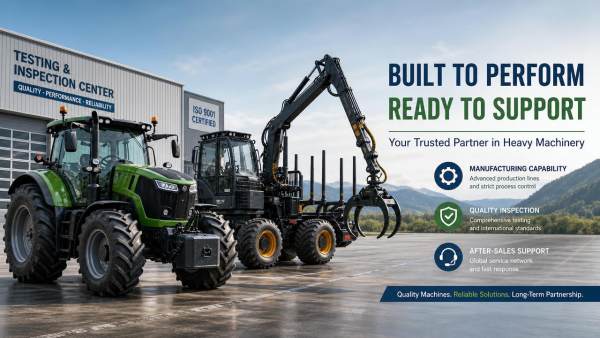
Selecting among Agri & Forestry machinery manufacturers requires more than a quick price check. For business evaluators, the most effective comparison starts with a simple principle: the best maker is not the lowest-cost supplier, but the one that can deliver reliable equipment, verified compliance, stable parts support, and predictable lifecycle value.
Searchers using terms like Agri & Forestry machinery manufacturers are usually trying to reduce procurement risk before shortlisting suppliers. They want a practical evaluation framework, not generic brand lists. Their key concerns typically include manufacturing capability, engineering consistency, certification status, service responsiveness, total cost of ownership, and supply chain transparency.
The most useful way to compare makers is to examine what directly affects operational uptime and commercial exposure. That means focusing on factory strength, product fit, quality systems, delivery reliability, aftermarket support, and evidence from real deployments. Broad company claims and marketing language should carry much less weight unless they are backed by documents, data, and site validation.
This guide is written for business evaluators who need an objective basis for supplier comparison. It explains which factors deserve the most attention, what warning signs to watch for, and how to structure a score-based review that helps identify long-term partners rather than short-term vendors.
Start with the question that matters most: can this manufacturer support your operating model?
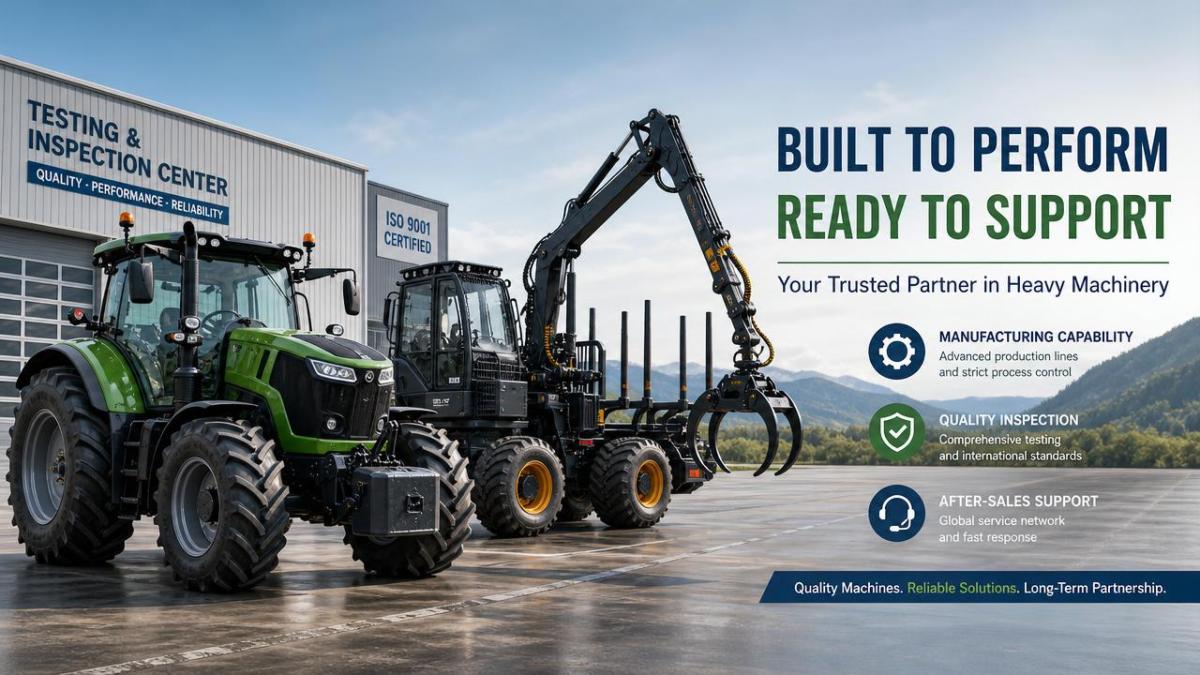
Before comparing specifications or prices, define the context of use. A manufacturer that performs well for row-crop farming may not be the best fit for forestry extraction, steep terrain, high-humidity regions, or intensive seasonal workloads.
Business evaluators should first align equipment requirements with business outcomes. That includes target acreage or timber volume, operator skill levels, maintenance resources, fuel expectations, terrain conditions, and expected annual utilization rates.
This early alignment prevents a common procurement error: comparing suppliers on machine category alone. Two makers may both offer tractors, harvesters, skidders, sprayers, or loaders, yet their machines may be engineered for very different duty cycles and support environments.
At this stage, the right comparison question is not “Who offers the cheapest machine?” but “Which manufacturer can sustain our productivity targets with acceptable service risk over the asset life?” That framing leads to better supplier selection.
Evaluate manufacturing capability before brand reputation
Brand visibility can influence initial interest, but it should not substitute for production evidence. Some well-known names outsource substantial parts of manufacturing, while less visible OEMs may maintain highly disciplined facilities with strong process control.
Ask for a clear overview of manufacturing scope. Does the maker produce frames, transmissions, hydraulic systems, control assemblies, or powertrain components in-house, or are critical parts sourced from multiple external vendors?
In-house capability often indicates stronger control over tolerances, lead times, and corrective action. It also makes root-cause analysis easier when field failures occur. However, outsourced models can still perform well if supplier qualification and inspection systems are mature.
Capacity matters as much as craftsmanship. A supplier may build excellent prototypes or low-volume units, yet struggle with delivery consistency when larger orders arrive. Review annual output, surge capacity, bottleneck processes, and typical lead time performance.
If possible, request production data across the last 12 to 24 months. Look for on-time delivery rates, rework levels, warranty return trends, and evidence that the factory can manage both customization and standardization without losing quality discipline.
Compare engineering quality through failure risk, not feature lists
Many business buyers are presented with feature-heavy brochures, but engineering quality is better assessed through durability, maintainability, and stability in actual operating conditions. More features do not automatically mean lower operational risk.
Focus on structural design, material grade, hydraulic performance, drivetrain reliability, corrosion resistance, and protection of electrical systems. In forestry applications especially, component shielding and ruggedized construction can significantly affect lifecycle performance.
Ask manufacturers how they validate design integrity. Useful evidence includes finite element analysis, bench testing, field endurance trials, load simulations, and feedback loops from fleet users. The more clearly a maker can explain its engineering validation, the stronger the credibility.
Serviceability should be weighted heavily in comparison. Machines designed for easier access to filters, pumps, belts, electronics, and lubrication points usually reduce downtime and labor cost. Maintenance complexity directly affects ownership economics.
Software and controls also deserve scrutiny. Precision agriculture, telematics, sensor integration, and semi-automated functions can add value, but only if the system is reliable, user-friendly, and supported with diagnostics and updates throughout the product lifecycle.
Use compliance and certification as a credibility filter, not a box-ticking exercise
For professional procurement, compliance is not a formality. It is a direct indicator of whether a manufacturer can meet market-entry requirements, safety obligations, and customer audit expectations across different regions.
Review the relevant certifications and standards for the machinery category and export destination. These may include ISO-based quality systems, CE marking, emissions compliance, occupational safety requirements, and region-specific environmental or road-use regulations.
Do not stop at asking whether the maker is “certified.” Request current certificates, issuing bodies, scope statements, and dates. A certificate that covers one production unit or process may not apply to the full machinery range being considered.
Also ask how regulatory changes are monitored. Emissions, operator safety, digital controls, and environmental requirements continue to evolve. Manufacturers with established compliance teams are better prepared to protect buyers from delayed approvals or market restrictions.
For evaluators, the practical question is whether compliance systems reduce your business risk. Strong documentation, traceability, and audit readiness are often more meaningful than promotional claims about international reach.
After-sales support often decides the real winner
When comparing Agri & Forestry machinery manufacturers, after-sales support frequently has a greater effect on long-term value than the purchase price difference between suppliers. Downtime during planting, harvesting, or timber operations is expensive.
Assess the service network in the regions where equipment will operate. This includes dealer coverage, field technician availability, service response times, training quality, and the availability of remote diagnostics or telematics-based troubleshooting.
Spare parts capability should be reviewed in detail. Ask for fill rates, stock locations, lead times for critical components, and escalation procedures for out-of-stock items. A machine with competitive pricing can become a costly liability if parts are slow to arrive.
Warranty terms also require careful reading. Compare not just duration, but exclusions, labor coverage, response obligations, and claim-processing timelines. Some suppliers advertise generous warranties that are difficult to enforce in cross-border transactions.
Strong manufacturers treat support as a core part of the product. They provide maintenance schedules, operator manuals, technical updates, structured training, and clear channels for issue reporting. These elements can materially reduce operational disruption.
Measure supply chain transparency and resilience
Recent disruptions have made supply chain resilience a strategic procurement issue. Business evaluators should look beyond assembly plants and understand where critical inputs, castings, engines, hydraulics, electronics, and control modules originate.
A manufacturer with transparent supplier mapping is generally easier to evaluate and lower risk to manage. Ask whether major components come from single sources, whether alternates are qualified, and how inventory is managed for essential assemblies.
Country-of-origin exposure can affect tariffs, shipping time, sanctions compliance, and political risk. For globally active buyers, transparency here is essential for both budgeting and continuity planning.
Traceability systems are equally important. The ability to track lot numbers, serial-linked components, and supplier batches improves warranty analysis and helps contain the impact of recalls or field defects.
Manufacturers that are reluctant to discuss sourcing risk, logistics contingencies, or supplier qualification should be evaluated cautiously. Openness in this area is often a sign of process maturity and commercial reliability.
Compare total cost of ownership, not just unit price
For business evaluators, headline price is only one part of the commercial equation. A lower initial quote can be offset by weaker fuel efficiency, shorter service intervals, higher component wear, limited resale value, or frequent downtime.
A practical total cost of ownership model should include acquisition cost, shipping, import duties, commissioning, training, maintenance, spare parts, fuel or energy consumption, software licensing if relevant, and expected residual value.
It is also useful to estimate the cost of lost productivity. If one manufacturer offers stronger uptime performance or faster service response, the value of avoided downtime may outweigh a meaningful portion of the purchase premium.
For fleet buyers, standardization matters too. Consolidating around one maker can simplify training, inventory management, workshop tooling, and data integration. However, standardization only works if the supplier can support volume and regional service needs.
Use scenarios rather than a single number. Compare best-case, expected, and stress-case ownership outcomes over three to seven years. This gives stakeholders a more realistic basis for comparing manufacturers under operational uncertainty.
Ask for proof from real installations and customer references
Claims become far more credible when they are tied to real operating environments. Ask manufacturers for references in applications similar to your own, including machine type, climate conditions, workload intensity, and maintenance model.
The most useful references are specific and measurable. Look for uptime percentages, average maintenance cost, failure history, fuel performance, operator feedback, and lead times for support interventions.
If direct customer conversations are possible, ask what happened after installation. Many procurement problems emerge not at delivery, but during the first year of operation when adjustments, spare parts, and service expectations are tested.
Site visits are ideal where contract value justifies them. A factory audit, dealer assessment, or field inspection can reveal far more than a presentation deck. Even virtual tours can help validate equipment assembly, testing practices, and warehouse readiness.
Independent market feedback also matters. Trade records, legal disputes, recall history, and online service complaints should not automatically disqualify a supplier, but they should inform risk weighting in the evaluation.
Build a weighted scorecard for objective comparison
To reduce bias, business evaluators should compare manufacturers through a weighted scorecard rather than informal impressions. This creates a documented basis for internal approval and improves alignment across procurement, operations, and finance teams.
A practical scorecard might assign weight to six main categories: manufacturing capability, engineering quality, compliance, service support, supply chain resilience, and total cost of ownership. Additional criteria can be added for digital integration or sustainability goals.
The weighting should reflect business priorities. A contractor facing intense seasonal pressure may give more value to uptime and parts availability, while a multinational buyer may place greater emphasis on compliance, traceability, and cross-border service support.
Each score should be tied to evidence. For example, “parts support” should be based on documented fill rates and regional stock positions, not on a supplier’s general assurance that parts are available.
This method also helps in executive review. When decision-makers ask why one manufacturer was selected over another, the answer becomes visible in a transparent, evidence-based framework rather than subjective preference.
Common red flags when reviewing Agri & Forestry machinery manufacturers
Several warning signs appear repeatedly in machinery sourcing. One is inconsistent documentation, such as mismatched specifications, outdated certificates, or unclear warranty language. These often signal weak internal control.
Another red flag is over-customization too early in the sales cycle. If a manufacturer promises extensive engineering changes before fully understanding your application, the risk of delays, testing issues, and cost escalation increases.
Be cautious when response quality is poor. Slow answers, vague technical explanations, and limited ownership of service questions can indicate future support problems after contract award.
Large price gaps also deserve investigation. An unusually low quote may reflect lower-grade materials, excluded accessories, thin spare parts support, or unrealistic delivery assumptions. Price competitiveness is positive, but unexplained deviations require closer examination.
Finally, avoid suppliers that rely heavily on reputation but resist audits, data requests, or reference checks. Credible manufacturers understand that serious buyers need evidence before commitment.
Conclusion: the best manufacturer is the one that lowers risk while sustaining performance
Comparing Agri & Forestry machinery manufacturers effectively means moving past brochures and unit pricing to evaluate the full operating reality behind the machine. For business evaluators, the strongest suppliers are those that combine engineering discipline, production consistency, compliance readiness, dependable support, and transparent sourcing.
If you structure the review around operational fit, manufacturing capability, service depth, and total lifecycle value, the comparison becomes clearer and more defensible. The goal is not simply to buy equipment, but to select a maker that can support productivity and protect your business over time.
In most cases, the winning manufacturer is not the one with the most aggressive sales message. It is the one that can prove, with documents and field evidence, that it will deliver stable performance long after the purchase order is signed.
Related Intelligence
- Heavy Agri MachineryHow Does Market Forecasting Help Plan Farm Machinery Procurement?How does market forecasting help agri procurement planning? Discover how to time machinery purchases, protect cash flow, and reduce delivery risks before critical farm deadlines.
- Heavy Agri MachineryIs It Safe to Source Farm Machinery from Emerging Markets?Is it safe to source agri machinery from emerging markets? Discover how to verify suppliers, check compliance, and secure parts support to protect your farm and avoid costly buying mistakes.
- Heavy Agri MachineryHow to Size a Combine Harvester for Acreage, Crop Mix, and Harvest WindowsCombine harvesters sized for your acreage, crop mix, and harvest window: calculate real field capacity, match headers, and avoid costly bottlenecks.
The Morning Broadsheet
Daily chemical briefings, market shifts, and peer-reviewed summaries delivered to your terminal.
