

The Authority in Global Agricultural Chemistry & Bio-Resources
Why marine propellers wholesale pricing varies so much
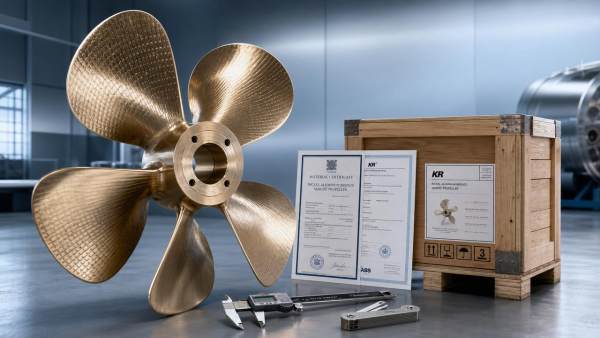
Why do marine propellers wholesale prices differ so dramatically between suppliers? The answer rarely sits in the quoted unit price alone. In marine propulsion, cost is shaped by metallurgy, dimensional accuracy, hydrodynamic efficiency, class requirements, batch size, finishing standards, and delivery risk. A low initial quote may hide weaker alloy integrity, looser tolerances, or longer lead times. A higher quote may include balancing, certification, machining precision, and traceable production records that reduce lifecycle expense.
For any industrial sourcing decision, marine propellers wholesale comparisons should focus on total value rather than headline price. That means checking what is included, what performance is expected, and what risk is transferred to the buyer after shipment. A checklist-based review helps standardize supplier evaluation and avoids comparing technically different products as if they were identical.
Why marine propellers wholesale pricing needs a checklist approach
Marine propellers are not commodity castings in the ordinary sense. Two parts may share the same diameter and blade count, yet differ greatly in alloy composition, hub strength, cavitation resistance, and machining quality. These differences directly affect thrust, fuel efficiency, vibration, shaft load, and service life.
In marine propellers wholesale transactions, price variation often reflects different assumptions. One supplier may quote a bare casting. Another may include CNC finishing, dynamic balancing, material certificates, packing for export, and inspection documentation. Without a checklist, the cheaper offer can become the costlier choice after rework, delays, or premature failure.
Core checklist for comparing marine propellers wholesale offers
Use the following checks before treating two marine propellers wholesale quotes as comparable.
- Verify alloy grade and origin, including nickel-aluminum bronze, manganese bronze, or stainless steel, because corrosion resistance and mechanical strength have a major effect on both price and durability.
- Check casting method and foundry controls, since pattern quality, melt consistency, porosity management, and heat treatment discipline strongly influence blade integrity and machining yield.
- Confirm dimensional tolerances for diameter, pitch, rake, skew, bore, and keyway, because tighter tolerances require more machining time and more advanced inspection equipment.
- Request balancing details, including static or dynamic balancing standards, because vibration-related losses can shorten bearing life and reduce propulsion efficiency in demanding operations.
- Review blade geometry complexity, as custom hydrodynamic designs, high skew profiles, and optimized blade sections increase engineering input and production difficulty.
- Compare surface finishing levels, since polishing quality affects cavitation behavior, drag, and appearance, especially in high-speed or performance-sensitive vessels.
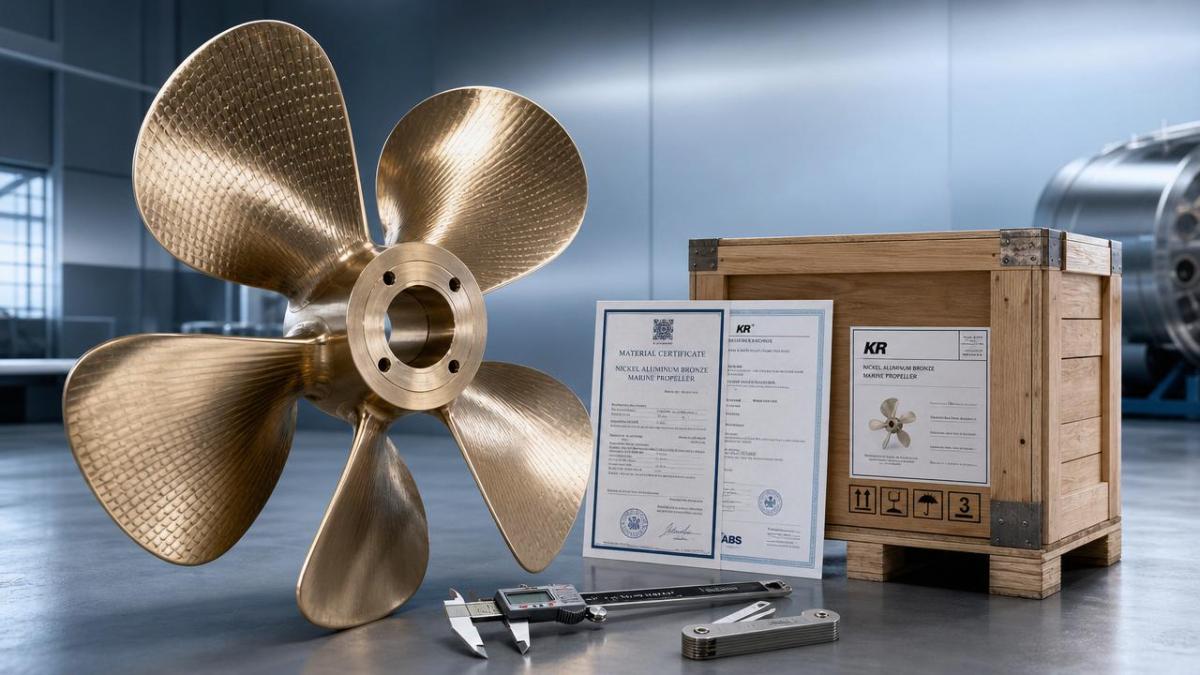
- Ask for material and inspection certificates, including chemical analysis, mechanical properties, NDT reports, and class compliance where applicable, because documentation adds cost but lowers compliance risk.
- Examine tooling and pattern charges separately, because first-run marine propellers wholesale orders may include one-time development costs not visible in repeat-order pricing.
- Measure volume breaks carefully, since larger orders usually reduce setup cost per unit, but savings depend on alloy procurement cycles and furnace batch economics.
- Assess lead time realism, because urgent production slots, expedited machining, and premium freight can distort marine propellers wholesale pricing significantly.
- Inspect packaging and export preparation, including anti-corrosion wrapping, crate strength, and lifting provisions, as poor packing can erase any savings through transit damage.
- Clarify warranty scope and after-sales support, because technical response, replacement terms, and root-cause analysis support carry real commercial value beyond the invoice.
What usually drives the biggest price gaps
Alloy costs and raw material volatility
The largest pricing driver in marine propellers wholesale markets is often the alloy itself. Nickel-aluminum bronze generally costs more than lower-grade bronze alternatives, but it offers strong corrosion resistance, fatigue performance, and seawater durability.
Raw material volatility also matters. Copper, nickel, and aluminum prices can shift quickly. When suppliers hedge differently or buy at different times, identical-looking propellers can be quoted at very different levels.
Machining precision and hydrodynamic performance
Precision machining is expensive, but it directly affects performance. Blade section accuracy, pitch consistency, and hub concentricity influence efficiency and vibration. In marine propellers wholesale sourcing, lower machining standards may save money initially while increasing fuel use later.
Custom or optimized blade forms increase engineering cost further. Designs intended to reduce cavitation, noise, or fuel consumption require more modeling, tighter production control, and more inspection time.
Certification, traceability, and compliance burden
Documentation can create substantial price differences. Class society approvals, heat numbers, foundry traceability, dimensional reports, and non-destructive testing all add labor and administrative overhead.
For regulated fleets or institutional procurement, marine propellers wholesale quotes without proper traceability may not be usable at all. In that case, a lower quote has no practical value.
How pricing changes by application scenario
Fishing and aquaculture vessels
In fishery and aquaculture operations, propellers often face continuous duty, debris exposure, and strict uptime demands. Marine propellers wholesale pricing here tends to favor robust alloys and repairable designs over cosmetic finish.
When operational continuity matters, slightly higher upfront cost can be justified by reduced haul-out frequency and stronger resistance to impact or corrosion in biologically active waters.
Commercial workboats and transport craft
Workboats typically prioritize fuel economy, dependable thrust, and repeatable performance across fleets. In this setting, marine propellers wholesale evaluations should weigh balancing quality and hydrodynamic consistency very carefully.
Fleet standardization can also change pricing. Repeatable models with stable forecast volumes often receive better terms than one-off custom propellers, even when technical quality remains high.
Replacement and retrofit orders
Replacement orders look simple but can cost more than expected. Reverse engineering, pattern recreation, shaft interface matching, and rush production increase supplier workload. That often explains surprising marine propellers wholesale price differences.
If no verified drawings exist, the supplier may price in uncertainty. Accurate legacy data usually lowers both commercial risk and unit cost.
Commonly overlooked cost factors and risk warnings
Ignore rework risk at your expense. A low quote without inspection depth may produce bore mismatch, pitch variation, or balance issues that require costly correction after arrival.
Do not overlook freight physics. Propellers are dense, heavy, and damage-sensitive. Export crating, insurance, lifting arrangements, and port handling can materially change landed cost.
Treat payment terms as part of price. A quote with a lower unit price but aggressive prepayment requirements may carry more financial risk than a slightly higher offer with stronger commercial protections.
Watch for inconsistent technical assumptions. Marine propellers wholesale quotes based on different pitch ratios, blade area, or finishing grade cannot be compared fairly in a simple spreadsheet.
Factor in downtime cost. If a delayed shipment keeps a vessel idle, the operational loss can exceed the savings from choosing the lowest initial quote.
Practical execution steps for better quote evaluation
- Standardize the RFQ with the same drawings, alloy callouts, tolerances, finish expectations, and certification requirements for every supplier.
- Separate one-time costs from recurring unit cost, especially for patterns, tooling, engineering review, and prototype inspection.
- Request a landed-cost comparison including freight, insurance, duties, packaging, and expected rework exposure.
- Score offers on total ownership value, combining price, lead time, traceability, expected life, and performance consistency.
- Validate sample documents before award, including certificates, dimensional reports, and inspection records from previous comparable orders.
Conclusion and next action
Marine propellers wholesale pricing varies because the product itself varies in hidden but meaningful ways. Alloy selection, casting discipline, machining precision, certification depth, order volume, and logistics arrangements all shape the final quote.
The most reliable next step is to compare offers with a disciplined technical checklist, not with unit price alone. Define specifications clearly, normalize quote assumptions, and calculate landed lifecycle value. That approach turns marine propellers wholesale sourcing from a price gamble into a controlled industrial decision.
Related Intelligence
- Commercial FishingWhat Should You Check in a Fishery Equipment Maintenance Contract?What should I look for in a fishery equipment maintenance contract? Explore coverage, response times, costs, records, safety, and biosecurity essentials.
- Commercial FishingDo commercial fishing vessels with hybrid diesel-electric propulsion reduce fuel cost per kg landed by more than 12%?Commercial fishing vessels with hybrid diesel-electric propulsion *can* cut fuel cost per kg landed by >12%—but only under precise operational and infrastructure conditions. Discover the real ROI.
- Commercial FishingHow to Choose Oyster Processing Equipment for Capacity, Hygiene, and Labor EfficiencyOyster processing equipment guide: compare capacity, hygienic design, and labor efficiency to build a reliable, scalable line and make smarter buying decisions.
The Morning Broadsheet
Daily chemical briefings, market shifts, and peer-reviewed summaries delivered to your terminal.
