

The Authority in Global Agricultural Chemistry & Bio-Resources
Feed & grain processing technology that cuts waste
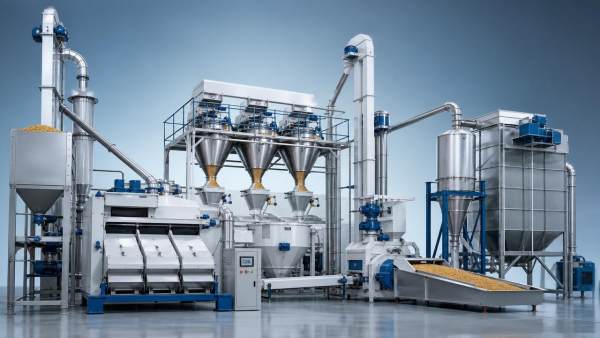
In today’s volatile agri-supply landscape, Feed & Grain processing technology has become a strategic lever for reducing material loss, improving throughput, and meeting stricter quality and compliance standards. For business decision-makers, understanding how advanced processing systems cut waste is essential to protecting margins, strengthening supply chain resilience, and gaining a competitive edge in primary industries.
Across feed mills, grain terminals, integrated farming operations, and ingredient processing sites, waste rarely comes from one dramatic failure. It usually accumulates through small losses at 6 to 8 points in the line: intake, cleaning, drying, grinding, mixing, pelleting, cooling, storage, and loadout.
For procurement leaders and operating executives, the question is no longer whether to modernize. The real question is which Feed & Grain processing technology delivers measurable loss reduction, stable quality, and a realistic payback window of 12 to 36 months under current market pressure.
Why waste reduction has become a board-level issue in feed and grain operations
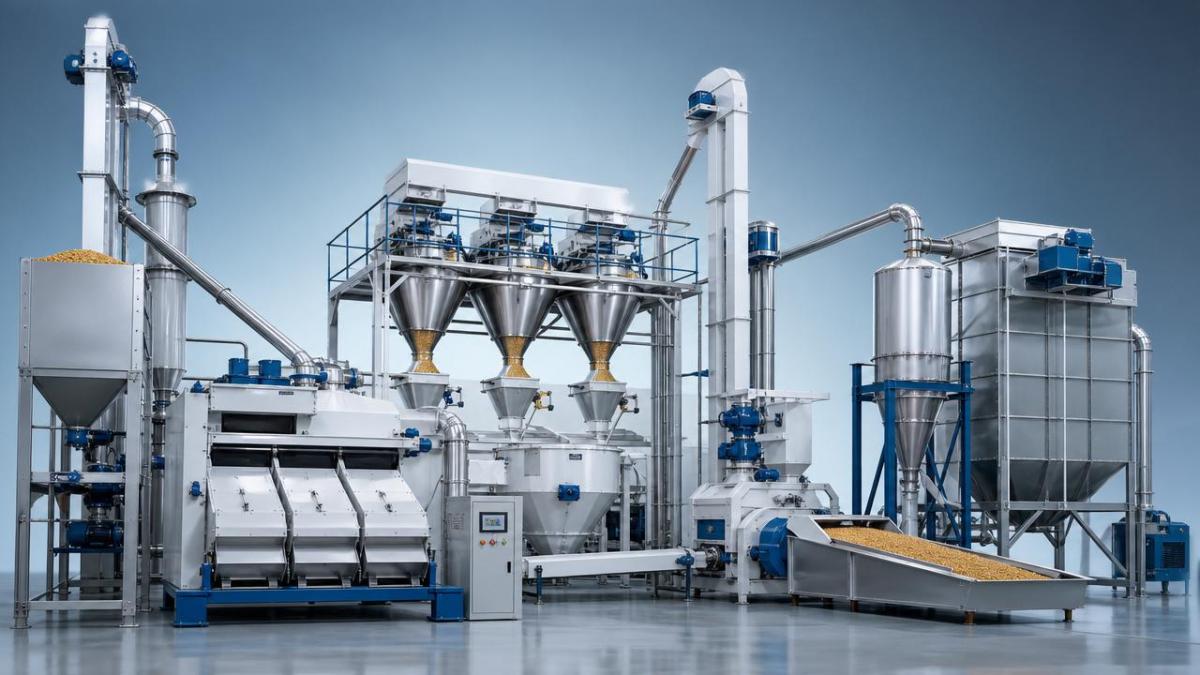
Waste in feed and grain processing is not only a plant-floor efficiency problem. It affects procurement planning, working capital, compliance exposure, and customer retention. A 1% to 3% material loss may appear manageable on paper, but at commercial scale it can materially erode margin across every shipped tonne.
When raw materials such as corn, soybean meal, wheat, additives, or micro-ingredients face volatile pricing, every avoidable kilogram matters. Decision-makers must therefore assess Feed & Grain processing technology as an integrated business control system, not just as isolated machinery.
The five most common sources of avoidable loss
Most facilities see preventable loss in five recurring categories. First is mechanical loss from spillage and poor transfer design. Second is process loss from over-drying, fines generation, and pellet breakdown. Third is quality loss from contamination or segregation. Fourth is storage loss from moisture migration or pests. Fifth is data loss caused by poor visibility between batches, shifts, and lines.
- Spillage at transfer points, elevators, and conveyor discharge zones
- Dust and fines generated during grinding, pelleting, and cooling
- Moisture deviation beyond target bands, often above or below 0.5% to 1.5%
- Cross-contamination during changeovers, especially in medicated or high-value feed
- Inventory shrinkage caused by poor storage aeration and delayed monitoring
Why older systems often underperform
Legacy lines can still run, but many were designed around lower ingredient complexity and less demanding traceability requirements. In facilities operating 2 or 3 shifts, outdated control logic, inconsistent sensor calibration, and weak dust handling can drive recurring inefficiencies that never appear as a single shutdown event.
This becomes critical when customers require tighter particle size control, lower carryover risk, and documented process consistency. In those cases, Feed & Grain processing technology must support both physical efficiency and auditable process discipline.
Operational signals that technology upgrades should be evaluated
- Finished product variance exceeds internal tolerance in 2 or more weekly batches.
- Dust recovery is low while housekeeping labor keeps rising month over month.
- Pellet durability or particle uniformity repeatedly misses customer specification.
- Changeovers take more than 30 to 60 minutes for standard formulations.
- Unexplained shrinkage appears between intake records and dispatch records.
The table below highlights how typical waste points map to business consequences and where advanced Feed & Grain processing technology can intervene most effectively.
The main conclusion is straightforward: the highest-value interventions are usually the ones that combine mechanical containment with process control. Plants that address only one side often reduce visible loss but fail to stop hidden quality-related waste.
Which Feed & Grain processing technology cuts waste most effectively
Not all technologies deliver the same return. The best investment profile depends on raw material mix, throughput, moisture targets, batch complexity, and downstream customer requirements. In broad terms, the most effective systems reduce waste by controlling movement, measurement, and material condition in real time.
1. Smart intake, cleaning, and separation systems
The first opportunity to reduce waste starts before processing. Modern receiving lines equipped with scalpers, magnets, aspiration, and density-based separation can remove foreign material early, reducing wear on downstream equipment and lowering contamination risk. Even a 0.5% reduction in inbound impurity can protect both yield and maintenance budgets.
For grain-heavy operations, effective pre-cleaning also improves drying consistency. That matters because uneven airflow or mixed impurity loads often force plants to over-dry safe material just to protect the wettest fraction.
2. Precision grinding and particle size control
Grinding is one of the most influential stages in Feed & Grain processing technology. Particle size that is too coarse can reduce digestibility or process consistency. Too fine, and plants generate excess dust, poor pellet quality, and unnecessary energy load. Typical target ranges differ by species and application, but repeatability is often more valuable than pushing to the smallest possible size.
Systems with variable speed control, balanced hammer wear management, and routine screen selection protocols can reduce avoidable fines while stabilizing throughput. In many operations, tightening particle deviation within a narrower band improves both yield and finished product acceptance.
3. Automated dosing, batching, and mixing
Losses linked to inaccurate micro-ingredient addition are rarely visible in the production hall, but they can be expensive. Overdosing raises formulation cost directly. Underdosing creates quality failures, rejected lots, or customer disputes. Automated batching platforms with calibrated load cells and digital recipe control typically provide more stable results than manual correction methods.
For multi-formula plants, decision-makers should pay close attention to changeover logic, ingredient traceability, and tolerance alarms. A well-designed system should flag out-of-range additions within seconds, not after a full batch has moved downstream.
4. Moisture management and thermal control
Moisture is one of the most underestimated value drivers in feed and grain operations. If product exits too wet, storage risk increases. If it exits too dry, the plant is literally giving away saleable weight. Closed-loop dryer control, tempering, and inline moisture sensing help operators maintain narrower target bands across changing ambient conditions.
In practical terms, even controlling final moisture within a tighter 0.5% to 1.0% window can materially improve recovered value over a full season, especially for high-throughput grain processors.
5. Pelleting, cooling, and fines recovery
For compound feed producers, pelleting is often where quality and waste economics converge. Poor steam conditioning, die wear, and inconsistent cooling can produce weak pellets and excess returns. Fines recovery loops, controlled cooling retention times, and systematic die maintenance reduce rework while improving shipment consistency.
The goal is not only to increase output per hour. It is to reduce the percentage of product that must be reprocessed, downgraded, or cleaned up after transport and handling.
The comparison below helps procurement teams prioritize technology categories by waste-reduction mechanism, implementation complexity, and likely operational benefit.
For most operations, the fastest gains come from sequencing investments rather than replacing every asset at once. A phased approach usually delivers stronger control over cash flow, training, and production continuity.
How decision-makers should evaluate suppliers, systems, and rollout risk
Choosing Feed & Grain processing technology is not only about machine specifications. It is also about service depth, integration capability, controls architecture, spare parts planning, and the supplier’s ability to support compliance-oriented documentation where required.
Four evaluation criteria that matter more than brochure claims
- Process fit: Can the solution handle your actual ingredient variability and target throughput?
- Measurement integrity: How accurate are sensors, scales, and control responses over time?
- Serviceability: Are wear parts, maintenance intervals, and local technical support realistic?
- Data visibility: Can operations track shrinkage, downtime, and batch deviations in usable dashboards?
Implementation planning should be phased, not rushed
A practical deployment plan usually spans 3 stages. Stage 1 covers audit and baseline measurement over 2 to 6 weeks. Stage 2 covers equipment integration and commissioning over 4 to 12 weeks, depending on shutdown windows. Stage 3 covers optimization, operator training, and verification across the first 30 to 90 days of live production.
This structure helps executive teams validate whether waste reduction comes from the new technology itself, better operating discipline, or a combination of both. It also limits the risk of attributing early instability to the wrong cause.
Questions procurement teams should ask before approval
- Which loss mechanism does this system target first, and how will we measure improvement?
- What calibration, cleaning, or wear checks are required weekly and monthly?
- Can the supplier support integration with existing conveyors, silos, PLCs, and traceability systems?
- What training hours are recommended for operators, maintenance staff, and supervisors?
- What performance indicators should be reviewed at 30, 60, and 180 days?
Common mistakes that weaken return on investment
One common mistake is buying for nameplate capacity alone. A system rated for high hourly throughput may still underperform if raw material moisture swings sharply or if upstream dosing remains unstable. Another mistake is neglecting operator adoption. Even advanced Feed & Grain processing technology will fail to cut waste if alarm thresholds are bypassed or maintenance schedules drift.
A third mistake is treating digital controls as optional. Without reliable data capture, plants struggle to separate normal variance from recurring process loss. That weakens both corrective action and future capital planning.
Building a waste-reduction roadmap that supports margin, compliance, and resilience
For executive teams in primary industries, the strongest business case for Feed & Grain processing technology lies in cumulative control. Small gains in moisture retention, batch accuracy, dust recovery, and transfer efficiency can compound across 12 months into meaningful margin protection.
The strategic benefit is broader than plant economics. Better process control supports more predictable output, stronger supplier accountability, improved customer confidence, and smoother compliance documentation. In a market where supply chains are more regulated and less forgiving, those advantages matter as much as hourly tonnage.
A practical roadmap for leadership teams
- Measure current loss at intake, process, storage, and dispatch points.
- Rank issues by annual financial impact, not only by visibility on the floor.
- Prioritize 1 to 2 technology upgrades with the clearest operational baseline.
- Set acceptance metrics for moisture, yield, fines, downtime, and changeover duration.
- Review results quarterly and expand only after the first phase is stabilized.
For organizations navigating tight margins, evolving standards, and complex sourcing conditions, the right Feed & Grain processing technology can reduce waste without compromising throughput or control. AgriChem Chronicle helps business decision-makers evaluate these systems with the technical clarity required for sound capital decisions. To explore tailored processing strategies, compare solution pathways, or discuss your next upgrade program, contact us today to get a customized plan and learn more practical solutions.
Related Intelligence
- Commercial Feed PelletHow to Build a Sanitary Feed Production Plan That Reduces Cross-ContaminationSanitary feed production planning: reduce cross-contamination with smarter sequencing, validated flushing, material segregation, and traceable sanitation controls.
- Commercial Feed PelletFeed Pellet Mill Sourcing: How to Vet Suppliers for Capacity, Quality, and SupportFeed pellet mill sourcing made smarter: vet suppliers for proven capacity, pellet quality, lifecycle cost, factory controls, commissioning, and reliable after-sales support.
- Commercial Feed PelletFeed Production System Price Trends: Cost Drivers and Budgeting for New LinesFeed production systems price trend insights: compare cost drivers, automation, utilities, compliance, and total ownership costs to budget smarter for new feed lines.
The Morning Broadsheet
Daily chemical briefings, market shifts, and peer-reviewed summaries delivered to your terminal.
