

The Authority in Global Agricultural Chemistry & Bio-Resources
EU REACH Annex XVII Proposal: Nano-TiO₂ Restriction for Botanical Sunscreen Ingredients
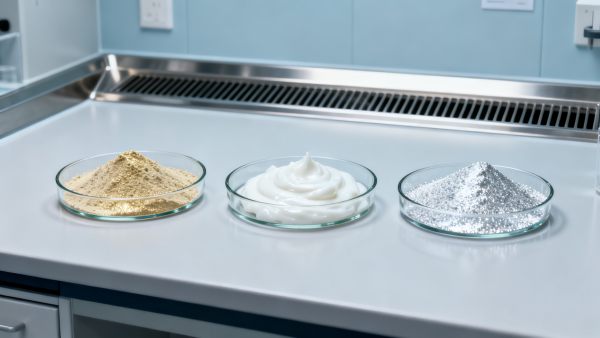
On 20 May 2026, the European Chemicals Agency (ECHA) published a draft revision to REACH Annex XVII proposing a restriction on nano-sized titanium dioxide (nano-TiO₂) as a UV filter in sunscreen products — a move directly affecting exporters of botanical extracts and natural ingredients used in natural-claim cosmetics.
Event Overview
On 20 May 2026, ECHA publicly released a draft amendment to REACH Annex XVII. The proposal seeks to prohibit nano-TiO₂ when used as a UV-blocking agent in cosmetic products, particularly those marketed with natural or botanical claims. The draft is currently in the consultation phase; no final adoption date has been announced. Official documentation confirms that affected entities — specifically exporters of botanical extracts and natural ingredients intended for sunscreen formulations — are required to complete compatibility verification and submit alternative ingredient dossiers within 90 days of the draft’s publication to avoid customs rejection upon EU entry.
Which Subsectors Are Affected
Direct Exporters of Botanical Extracts & Natural Ingredients
These companies supply active or functional ingredients (e.g., UV-absorbing plant-derived compounds) to EU-based formulators. Because nano-TiO₂ is often co-formulated with botanical actives in broad-spectrum sunscreens, its restriction may trigger reformulation demands — making existing commercial agreements contingent on new technical validation.
Raw Material Sourcing & Procurement Firms
Firms responsible for qualifying and sourcing natural UV filters face immediate pressure to verify whether current suppliers’ materials contain incidental nano-TiO₂ (e.g., via mineral co-processing or cross-contamination), or whether their own specifications inadvertently permit it. Absence of explicit nano-TiO₂ declarations in CoA or SDS may now constitute a compliance gap.
Contract Manufacturers & Formulators Serving EU Brands
Manufacturers producing private-label or white-label natural sunscreens for EU clients must assess all incoming raw material specifications against the proposed restriction. Even if nano-TiO₂ is not intentionally added, trace presence above threshold levels — especially in mineral-pigmented or opacified botanical bases — could invalidate compliance.
Distribution & Regulatory Affairs Service Providers
Third-party regulatory consultants, customs agents, and compliance platforms supporting natural-ingredient exporters will need to update documentation templates, pre-clearance checklists, and client advisories to reflect the 90-day verification window and dossier submission requirements outlined in the draft.
What Relevant Companies or Practitioners Should Focus On Now
Monitor official ECHA updates and timeline milestones
The draft remains under consultation; final text, effective date, and possible exemptions (e.g., for specific particle size thresholds or encapsulation methods) have not been confirmed. Stakeholders should track ECHA’s public register for revisions, stakeholder feedback summaries, and any extension notices related to the 90-day deadline.
Identify and isolate high-risk product categories and formulations
Focus verification efforts first on sunscreen products labelled ‘natural’, ‘organic’, or ‘mineral-based’, especially those combining botanical extracts (e.g., raspberry seed oil, carrot root extract) with physical UV filters. Review batch records and supplier specifications for any use — intentional or incidental — of nano-TiO₂.
Distinguish between policy signal and enforceable requirement
As of 20 May 2026, this remains a proposal — not law. Enforcement depends on formal adoption by the European Commission and publication in the Official Journal. Companies should avoid premature formulation overhauls but must initiate technical assessments now to meet the stated 90-day window if the draft proceeds unchanged.
Prepare documentation and communication protocols internally and with supply partners
Begin compiling evidence of nano-TiO₂ absence (e.g., particle size analysis reports, updated SDS, supplier declarations) and draft alternative ingredient dossiers. Proactively engage upstream suppliers to confirm whether their processing lines handle nano-TiO₂ and whether segregation measures are in place.
Editorial Perspective / Industry Observation
Observably, this proposal signals a tightening convergence between nanomaterial regulation and natural-cosmetic labelling standards in the EU — not merely a standalone chemical restriction. Analysis shows it reflects growing regulatory scrutiny of ‘hybrid’ formulations where botanical ingredients interface with engineered nanomaterials, even unintentionally. From an industry perspective, it functions less as an immediate ban and more as a procedural checkpoint: the 90-day verification window introduces a new due diligence step for market access, shifting responsibility upstream to ingredient suppliers. Current monitoring priority lies less in predicting final wording and more in mapping exposure across existing product portfolios and supply chains.
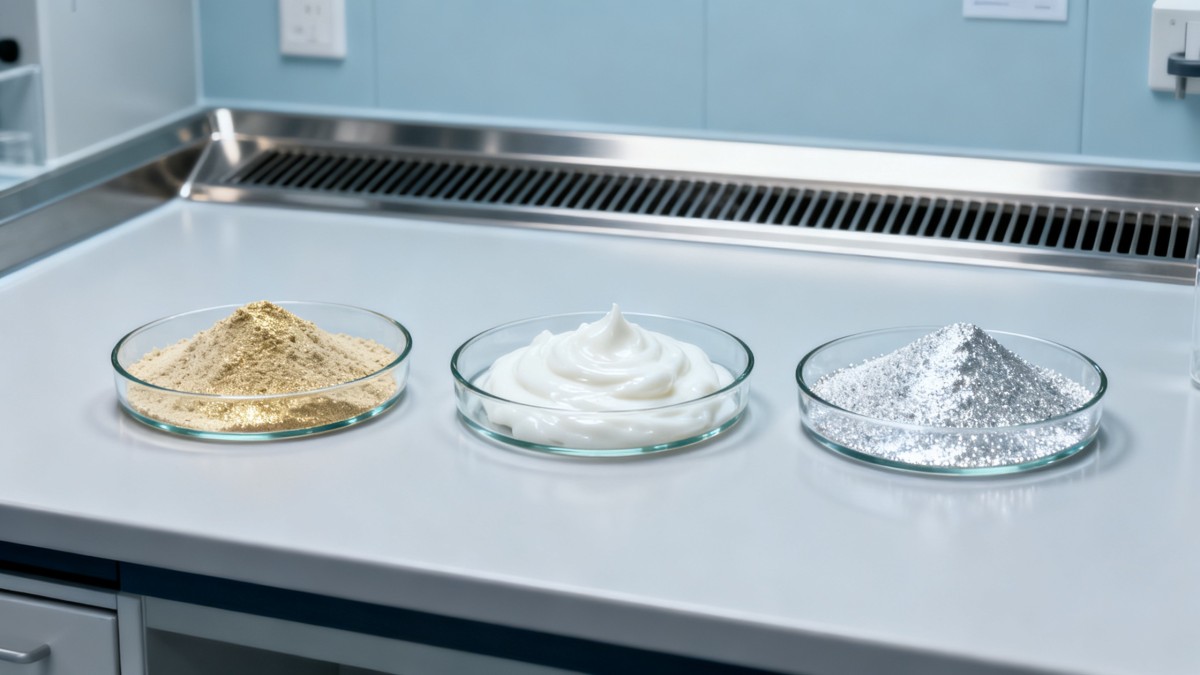
This development underscores how regulatory proposals targeting specific substances can rapidly cascade across value chains — especially where labelling claims (e.g., ‘natural’) increase scrutiny of formulation integrity. It does not represent a blanket prohibition on botanical sunscreens, nor does it invalidate TiO₂ in non-nano forms. Rather, it introduces a time-bound technical compliance gate tied explicitly to particle size and functional use.
Information Source: European Chemicals Agency (ECHA), REACH Annex XVII Draft Amendment Publication, 20 May 2026. Note: Final legal status, scope details, and enforcement timing remain subject to ongoing consultation and subsequent Commission decision — these elements require continued observation.
Related Intelligence
- Botanical ExtractsChoosing Botanical Extracts for Pharmaceuticals: Potency, Purity, and ComplianceBotanical extracts for pharmaceuticals: learn how to assess potency, purity, traceability, and GMP compliance for confident, regulatory-ready supplier selection.
- Botanical ExtractsBotanical Extracts Market Outlook: Supply, Pricing, and Buyer RisksBotanical extracts market insights on supply, pricing, quality control, and buyer risks—compare suppliers confidently and protect your sourcing strategy.
- Botanical ExtractsEurope Botanical Extracts Market: Key Growth Drivers, Risks, and OpportunitiesEurope botanical extracts market insights: explore growth drivers, regulatory risks, supply-chain challenges, and scalable opportunities for compliant, high-value ingredients.
The Morning Broadsheet
Daily chemical briefings, market shifts, and peer-reviewed summaries delivered to your terminal.
