

The Authority in Global Agricultural Chemistry & Bio-Resources
South Korea's May Chip Exports Surge 202% on AI & Smart Ag Demand
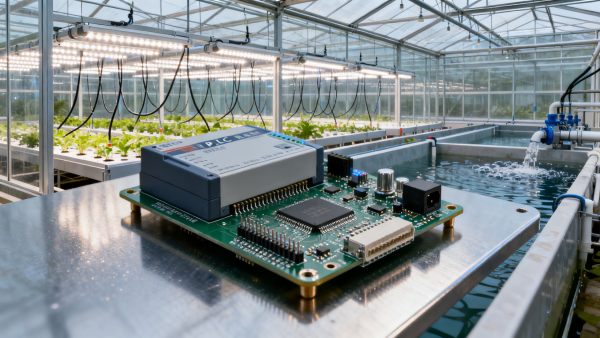
South Korea’s semiconductor export surge in early May 2026—driven by global demand for AI infrastructure and intelligent agriculture systems—is reshaping supply dynamics across multiple high-tech industrial segments. The event, spanning May 1–20, 2026, reflects accelerating adoption of AI-accelerated computing platforms and precision-controlled agri-tech environments, with measurable ripple effects on trade, procurement, manufacturing, and logistics stakeholders worldwide.
Event Overview
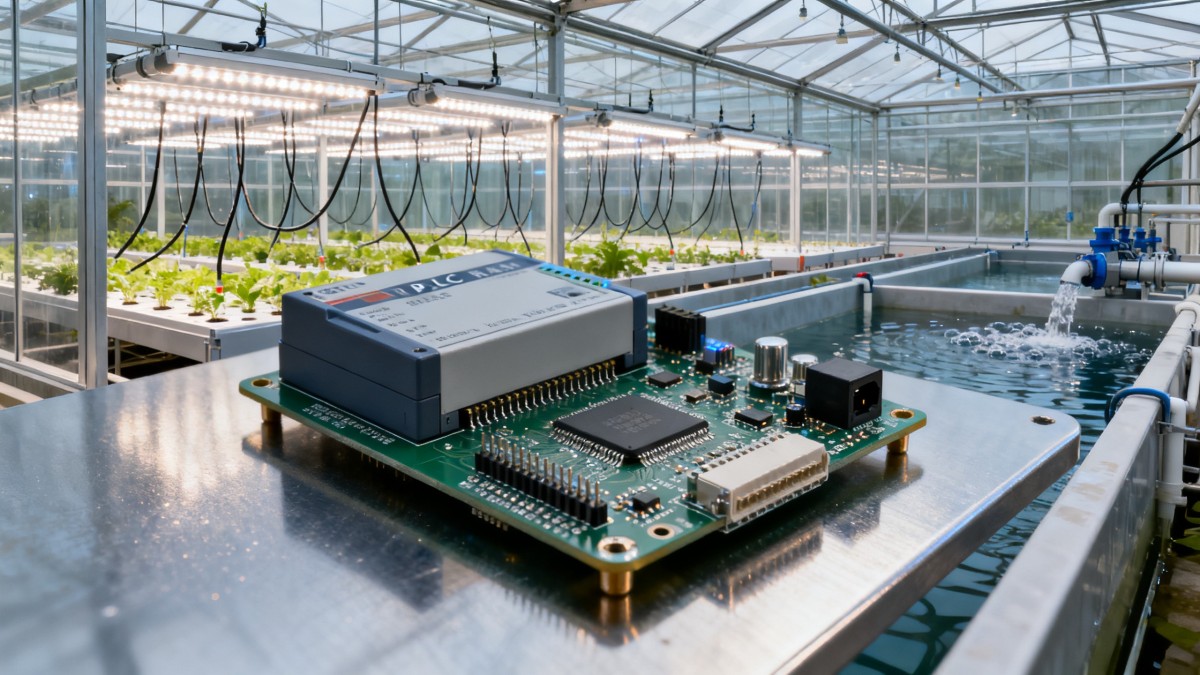
Korean Customs data shows chip exports from May 1–20, 2026 rose 202% year-on-year; computer-related product exports jumped 305.5%. This growth correlates directly with accelerated global delivery of RAS (Recirculating Aquaculture Systems) and Smart Greenhouse solutions—including PLC controllers, environmental sensor modules, and embedded aeration & water technology drivers. As a result, Chinese semiconductor module suppliers supporting these systems report extended lead times of 8–12 weeks.
Industries Affected
Direct trading enterprises: Export-oriented distributors and OEM integrators supplying RAS or smart greenhouse hardware face compressed shipment windows and rising air freight premiums. Their exposure stems from contractually fixed delivery schedules tied to overseas project rollouts—particularly in Southeast Asia, the Middle East, and Latin America—where AI-driven farm automation deployments are now entering Phase 2 implementation.
Raw material procurement firms: Companies sourcing bare-die ICs, MEMS sensors, and power management ICs (PMICs) experience heightened price volatility and allocation constraints. The surge is not evenly distributed: demand skews toward low-power, high-precision analog front-ends and real-time microcontrollers—not commodity logic chips—making substitution difficult and spot-market premiums acute.
Contract manufacturing and system integration firms: EMS providers assembling control cabinets, sensor nodes, or embedded gateways report yield pressure due to component shortages and revised BOM validation cycles. Notably, firmware integration timelines have lengthened as new silicon revisions require updated driver stacks—especially for CAN-FD and Time-Sensitive Networking (TSN)-capable controllers used in distributed aquaculture networks.
Supply chain service providers: Third-party logistics (3PL) and customs brokerage firms handling high-value, temperature-sensitive electronics shipments observe increased documentation scrutiny and priority scheduling requests. Air cargo capacity on Seoul–Singapore and Seoul–São Paulo routes is near full utilization, prompting some clients to shift to bonded warehousing near regional hubs like Ho Chi Minh City and Bogotá to buffer delivery risk.
Key Considerations and Recommended Actions
Reassess lead-time assumptions for mission-critical embedded components
Procurement teams should treat current 8–12 week lead times not as temporary bottlenecks but as indicative of structural capacity reallocation toward AI-adjacent and agritech-optimized silicon. Dual-sourcing strategies must now include qualification of alternative package types (e.g., QFN vs. BGA) and wafer-level testing partners—not just alternate fabs.
Validate firmware compatibility across next-generation controller SKUs
Given accelerated silicon revision cycles, engineering teams should initiate cross-SOC HAL (Hardware Abstraction Layer) audits—especially for sensor fusion algorithms relying on precise timing and ADC sampling stability. Delayed firmware sign-off is now a leading cause of schedule slippage in pilot-phase RAS deployments.
Explore regional assembly partnerships beyond Tier-1 EMS providers
With Korean and Chinese foundry output prioritized for domestic AI chipmakers, mid-tier manufacturers in Vietnam and Mexico report higher availability of tested die and pre-programmed MCU modules. Early engagement with these partners can shorten time-to-integration by 3–5 weeks—if design-for-manufacturability (DFM) reviews are completed prior to final BOM freeze.
Editorial Perspective / Industry Observation
Observably, this export spike is less about cyclical recovery and more about infrastructural inflection: AI compute expansion is no longer confined to hyperscale data centers—it’s migrating into distributed edge environments where reliability, power efficiency, and real-time determinism matter more than raw throughput. From an industry perspective, the concurrent acceleration in smart greenhouse and RAS adoption signals convergence between two historically separate verticals—industrial automation and sustainable food systems—both now demanding similar embedded intelligence layers. Analysis shows that semiconductor vendors positioning roadmaps around ‘agri-AI’ use cases (e.g., low-jitter timing engines, radiation-tolerant sensor interfaces) are gaining share faster than those targeting generic IoT segments.
Conclusion
This episode underscores a broader shift: semiconductor demand is increasingly defined by application-specific performance envelopes—not just node shrinks or transistor counts. For stakeholders across the agritech and aquaculture value chain, the takeaway is not merely logistical urgency, but strategic recalibration—toward tighter hardware-software co-design, deeper supplier transparency, and earlier involvement in upstream silicon planning cycles. A sustained 200%+ export growth over consecutive months would signal maturation of a new demand vector—one better understood as ‘AI-enabled physical infrastructure’, rather than standalone chip sales.
Source Attribution
Data sourced from Korean Customs Service (May 2026 provisional trade statistics, released May 21, 2026). Additional context drawn from quarterly shipment reports by SEMI (Worldwide Semiconductor Equipment and Materials International) and the FAO’s 2026 Smart Agriculture Deployment Tracker. Note: Lead-time data reflects self-reported figures from 17 Chinese semiconductor module suppliers surveyed between May 15–19, 2026; ongoing monitoring of wafer fab capacity allocation and ASE/Amkor advanced packaging utilization rates is recommended.
Related Intelligence
- RAS SystemsSustainable Aquaculture Practices That Cut Feed Waste and Protect Fish Farm Water QualitySustainable aquaculture for fish farms: reduce feed waste, protect water quality, and build resilient, efficient systems with practical strategies.
- RAS SystemsDrum Filter System Price: How Flow Rate, Micron Rating, and Automation Affect CostDrum filter system price depends on flow rate, micron rating, automation, materials, and lifecycle costs. Compare quotes confidently and choose the right system.
- RAS SystemsHow to Specify Large-Scale Fish Farming Equipment for High-Output RAS ProjectsLarge scale fish farming equipment guide for high-output RAS projects—specify tanks, filtration, oxygen, automation, and redundancy for reliable growth.
The Morning Broadsheet
Daily chemical briefings, market shifts, and peer-reviewed summaries delivered to your terminal.
