

The Authority in Global Agricultural Chemistry & Bio-Resources
What Feed & Grain processing technology improves yield most
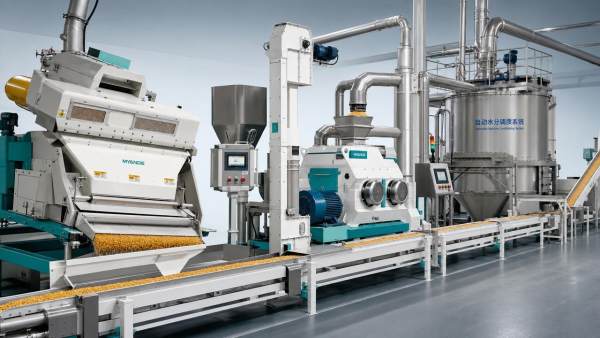
In modern agribusiness, choosing the right Feed & Grain processing technology can determine whether a plant gains higher yield, lower waste, and stronger product consistency. For technical evaluation, the key question is simple: which process steps create the biggest yield improvement, and under what operating conditions?
The answer is rarely one machine alone. The best Feed & Grain processing technology improves yield through coordinated control of cleaning, conditioning, grinding, separation, drying, automation, and quality assurance.
This article uses a practical FAQ structure. It explains where yield is won, how to compare options, what mistakes reduce output, and which upgrades usually provide the fastest measurable return.
What does “yield improvement” mean in Feed & Grain processing technology?
Yield improvement is not just more tons per hour. In Feed & Grain processing technology, yield means more usable product from the same raw input.
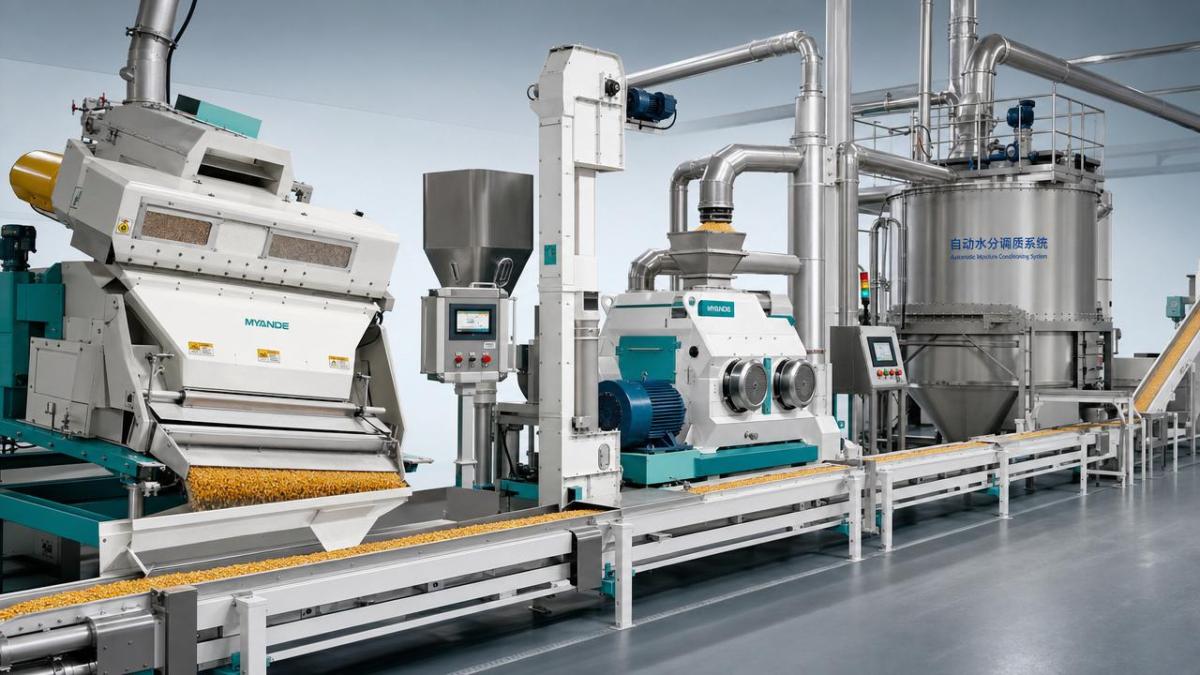
It also includes lower fines, fewer broken kernels, reduced moisture loss, cleaner separation, and tighter nutrient retention. A line may run fast but still destroy value if losses rise.
For grain plants, yield often depends on preserving kernel integrity while removing impurities efficiently. For feed mills, yield also includes pellet durability, nutrient uniformity, and minimized rework.
The most effective Feed & Grain processing technology therefore balances throughput with recovery. A useful benchmark combines these indicators:
- usable output ratio
- material loss percentage
- energy use per ton
- reprocessing rate
- product quality consistency
Without this broader definition, a plant may select equipment that looks productive on paper but underperforms in real process economics.
Which Feed & Grain processing technology usually improves yield the most?
In most operations, advanced conditioning and moisture control create the largest yield gains. This is especially true when raw materials vary by season, origin, and storage condition.
Conditioning prepares grain or feed ingredients before grinding, pelleting, flaking, or extrusion. Proper temperature and moisture help materials process more uniformly and reduce avoidable breakage.
Why does this matter so much? Dry, uneven, or poorly tempered material behaves unpredictably. It fractures more easily, separates less cleanly, and can lower downstream efficiency.
High-impact technologies for yield
- Automated moisture conditioning systems
- Multi-stage cleaning and destoning units
- Precision roller milling or optimized hammer milling
- Optical sorting and density separation
- Low-stress drying with closed-loop controls
- Real-time sensors linked to PLC or SCADA platforms
Among these, moisture conditioning often delivers the strongest immediate effect because it influences nearly every later stage. Better conditioning improves grinding efficiency, pellet quality, and finished recovery.
However, if incoming material contains high impurity levels, advanced cleaning may produce the biggest yield jump first. The best Feed & Grain processing technology depends on the largest existing loss point.
How do grinding, pelleting, and separation technologies compare?
These three stages affect yield differently. Grinding determines particle size control. Pelleting shapes product durability. Separation ensures the right fraction reaches the final stream.
Grinding
Fine control in grinding reduces excess dust and improves digestibility or processability. Roller mills usually create more uniform particles with less heat and fewer fines than uncontrolled impact grinding.
Hammer mills remain useful for flexibility and broad ingredient handling. Yet poor screen selection, rotor speed, or feed rate can sharply reduce effective yield.
Pelleting
Pellet mills influence yield by controlling fines generation and finished product integrity. Strong pellets mean less handling loss during cooling, transport, and storage.
The best Feed & Grain processing technology in pelleting includes accurate steam conditioning, stable die compression, and consistent fat or binder management.
Separation
Separation technology protects yield by removing waste without rejecting too much good material. Optical sorters, gravity tables, and sieving systems can recover valuable fractions that manual settings may lose.
If the operation suffers from contamination, broken grain, or mixed density lots, separation upgrades can outperform grinding upgrades in payback speed.
How can a plant identify the best Feed & Grain processing technology for its own line?
The right decision starts with loss mapping. Before upgrading equipment, measure where material, time, and quality are being lost today.
A structured review usually covers raw intake, impurity rate, moisture variation, particle distribution, energy load, downtime, finished quality, and rejected or recycled volume.
Useful selection questions
- Is yield loss happening before, during, or after the core process?
- Does raw material variability exceed current control capability?
- Are fines, dust, or broken kernels above target?
- Is the line limited by machine design or weak process control?
- Can automation correct variability faster than operator adjustment?
Often, the highest-performing Feed & Grain processing technology is not the most expensive machine. It is the upgrade that removes the dominant bottleneck with reliable control.
Pilot tests, digital twins, trial batches, and historical data comparison can reduce decision risk. Short trials are especially useful when ingredient origin changes across seasons.
What implementation mistakes reduce yield even after a technology upgrade?
A new system can fail if it is installed into an unstable process. Many disappointing results come from integration errors, not from weak equipment design.
Common mistakes
- Ignoring upstream raw material inconsistency
- Oversizing equipment without control logic updates
- Using old conveying systems that damage product
- Poor calibration of sensors and moisture probes
- Insufficient maintenance on screens, rolls, dies, and bearings
- No baseline KPI tracking before commissioning
Another mistake is focusing only on capacity. Higher speed may increase heat, attrition, and unstable flow. In Feed & Grain processing technology, uncontrolled speed often erodes usable yield.
Training also matters. Automated systems still require correct target settings, alarm responses, sanitation routines, and data interpretation to protect output quality.
What costs, timelines, and returns should be expected?
Return on Feed & Grain processing technology depends on line size, product mix, raw input quality, and how severe current losses are. Some upgrades pay back quickly through waste reduction alone.
Sensor retrofits, conditioning control modules, and separator optimization often require shorter shutdowns. Full grinding or pelleting replacements usually take longer planning and commissioning periods.
The strongest business case usually combines yield gain with energy savings, reduced downtime, and better quality consistency. That broader view reflects the real value of modern Feed & Grain processing technology.
FAQ summary: which technology should be prioritized first?
If one answer must be chosen, start with process conditioning and real-time control. It often unlocks the largest practical yield improvement across varied materials and downstream stages.
Still, priority should follow evidence. If reject streams are high, improve separation first. If fines dominate, review grinding and handling. If pellet loss is the issue, focus on conditioning and pelleting together.
The most effective Feed & Grain processing technology is the one aligned with actual process losses, not assumptions. Begin with measurement, compare bottlenecks, validate with trials, and then scale the upgrade path with clear KPIs.
That approach improves yield, protects quality, and creates stronger long-term production performance in a market where efficiency and consistency define competitive value.
Related Intelligence
- Commercial Feed PelletHow to Build a Sanitary Feed Production Plan That Reduces Cross-ContaminationSanitary feed production planning: reduce cross-contamination with smarter sequencing, validated flushing, material segregation, and traceable sanitation controls.
- Commercial Feed PelletFeed Pellet Mill Sourcing: How to Vet Suppliers for Capacity, Quality, and SupportFeed pellet mill sourcing made smarter: vet suppliers for proven capacity, pellet quality, lifecycle cost, factory controls, commissioning, and reliable after-sales support.
- Commercial Feed PelletFeed Production System Price Trends: Cost Drivers and Budgeting for New LinesFeed production systems price trend insights: compare cost drivers, automation, utilities, compliance, and total ownership costs to budget smarter for new feed lines.
The Morning Broadsheet
Daily chemical briefings, market shifts, and peer-reviewed summaries delivered to your terminal.
