

The Authority in Global Agricultural Chemistry & Bio-Resources
Is seawater desalination for boats worth the running cost
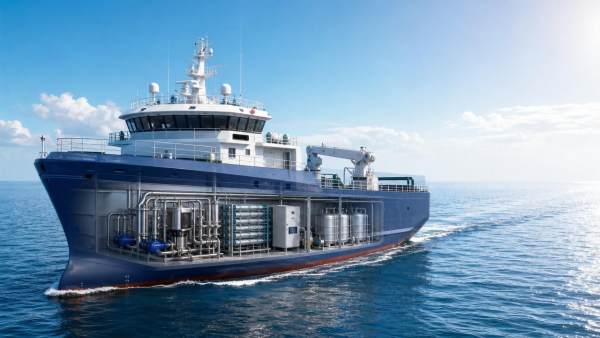
For finance approvers evaluating onboard water systems, the key question is whether seawater desalination for boats delivers measurable value beyond convenience. Running costs, maintenance cycles, energy demand, and voyage profiles all affect total ownership economics. This article examines the financial case in practical terms, helping decision-makers weigh operating expense against reduced freshwater dependence, longer-range capability, and procurement efficiency.
When seawater desalination for boats becomes a cost question, not a luxury question
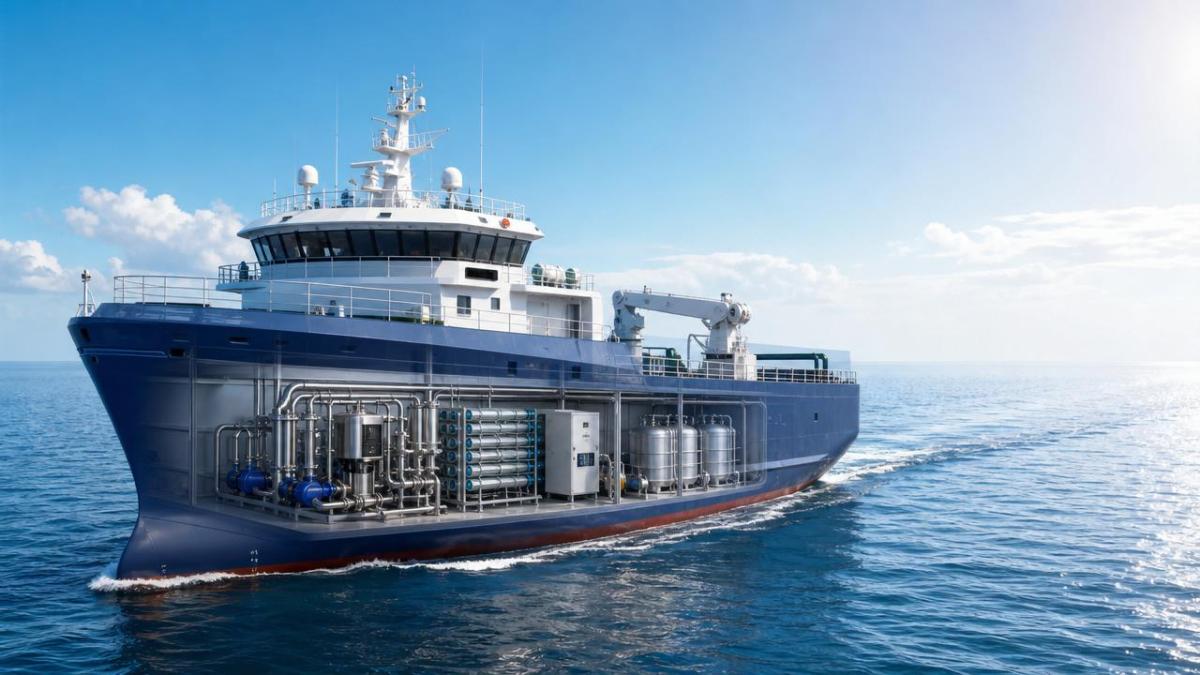
The economics of seawater desalination for boats change sharply by operating pattern. A weekend cruiser has very different needs from a research craft or fishing vessel.
If a boat spends most nights in marinas, buying dockside freshwater may remain cheaper. If it runs extended passages, desalination often shifts from optional to strategic.
The right comparison is not machine cost alone. It is total water cost across fuel, maintenance, tank capacity, route flexibility, and operational downtime.
In marine operations linked to aquaculture, fisheries, survey work, or mixed commercial use, onboard autonomy can carry direct business value.
Why the same unit looks expensive in one case and efficient in another
A compact watermaker may consume several kilowatt-hours per production cycle. That cost appears high until compared with marina water pricing, tender logistics, or added fuel from carrying larger freshwater loads.
Seawater desalination for boats also changes voyage planning. Less dependence on port calls can reduce schedule disruption and improve route selection in constrained coastal regions.
Scenario one: coastal leisure and short-stay vessels often see mixed payback
For day boats and short coastal users, the running cost question is strict. Water demand is moderate, marina access is frequent, and daily production needs are low.
In this scenario, seawater desalination for boats may not offer the fastest financial return. Filters, membranes, and occasional servicing can exceed avoided water purchases.
Still, some operators justify it through comfort and reduced port dependence during peak seasons. The financial case is stronger where marina water is overpriced or unreliable.
Core judgment points for short-range use
- Annual water consumption versus dockside refill cost
- Idle periods that increase preservation and flushing needs
- Battery or generator capacity available for water production
- Seasonal freshwater shortages at destination marinas
Scenario two: passagemaking and offshore cruising usually improve the value case
Long-range boats face a different equation. Carrying enough freshwater for many days adds weight, limits range, and occupies storage that could serve fuel or provisions.
Here, seawater desalination for boats often supports both economics and resilience. Water can be generated as needed, reducing dependency on uncertain resupply points.
Running cost becomes easier to justify because the system replaces repeated port stops, expensive delivered water, and excess tankage requirements.
Where the numbers improve offshore
Offshore operations usually spread fixed costs across more operating hours. Membranes stay healthier with regular use, and energy demand can be aligned with engine or generator runtime.
This operating rhythm often lowers effective cost per liter. It also reduces the hidden cost of emergency route changes caused by low freshwater reserves.
Scenario three: fishing, aquaculture support, and workboats evaluate water as an operating input
Commercially active boats assess water differently. Onboard freshwater may support crew welfare, washdown, food preparation, light processing, or equipment cleaning.
In fisheries and aquaculture support, seawater desalination for boats can reduce turnback risk and improve scheduling discipline, especially in remote harbors or island chains.
The value case strengthens further when poor freshwater quality threatens hygiene standards or causes scaling in auxiliary systems.
Core judgment points for commercial-style usage
- Water demand per crew member and operating day
- Revenue impact from unplanned resupply deviations
- Fuel penalty from carrying larger freshwater volumes
- Compliance and sanitation requirements for onboard activities
How different boat scenarios change the true cost of seawater desalination for boats
A practical way to estimate whether seawater desalination for boats is worth the running cost
A reliable assessment should separate direct cost from avoided cost. Direct cost includes energy, prefilters, membrane care, sterilization, and annual servicing.
Avoided cost includes marina water purchases, delivery fees, detour fuel, waiting time, storage loss, and reduced operational flexibility.
Use this decision framework
- Estimate daily freshwater demand under real operating conditions.
- Map annual days underway and days at dock.
- Calculate energy cost per liter at normal production rates.
- Add annual filter, membrane, and preservation costs.
- Compare against total annual freshwater sourcing and deviation costs.
- Test best-case and worst-case voyage scenarios.
This method reveals whether seawater desalination for boats is a utility expense, a range extender, or a marginal convenience feature.
Recommended fit by operating profile
Common mistakes that distort the running cost calculation
One common error is focusing only on power draw. Energy matters, but membrane replacement and poor maintenance discipline often create larger lifetime cost swings.
Another mistake is using nominal output figures. Real production changes with salinity, intake temperature, fouling, and system voltage stability.
Many evaluations also ignore downtime risk. A failed system during a remote route can force expensive resupply actions that erase months of planned savings.
Finally, seawater desalination for boats should not be sized only for peak demand. Oversized units may cycle inefficiently and increase unnecessary service burden.
What to do next before approving a system decision
Start with a one-year water profile. Record freshwater use, port refill frequency, water price, route interruptions, and generator runtime.
Then request a scenario-based cost model rather than a simple equipment quote. Include consumables, annual service intervals, and expected output under actual salinity conditions.
If the vessel supports offshore work, aquaculture logistics, or extended cruising, model the value of autonomy alongside direct expense. That is where seawater desalination for boats often proves its worth.
In short, seawater desalination for boats is worth the running cost when water access limits mission flexibility, range, or reliability. Where usage is irregular and supply is easy, the answer may be no. A scenario-led calculation delivers the clearest, most defensible decision.
Related Intelligence
- Aeration & Water TechHow Water Treatment Research Guides Technology Selection for Industrial Wastewater ProjectsWater treatment research guides smarter industrial wastewater technology selection. Learn how to assess variable streams, pilot risks, compare process trains, and reduce compliance costs.
- Aeration & Water TechSelecting Solids Filtration for Aquaculture: Flow Rates, Loading, and Fish WelfareSolids filtration aquaculture guide: compare flow rates, peak loading, capture performance, maintenance, and fish welfare to choose a reliable system.
- Aeration & Water TechWhat RO water treatment systems deliver consistent 98% salt rejection at 25°C with feed TDS over 3,000 ppm?RO water treatment systems that deliver proven 98% salt rejection at 25°C with >3,000 ppm TDS—engineered for API synthesis, aquaculture & grain processing.
The Morning Broadsheet
Daily chemical briefings, market shifts, and peer-reviewed summaries delivered to your terminal.
