

The Authority in Global Agricultural Chemistry & Bio-Resources
GAA Launches RAS 3.0 Certification Framework
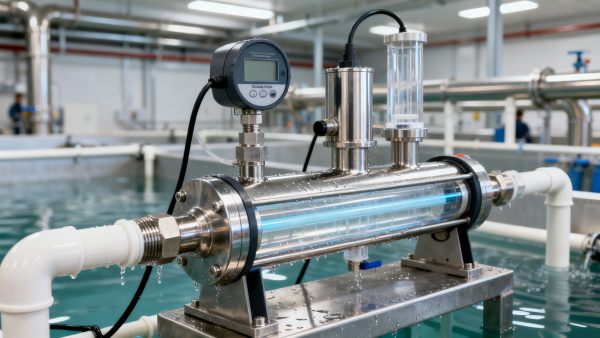
GAA (Global Aquaculture Alliance) released the RAS 3.0 certification framework on May 20, 2026 — a development with direct implications for aeration and water treatment equipment manufacturers, RAS system integrators, and aquaculture operators globally. The new framework introduces two mandatory technical validation requirements: millisecond-level dissolved oxygen (DO) dynamic response testing (±0.1 mg/L within 50 ms) and biofilm inhibition efficacy verification (biofilm thickness ≤5 μm within 72 hours). This update signals a tightening of performance benchmarks for critical life-support components in recirculating aquaculture systems — making it relevant for equipment suppliers, certification bodies, and procurement teams in high-intensity land-based farming operations.
Event Overview
On May 20, 2026, the Global Aquaculture Alliance (GAA) officially published the RAS 3.0 certification framework. It specifies two new technical test criteria for aeration and water treatment equipment: (1) DO dynamic response capability must meet ±0.1 mg/L deviation within 50 ms; and (2) verified biofilm inhibition performance, defined as biofilm thickness no greater than 5 μm after 72 hours under standardized test conditions. The framework has already been adopted by major RAS operators in Norway and Canada as a pre-qualification requirement in equipment tenders. No further implementation timelines or transitional provisions were disclosed in the initial release.
Industries Affected
Aeration & Water Treatment Equipment Manufacturers
These firms are directly subject to the new testing mandates. Their products — including blowers, oxygen injectors, degassers, and UV/ozone units — must now undergo third-party verification against both DO responsiveness and biofilm suppression metrics. Non-compliance may exclude them from bidding on projects led by early-adopter operators in Norway and Canada.
RAS System Integrators & EPC Contractors
Integrators sourcing components for turnkey RAS facilities must now verify supplier certification status prior to subsystem selection. Absence of RAS 3.0 certification may trigger contractual risk, especially where project specifications reference GAA standards or where financiers require compliance documentation.
Certification & Testing Service Providers
Third-party labs and certification bodies face increased demand for standardized DO dynamic response and biofilm inhibition testing protocols. As of May 2026, no official list of accredited testing facilities has been published by GAA — suggesting a near-term gap between framework availability and verification capacity.
Import/Export & Trade Compliance Teams
For Chinese and other non-Nordic/Canadian equipment exporters, RAS 3.0 certification is not yet a regulatory mandate but functions de facto as a market access condition in key jurisdictions. Customs classifications, technical documentation, and conformity declarations may need updating to reflect this emerging commercial benchmark.
What Stakeholders Should Monitor and Do Now
Track Official Protocol Documentation and Accredited Lab Announcements
The GAA release did not include detailed test methodologies, calibration references, or lab accreditation criteria. Stakeholders should monitor GAA’s official communications for publication of the RAS 3.0 Technical Annex — particularly sections covering test setup, repeatability thresholds, and pass/fail adjudication rules.
Prioritize Certification for High-Value Export Markets
Given that Norwegian and Canadian RAS operators have already embedded RAS 3.0 as a tender prerequisite, manufacturers targeting those markets should initiate third-party validation processes without waiting for broader regional adoption. Early certification may confer competitive advantage during bid evaluation phases where technical compliance is weighted heavily.
Distinguish Between Policy Signal and Enforceable Requirement
As of May 2026, RAS 3.0 remains a voluntary certification framework administered by GAA — not a government-mandated standard. Its current influence derives from commercial adoption by leading operators, not legal enforceability. Companies should assess internal readiness separately from regulatory compliance planning.
Review Existing Supply Chain Agreements and Warranty Clauses
Equipment vendors supplying integrators should examine whether existing contracts reference prior GAA versions (e.g., RAS 2.0) or contain technology-refresh clauses. Proactive alignment with RAS 3.0 may mitigate future disputes over obsolescence or performance liability in long-term service agreements.
Editorial Observation / Industry Perspective
This development is best understood not as an immediate compliance deadline, but as a forward-looking signal of operational rigor in land-based aquaculture. Analysis shows that the dual focus — on real-time DO control and biofilm mitigation — reflects growing industry awareness of two interdependent failure modes: transient hypoxia events and microbial fouling in closed-loop hydraulic circuits. Observably, the 50-ms DO response threshold implies design emphasis on sensor-actuator latency and control loop stability — factors previously outside most equipment-level certifications. From an industry perspective, RAS 3.0 appears less like a finalized regulation and more like an early-stage benchmarking initiative, with its real-world impact dependent on continued uptake by financiers, insurers, and multi-site operators beyond the initial Nordic/Canadian adopters.
Consequently, the framework currently functions as a market-driven quality gate rather than a universal technical law. Its significance lies in accelerating convergence around measurable, repeatable performance parameters — a shift that benefits technically mature suppliers while raising entry barriers for legacy or low-precision hardware providers.
It is appropriate to conclude that RAS 3.0 represents an evolution in how aquaculture technology performance is validated — moving from static output metrics toward dynamic system behavior and biological interface management. For stakeholders, the most rational interpretation is to treat it as an actionable commercial signal requiring selective, market-aligned response — not as a sweeping regulatory overhaul.
Information Source: Global Aquaculture Alliance (GAA), official announcement dated May 20, 2026. Note: Details regarding test methodology, accredited laboratories, and phased rollout timelines remain pending and are subject to ongoing observation.
Related Intelligence
- Aeration & Water TechHow Water Treatment Research Guides Technology Selection for Industrial Wastewater ProjectsWater treatment research guides smarter industrial wastewater technology selection. Learn how to assess variable streams, pilot risks, compare process trains, and reduce compliance costs.
- Aeration & Water TechSelecting Solids Filtration for Aquaculture: Flow Rates, Loading, and Fish WelfareSolids filtration aquaculture guide: compare flow rates, peak loading, capture performance, maintenance, and fish welfare to choose a reliable system.
- Aeration & Water TechWhat RO water treatment systems deliver consistent 98% salt rejection at 25°C with feed TDS over 3,000 ppm?RO water treatment systems that deliver proven 98% salt rejection at 25°C with >3,000 ppm TDS—engineered for API synthesis, aquaculture & grain processing.
The Morning Broadsheet
Daily chemical briefings, market shifts, and peer-reviewed summaries delivered to your terminal.
