

The Authority in Global Agricultural Chemistry & Bio-Resources
Are submersible axial flow pumps right for high flow duty
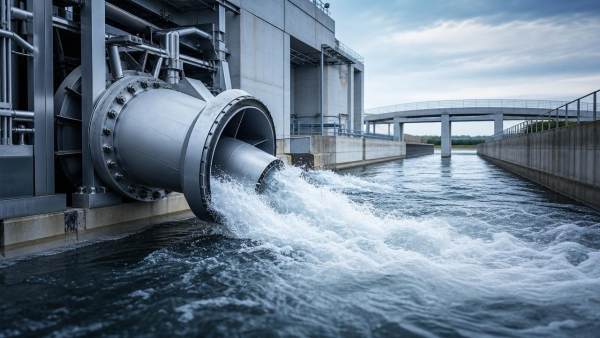
When high-volume water movement is critical, choosing the right pump can determine system efficiency, operating cost, and long-term reliability. For technical evaluation across drainage, irrigation, flood control, and aquaculture, submersible axial flow pumps stand out in low-head, high-flow duty. Yet they are not universally ideal. The right answer depends on hydraulic conditions, solids content, installation constraints, maintenance access, and lifecycle priorities.
This article examines where submersible axial flow pumps perform best, where alternatives may fit better, and how to judge suitability using practical project criteria. The goal is not to generalize. It is to match pump design to real operating scenarios with fewer downstream compromises.
When do submersible axial flow pumps make the most sense?
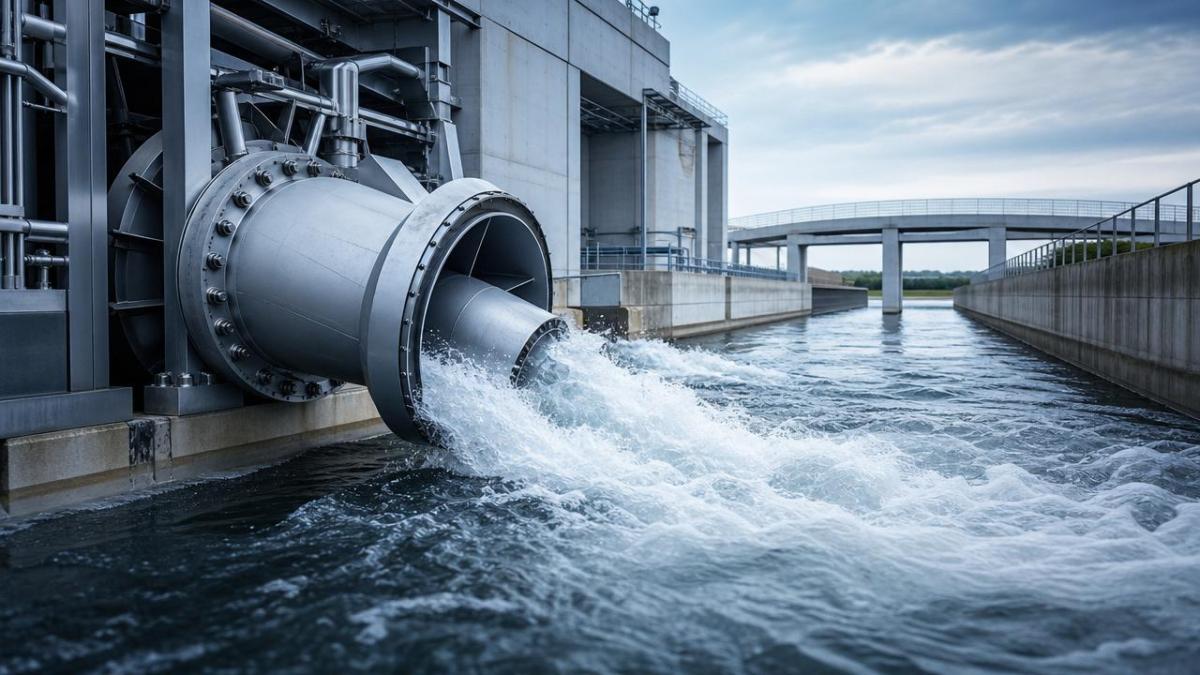
The strongest use case for submersible axial flow pumps is moving very large water volumes against relatively low total dynamic head. Their impeller design prioritizes flow over pressure. That makes them efficient in channels, sumps, intake structures, and lift applications with modest elevation change.
They also reduce civil complexity in some layouts. Because the motor and pump are submerged, separate dry motor rooms, long drive shafts, and complex priming systems may be unnecessary. In tight infrastructure footprints, that can simplify installation and cut structural demands.
However, if a system requires medium or high head, a mixed-flow or centrifugal design often performs better. The central question is simple: does the application need maximum volume, or meaningful pressure gain? Submersible axial flow pumps answer the first need exceptionally well.
How application context changes the pump decision
In comprehensive industrial and primary processing environments, water movement is never one-dimensional. Water quality, duty cycle, regulation, and downtime tolerance vary sharply. A pump suitable for drainage may fail economically in aquaculture circulation or process water transfer.
That is why submersible axial flow pumps should be judged by scenario rather than by catalog flow rate alone. Head profile, seasonal variability, debris load, energy tariff exposure, and access for inspection all influence long-term value.
Scenario 1: Agricultural drainage and irrigation transfer
Agricultural drainage often demands rapid movement of stormwater or canal water across short elevation differences. This is a classic fit for submersible axial flow pumps. They can deliver high volume efficiently when the hydraulic lift remains low.
For irrigation transfer, they work well between reservoirs, rivers, balancing ponds, and distribution channels. Key checks include seasonal water level changes, intake vortex risk, and suspended solids. If sediment is moderate and head remains limited, the fit is usually strong.
Scenario 2: Flood control and municipal stormwater removal
Flood control stations need fast response and reliable operation under surging inflow. Submersible axial flow pumps are widely favored here because they can move large water volumes quickly without extensive above-ground machinery.
Yet stormwater is rarely clean. Debris, fibrous material, and grit can affect hydraulic performance and wear. In these cases, impeller passage design, guide vane durability, motor sealing, and trash rack design become as important as nominal capacity.
Scenario 3: Aquaculture circulation and water exchange
In aquaculture, water exchange must support oxygen balance, waste removal, and stable environmental conditions. Submersible axial flow pumps can be effective when the objective is gentle, high-volume transfer through ponds, raceways, or recirculation channels.
The judgment point is control sensitivity. If precise pressure management, filtration integration, or complex piping losses dominate, other pump types may outperform. If broad circulation at low head is the priority, axial flow remains attractive.
Scenario 4: Industrial cooling water and process water movement
Some industrial facilities require bulk water transfer for cooling loops, intake structures, or low-lift process movement. Here, submersible axial flow pumps can reduce footprint and support continuous duty, especially where suction conditions challenge dry-installed pumps.
Still, chemical compatibility matters. Corrosive exposure, temperature variation, and regulatory cleanliness standards may require specific metallurgy, coatings, cable systems, and sealing arrangements. Hydraulic fit alone is not enough.
What project conditions favor submersible axial flow pumps?
The following comparison helps determine when submersible axial flow pumps are likely to be the right choice.
This table highlights the main pattern. Submersible axial flow pumps are strongest where flow dominates the duty requirement and the system does not demand substantial discharge pressure.
How to assess scenario-specific needs before selection
A useful selection process should move from field conditions to hydraulic validation, not the reverse. These steps help avoid overgeneralized decisions.
- Confirm actual operating head across normal, peak, and low-water conditions.
- Define minimum and maximum required flow, not just design-point flow.
- Review solids, fibers, algae, grit, and chemical exposure in the water stream.
- Check whether maintenance can be performed with lifting equipment on site.
- Evaluate power quality, variable speed needs, and off-design operating frequency.
- Compare civil savings against retrieval and service complexity.
In many cases, the question is not whether submersible axial flow pumps can operate. The better question is whether they can operate efficiently across the full annual duty envelope.
Common misjudgments in high-flow duty projects
The most common mistake is sizing around peak flow alone. That often pushes the pump away from its best efficiency region during normal operation, increasing energy cost and wear.
Another error is ignoring transient head changes. Seasonal water level shifts, downstream gate conditions, or pipe losses can move the duty point more than expected. Submersible axial flow pumps are sensitive to proper hydraulic matching.
A third oversight is assuming all submersible configurations are maintenance-equal. Retrieval method, guide rail arrangement, seal monitoring, and cable routing affect service time and risk exposure significantly.
Finally, some projects underestimate debris management. Screens, sump geometry, and intake flow patterns are part of pump performance. A good pump in a poor hydraulic structure will not deliver dependable results.
Are submersible axial flow pumps right for your high flow duty?
If the application requires low-head, high-volume movement, submersible axial flow pumps are often one of the most effective solutions available. They fit especially well in drainage stations, irrigation transfer, flood mitigation, aquaculture exchange, and bulk water intake systems.
They become less suitable when discharge head rises, solids become highly problematic, or process control demands sharper pressure precision. In those cases, a different hydraulic profile may deliver better lifecycle value.
The best next step is to build a duty review around real operating points, water characteristics, installation limits, and maintenance realities. With that scenario-based approach, submersible axial flow pumps can be judged accurately, not just attractively.
For any high flow duty, technical confidence starts with a verified hydraulic curve, a realistic site assessment, and a clear definition of what the system must sustain over time. That is where the right pump decision begins.
Related Intelligence
- Aeration & Water TechHow Water Treatment Research Guides Technology Selection for Industrial Wastewater ProjectsWater treatment research guides smarter industrial wastewater technology selection. Learn how to assess variable streams, pilot risks, compare process trains, and reduce compliance costs.
- Aeration & Water TechSelecting Solids Filtration for Aquaculture: Flow Rates, Loading, and Fish WelfareSolids filtration aquaculture guide: compare flow rates, peak loading, capture performance, maintenance, and fish welfare to choose a reliable system.
- Aeration & Water TechWhat RO water treatment systems deliver consistent 98% salt rejection at 25°C with feed TDS over 3,000 ppm?RO water treatment systems that deliver proven 98% salt rejection at 25°C with >3,000 ppm TDS—engineered for API synthesis, aquaculture & grain processing.
The Morning Broadsheet
Daily chemical briefings, market shifts, and peer-reviewed summaries delivered to your terminal.
