

The Authority in Global Agricultural Chemistry & Bio-Resources
Indonesia Mandates Bahasa Labels for Forestry Equipment Imports
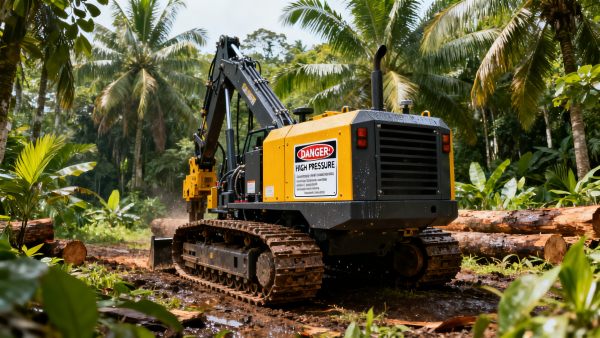
On May 19, 2026, Indonesia’s Ministry of Industry issued a new regulation requiring all imported forestry equipment to comply with localized labeling and documentation standards—triggering immediate attention across agricultural machinery exporters, certification providers, and supply chain stakeholders in Southeast Asia and beyond.
Event Overview
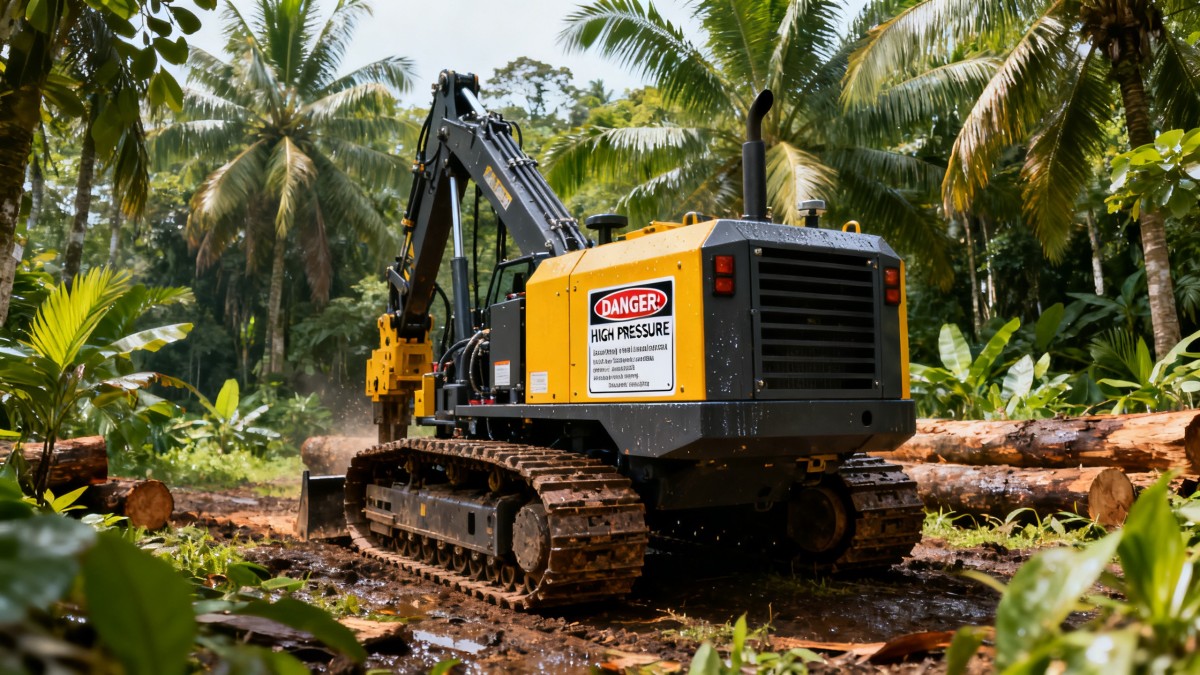
Per the Ministry of Industry’s official announcement dated May 19, 2026, effective July 1, 2026, all imported forestry equipment must bear physical safety warning labels in Bahasa Indonesia affixed directly to the machine body. In addition, importers must submit an operation manual translated into Bahasa Indonesia and certified by the National Accreditation Committee of Indonesia (KAN). Compliance is mandatory for customs clearance; non-compliant shipments will be detained or rejected.
Industries Affected
Direct Trading Enterprises: Exporters—especially SMEs based in China, South Korea, and the EU—face direct cost and timeline impacts. The requirement adds translation, KAN certification, label printing, and quality verification steps to pre-shipment workflows. With average certification cycles lasting 6–8 weeks, order lead times are extended, and inventory planning becomes more complex.
Raw Material Procurement Enterprises: While not directly handling labeling, suppliers of components used in final assembly (e.g., hydraulic systems, engine modules) may face upstream pressure to provide bilingual technical data sheets or safety specifications. This introduces new coordination layers and potential delays if OEM documentation lacks localization readiness.
Manufacturing Enterprises: Original equipment manufacturers (OEMs) exporting under their own brand or via white-label arrangements must now integrate Bahasa-compliant labeling into production line processes—requiring updated labeling software, staff training on regulatory formatting rules, and internal QA checks for linguistic accuracy and placement compliance.
Supply Chain Service Providers: Freight forwarders, customs brokers, and certification consultants report rising demand for integrated compliance packages—including KAN liaison support, label layout validation, and manual version control. Some third-party labs have already introduced expedited (but premium-priced) Bahasa manual review services.
Key Considerations and Response Measures
Verify KAN-Certified Translation Partners Early
KAN does not accredit translators directly but certifies translation agencies meeting ISO/IEC 17065 criteria. Companies should confirm partner eligibility before initiating translations—avoiding rework due to non-recognized certifications.
Update Labeling Specifications in Bill of Materials (BOM)
Manufacturers must revise BOM templates to include Bahasa label material type, adhesive durability (for tropical humidity), font size minimums (≥10 pt per regulation Annex II), and mandatory symbol placements—ensuring consistency across SKUs and production batches.
Factor in 6–8 Week Certification Lead Time
Given the fixed July 1, 2026 enforcement date, orders scheduled for Q3 2026 delivery must initiate documentation work no later than mid-May 2026. Delays risk missed sales windows, especially during peak planting and harvesting seasons.
Maintain Version-Controlled Documentation Archives
Each KAN-certified manual receives a unique reference number and validity period. Enterprises must track revisions, expiration dates, and associated equipment serial ranges—critical for audit readiness and post-import inspections.
Editorial Insight / Industry Observation
Observably, this regulation reflects Indonesia’s broader industrial policy shift toward domestic capacity building—not just language localization, but also knowledge transfer and end-user safety literacy. While often framed as a market access barrier, analysis shows it may accelerate consolidation among smaller exporters lacking in-house regulatory affairs teams. Larger OEMs, meanwhile, are beginning to treat Bahasa documentation as a modular compliance asset—reusable across multiple ASEAN markets with minor adaptation.
Current evidence suggests that the 15% estimated cost increase applies most acutely to low-volume, high-variability product lines (e.g., custom-built harvesters). For standardized skidders or brush cutters, economies of scale in translation and label procurement could compress that figure closer to 8–10% over time.
Conclusion
This mandate marks more than a procedural update—it signals Indonesia’s growing emphasis on post-import usability and accountability in capital equipment sectors. For global forestry equipment stakeholders, responsiveness hinges less on reacting to the rule itself and more on embedding localization readiness into product development and export operations—not as an afterthought, but as a design-phase requirement.
Source Attribution
Official source: Republic of Indonesia Ministry of Industry Regulation No. 18/M-IND/PER/5/2026, published May 19, 2026. Annexes specify label dimensions, required safety symbols, and KAN certification scope. Note: KAN’s public registry of accredited translation bodies remains under active expansion; updates expected through June 2026.
Related Intelligence
- Forestry EquipmentChoosing Compact Forestry Machinery for Small Woodlots and Narrow AccessChoose compact forestry machinery that fits small woodlots and narrow access. Compare payload, turning clearance, safety, and running costs to find the right machine for your site.
- Forestry EquipmentAre PTO driven wood chipper vibration levels within ISO 5349-1 hand-arm exposure limits for forestry crews?PTO driven wood chipper vibration often exceeds ISO 5349-1 limits—discover real-world data, actionable mitigation strategies, and how to protect forestry crews now.
- Forestry EquipmentSelecting Timber Processing Equipment for Middle East Heat, Dust, and Wood SpeciesTimber processing equipment for Middle East operations: discover how to select heat-resistant, dust-protected, species-matched systems for reliable output and lower downtime.
The Morning Broadsheet
Daily chemical briefings, market shifts, and peer-reviewed summaries delivered to your terminal.
