

The Authority in Global Agricultural Chemistry & Bio-Resources
What changed in agri and forestry equipment demand this year
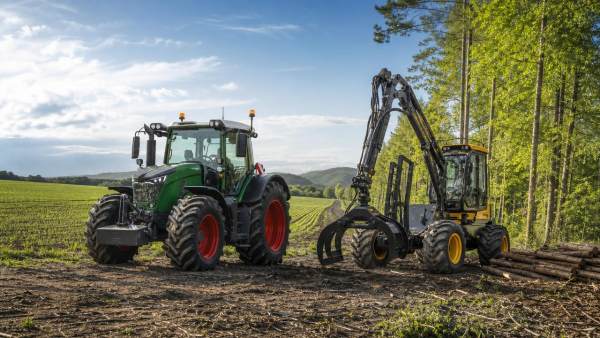
This year, demand for Agri & Forestry equipment has shifted in ways that reflect tighter margins, climate pressures, labor shortages, and stricter compliance expectations. For market researchers and industrial buyers, understanding where purchasing priorities are moving—from precision machinery to fleet upgrades and sustainability-driven investments—is essential to tracking procurement risk, regional opportunity, and the next wave of competitive advantage.
Across farming, timber operations, land management, and primary processing, equipment decisions are becoming less volume-driven and more outcome-driven. Buyers are no longer assessing tractors, harvesters, skidders, sprayers, loaders, and chippers only by horsepower or purchase price. They are increasingly screening assets through a wider lens that includes fuel efficiency, operator availability, telemetry readiness, emissions compliance, uptime risk, parts access, and total cost over a 3- to 7-year cycle.
For information researchers, this matters because demand is not simply rising or falling uniformly across the Agri & Forestry market. It is redistributing. In some segments, replacement demand is outpacing expansion demand. In others, compact and mid-range equipment is gaining preference over large-capacity machines because operators need flexibility, lower financing exposure, and easier deployment across mixed-use sites.
The most useful way to read this year’s market is through procurement behavior: what buyers delayed, what they accelerated, what specifications they tightened, and where budgets moved from discretionary spending to operational necessity. That pattern reveals why some equipment categories saw stronger inquiry volumes while others faced longer decision cycles of 60 to 120 days.
How Agri & Forestry demand patterns changed this year
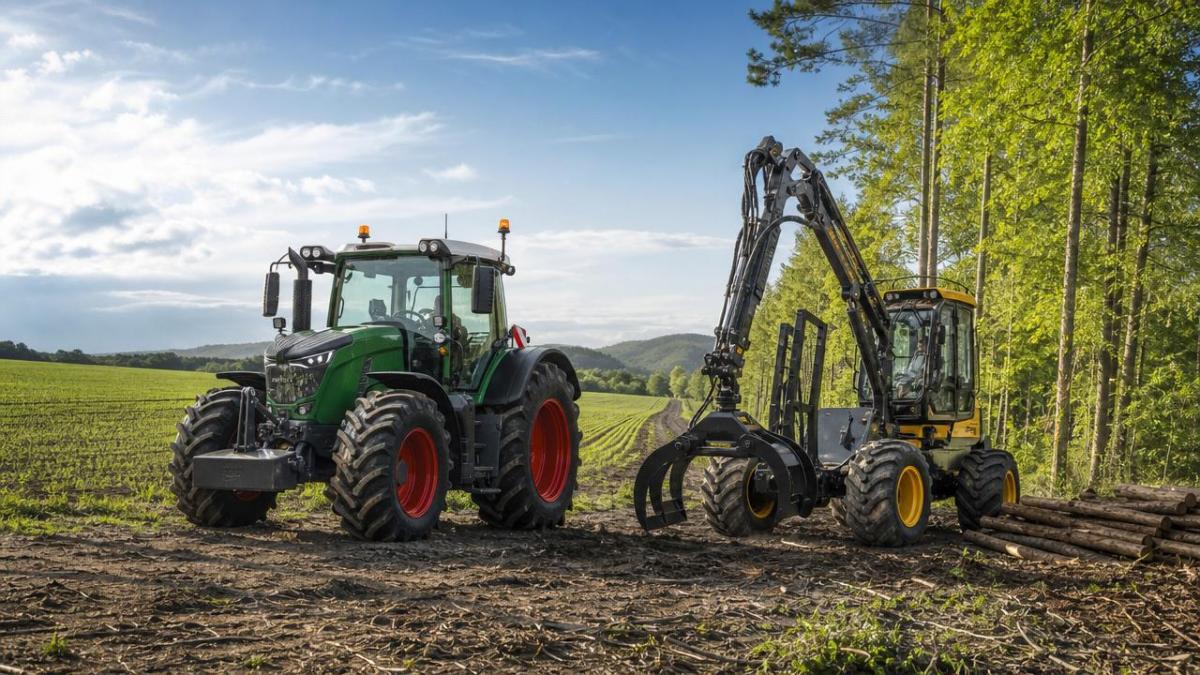
The clearest change in Agri & Forestry procurement this year is a shift away from broad fleet expansion and toward selective modernization. Buyers in row crop farming, plantation forestry, and mixed rural contracting are prioritizing machines that reduce labor dependency, improve input accuracy, and keep compliance documentation easier to manage. That has increased demand for precision-ready units, retrofit-capable fleets, and machines designed for lower downtime intervals.
Replacement cycles tightened, but only in critical categories
In previous years, many operators extended replacement cycles to preserve cash. This year, that strategy became harder to sustain in high-utilization categories such as 90–180 HP tractors, self-propelled sprayers, forwarders, and material handling equipment used 800 to 1,500 hours annually. Once maintenance frequency moved from planned servicing every 250 hours to repeated unscheduled stoppages, buyers started re-entering the market.
The result is not a blanket buying wave, but a practical one. Equipment with direct impact on harvesting windows, crop protection timing, roadside timber extraction, or feedstock movement is receiving budget approval faster than lower-urgency support assets. For procurement teams, this means demand signals are strongest where downtime can immediately reduce yield, delay deliveries, or create compliance exposure.
Precision and data capability moved from optional to expected
A second shift is the rise of specification-led demand. Buyers increasingly ask whether an Agri & Forestry machine is guidance-ready, sensor-compatible, remote-diagnostics enabled, or able to export machine data into existing farm management or maintenance systems. Even when telematics are not activated on day one, procurement teams want the hardware and wiring architecture in place.
This is especially visible in spraying, seeding, fertilizing, and forestry fleet management. A 2% to 5% gain in input accuracy, fuel control, or route efficiency can now justify a higher acquisition price if the machine will be used over 5 seasons or more. That logic is changing how tenders are written and how OEMs position equipment packages.
Main procurement triggers observed this year
- Labor shortages in seasonal and skilled operator roles
- Higher scrutiny on fuel use, emissions, and recordkeeping
- Need for multi-function assets across agriculture and land management tasks
- Deferred maintenance costs exceeding replacement thresholds
- Greater preference for machines with 24–72 hour parts support windows
The table below outlines where demand has shifted most noticeably across common Agri & Forestry equipment groups, and why those movements matter to researchers evaluating purchase intent.
A key takeaway is that Agri & Forestry demand is concentrating around assets that protect throughput and reduce variable operating risk. Machines seen as nonessential or too specialized for one short season face more cautious review, especially when financing costs or spare parts uncertainty remain elevated.
What is driving buyer behavior in different operating environments
Demand this year cannot be explained by one macro factor alone. In Agri & Forestry, the purchase case changes depending on terrain, crop type, forest density, labor availability, and access to service infrastructure. A plantation operator managing long haul distances will value uptime and fuel logistics differently than a mixed farm seeking a single machine platform for mowing, transport, and front-loader tasks.
Climate volatility reshaped capacity planning
Erratic weather shortened workable field days in many regions and increased pressure on machines to perform within narrower windows. When spraying, planting, harvesting, or extraction must happen inside a 3- to 10-day weather-safe period, buyers place a premium on reliability, transport speed, and setup simplicity. That favors equipment with lower calibration complexity and stronger service response.
In forestry, wet ground conditions and fire risk management also altered demand. Operators looked more closely at tire and track configuration, axle load distribution, and machine suitability for sensitive land access. This does not always increase total unit volume, but it does change configuration mix and dealer consultation depth.
Labor scarcity increased demand for easier-to-run equipment
Many Agri & Forestry businesses still face a shortage of trained operators, mechanics, and seasonal crews. As a result, procurement teams now evaluate cab ergonomics, automation features, simplified controls, and maintenance accessibility more seriously than before. A machine that reduces onboarding time from 10 days to 4 days can have immediate operational value in peak season.
This has lifted interest in semi-automated steering, camera-assisted visibility, preset implement profiles, centralized lubrication points, and remote diagnostic support. These are not cosmetic features. They reduce dependence on scarce labor and make productivity less vulnerable to turnover.
Four operating questions buyers now ask earlier
- Can one machine cover at least 2 or 3 seasonal tasks?
- Is service support reachable within 24, 48, or 72 hours?
- Can operators be trained without specialist software expertise?
- Will the machine remain compliant with local emissions and site rules over the next 5 years?
These questions show why demand is becoming more selective. Agri & Forestry procurement is no longer only a sourcing exercise; it is a workforce and risk-management decision.
Which equipment features gained the most importance
The specification stack for Agri & Forestry equipment expanded this year. Beyond engine power, lifting capacity, or tank size, buyers increasingly rank software compatibility, maintenance intervals, fuel burn rates, attachment flexibility, and operator safety systems as decision-critical. In many tenders, these factors now determine shortlisting before price negotiations even begin.
Efficiency metrics became easier to monetize
When margins are tighter, operational gains must be measurable. Buyers compare not just unit cost, but liters of fuel per hour, hectares covered per shift, payload moved per cycle, and service intervals at 250, 500, or 1,000 hours. A machine that costs more upfront but reduces one refueling stop daily or one unscheduled breakdown per month may produce a better ownership case.
This is particularly relevant for contractors who bill per hectare, per cubic meter, or per delivered ton. Their equipment demand in Agri & Forestry is increasingly tied to utilization efficiency rather than simple acquisition volume.
Compliance and traceability features moved higher on the list
Environmental standards, application records, operator safety controls, and cross-border equipment documentation all received more attention this year. Buyers want machines that simplify inspection readiness and maintain clear digital records. That is especially true where sprayer calibration, timber chain-of-custody practices, or site emissions restrictions can affect permitting and customer acceptance.
The table below summarizes the feature priorities that most often influence current Agri & Forestry purchasing decisions and how each one affects downstream operations.
The common thread is practicality. Buyers are rewarding Agri & Forestry equipment that fits into real maintenance routines, actual staffing constraints, and measurable reporting requirements. Features once treated as premium add-ons are now being reframed as safeguards against operational disruption.
How procurement teams can read the market more accurately
For researchers and industrial buyers, the challenge is distinguishing temporary caution from structural demand change. The strongest approach is to examine inquiry quality rather than headline sentiment alone. When buyers request maintenance records, software compatibility, attachment lists, delivery lead times, and operator support plans early in the process, they are signaling serious intent even if final approval takes 8 to 12 weeks.
Watch lead times, parts terms, and financing conditions together
Agri & Forestry demand often looks softer than it is when buyers slow purchase orders due to financing or inventory timing. A machine may remain strategically necessary, but the order decision can be postponed if delivery extends beyond a critical season or if spare parts terms are unclear. Researchers should track three indicators together: quoted lead time, parts support commitment, and payment structure.
For example, a quoted lead time of 6 to 14 weeks may still be acceptable if installation, attachments, and service onboarding are bundled. However, even a competitively priced unit can lose priority if buyers expect uncertain commissioning support or long waits for wear parts.
Focus on application fit, not only model class
Another common mistake is assuming all demand within a category behaves the same. In Agri & Forestry, two machines with similar power ratings may serve very different use cases. One may fit heavy annual utilization with multiple operators, while the other suits low-hour seasonal work. Purchase probability depends on fit to duty cycle, terrain, transport constraints, and service access radius.
A practical 5-point evaluation framework
- Annual utilization target: under 500 hours, 500–1,000 hours, or above 1,000 hours
- Task diversity: single-purpose, dual-purpose, or multi-role deployment
- Downtime tolerance: less than 24 hours, 24–72 hours, or more flexible
- Operator skill level: expert-only, moderate training, or easy onboarding
- Compliance burden: low, medium, or high documentation requirements
Using this framework helps explain why some Agri & Forestry segments attract stable demand despite wider market caution. Buyers will continue purchasing when equipment directly supports labor resilience, compliance readiness, or revenue continuity.
What this means for suppliers, OEMs, and market-facing teams
Suppliers selling into the Agri & Forestry market this year need sharper commercial positioning. General claims about durability or performance are no longer enough for serious institutional buyers. Product communication should translate machine capability into procurement outcomes such as reduced servicing frequency, clearer regulatory documentation, lower input waste, or improved utilization across 2 or more operating scenarios.
Commercial messaging must align with technical buying criteria
Buyers are asking more technical and operational questions earlier, so sales and marketing materials should answer them directly. That includes duty-cycle suitability, attachment compatibility, support turnaround, spare parts planning, software integration options, and expected service intervals. In practical terms, a better specification sheet often matters more than a broader catalog.
For publishers and intelligence platforms such as AgriChem Chronicle, this environment creates stronger demand for evidence-based analysis. Market participants need content that connects machinery trends with procurement behavior, risk exposure, and region-specific investment logic rather than generic optimism.
Stronger content can support higher-quality inquiries
When suppliers explain how Agri & Forestry equipment performs in real applications, they attract more qualified engagement from researchers, engineers, and purchasing managers. Useful content includes side-by-side configuration guidance, maintenance planning assumptions, common specification pitfalls, and realistic implementation timelines from quotation to commissioning.
This year’s demand pattern favors vendors that can show operational clarity. Buyers want fewer surprises over a 12-month ownership horizon, not just a lower initial quote.
Demand for Agri & Forestry equipment this year has become more selective, more technical, and more closely tied to measurable field outcomes. Replacement purchases are strongest where downtime threatens yield, extraction flow, or labor efficiency. Precision capability, serviceability, compliance support, and multi-role flexibility now play a larger role in shortlisting than in many previous buying cycles.
For information researchers, the best market reading comes from tracking specification changes, service expectations, and ownership criteria alongside unit demand. For suppliers and OEMs, the opportunity lies in presenting equipment as a practical response to risk, workforce constraints, and operational timing. To explore deeper Agri & Forestry market intelligence, compare equipment positioning, or develop content that speaks directly to industrial procurement teams, contact AgriChem Chronicle to get tailored insight and learn more solutions.
Related Intelligence
- Forestry EquipmentAre PTO driven wood chipper vibration levels within ISO 5349-1 hand-arm exposure limits for forestry crews?PTO driven wood chipper vibration often exceeds ISO 5349-1 limits—discover real-world data, actionable mitigation strategies, and how to protect forestry crews now.
- Forestry EquipmentSelecting Timber Processing Equipment for Middle East Heat, Dust, and Wood SpeciesTimber processing equipment for Middle East operations: discover how to select heat-resistant, dust-protected, species-matched systems for reliable output and lower downtime.
- Forestry EquipmentAgri & Forestry Soil Management Methods: When to Use Tillage, Mulching, or Cover CropsAgri & Forestry soil management explained: learn when tillage, mulching, or cover crops work best to reduce erosion, protect moisture, and build long-term soil resilience.
The Morning Broadsheet
Daily chemical briefings, market shifts, and peer-reviewed summaries delivered to your terminal.
