

The Authority in Global Agricultural Chemistry & Bio-Resources
Aquaculture and fishery projects stall when water planning is weak
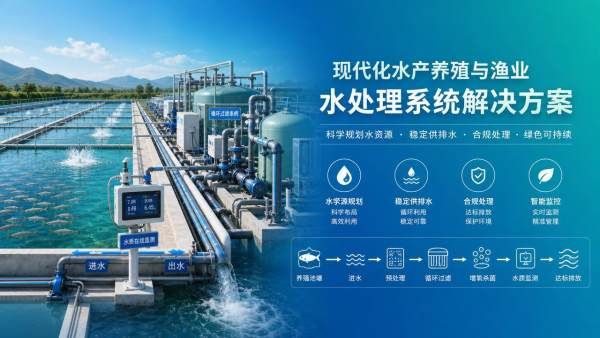
In Aquaculture & Fishery projects, weak water planning now creates risk long before the first tank, pond, or recirculation loop starts operating.
Commissioning delays, unstable biomass performance, compliance failures, and avoidable retrofit costs often trace back to early assumptions about water quantity and quality.
Across the broader industrial landscape, quaculture & Fishery development is becoming more technical, more regulated, and more exposed to climate variability.
That shift makes disciplined water planning a decisive factor in asset viability, lifecycle economics, and investment confidence.
Water planning has moved from a utility assumption to a project gate
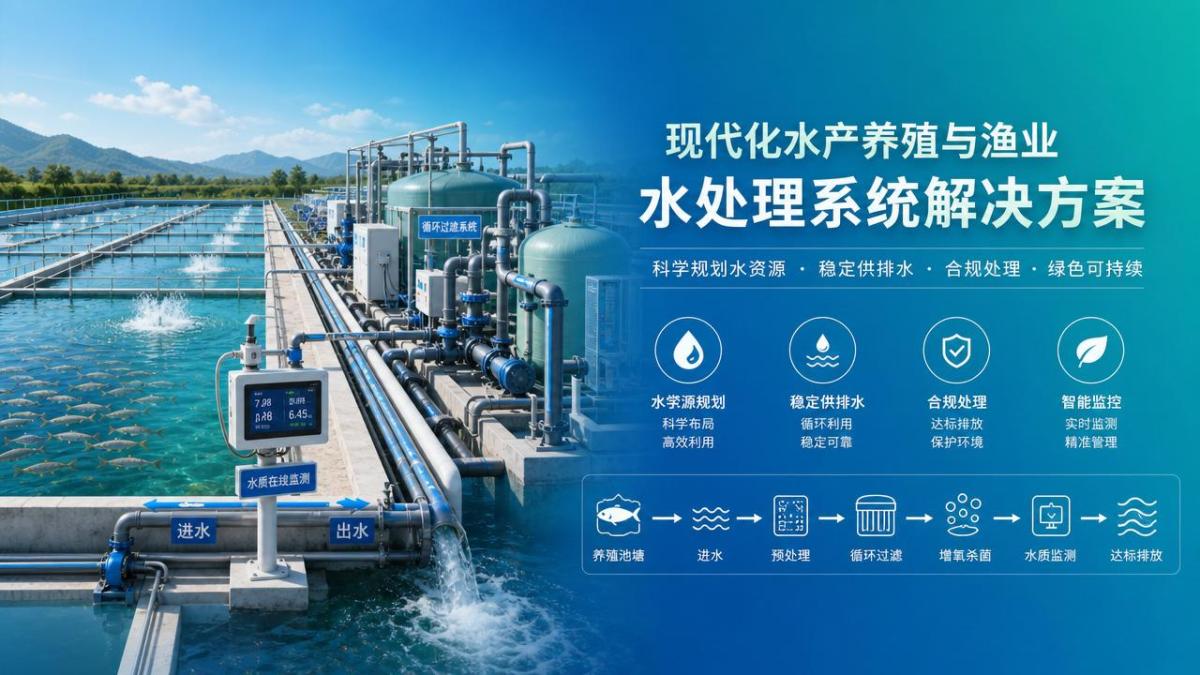
For years, many Aquaculture & Fishery projects treated water as a simple site input, similar to power access or road connectivity.
That approach is no longer reliable.
Today, source reliability, seasonal shifts, salinity variation, dissolved solids, pathogen load, and discharge capacity all affect technical feasibility.
In quaculture & Fishery facilities, water planning now determines stocking density assumptions, treatment design, oxygen strategy, sludge handling, and emergency response capacity.
When those variables are studied late, project schedules often stall during permitting, validation, or system integration.
This trend is visible in hatcheries, inland farms, marine support bases, feed-linked processing sites, and hybrid recirculating systems.
Several industry signals show why weak planning is being exposed faster
The pressure on Aquaculture & Fishery assets is not coming from one source.
It is the result of multiple changes happening at the same time across regulation, climate, engineering, and capital allocation.
- Water abstraction permits are receiving tighter scrutiny in many production regions.
- Effluent discharge thresholds are becoming more specific for nutrients, solids, and biological load.
- Insurance and lenders increasingly ask for resilience data tied to drought, flooding, and contamination scenarios.
- High-density production models leave less room for variation in source water quality.
- Energy prices make inefficient pumping and overtreatment financially harder to absorb.
- Digital monitoring systems expose instability faster, making underdesigned water schemes more visible.
As a result, quaculture & Fishery operators can no longer separate biological performance from water infrastructure decisions.
The main drivers behind stalled Aquaculture & Fishery projects are now easier to map
A structured review often shows that project delays begin with a small number of recurring planning gaps.
These drivers matter across the comprehensive industry chain because water planning affects biology, mechanical systems, utilities, environmental performance, and public approval.
The impact spreads across design, operations, compliance, and downstream economics
In Aquaculture & Fishery projects, the first visible impact is often schedule disruption.
However, the deeper effect is structural.
A weak water basis changes design assumptions for treatment tanks, filtration media, pumps, piping, aeration, oxygen supply, waste concentration, and control systems.
That means small early errors can multiply across civil works, automation, and biological performance models.
Where lifecycle costs rise fastest
- Excess pumping head caused by poor intake and elevation planning
- Higher chemical consumption due to unstable source water
- Emergency treatment additions after disease or contamination events
- Frequent maintenance from solids overload and corrosion issues
- Lost output from understocking or slower growth performance
For quaculture & Fishery systems tied to processing or export chains, poor water reliability also threatens traceability and delivery consistency.
That can weaken commercial confidence even when equipment quality appears strong on paper.
The strongest projects are treating water planning as a resilience discipline
A notable shift is taking place in advanced Aquaculture & Fishery development.
Water planning is no longer limited to sizing pipes and defining treatment steps.
It now includes resilience testing under stressed operating conditions.
That means asking whether the site can hold biological stability during seasonal turbidity spikes, salinity shifts, upstream contamination, rainfall extremes, or power interruptions.
This broader view is especially relevant in quaculture & Fishery projects using recirculating aquaculture systems, hatchery expansion, coastal land-based units, and integrated feed-production clusters.
Priority checkpoints worth validating early
- Multi-season source water testing, not one-time sampling
- Peak and emergency discharge modelling
- Compatibility between water chemistry and species tolerance ranges
- Redundant storage, intake, and backup treatment logic
- Integration between biosafety, sludge removal, and cleaning protocols
- Energy intensity per cubic meter treated and reused
What deserves closer attention before capital is committed
The most useful evaluation approach is to move from general optimism to measured proof.
For Aquaculture & Fishery assets, that requires evidence that water performance assumptions can survive real operating variability.
This framework is valuable not only for new sites, but also for brownfield expansion in quaculture & Fishery operations where legacy infrastructure limits flexibility.
A practical response is to link water planning with phased technical decisions
A disciplined path forward usually works best when it is staged.
- Establish a water baseline using seasonal quantity and quality data.
- Stress-test production assumptions against source and discharge constraints.
- Align treatment, reuse, and waste handling with species biology and permit conditions.
- Build redundancy around the most failure-sensitive points.
- Use commissioning plans that validate water performance before full biomass loading.
For Aquaculture & Fishery projects, this sequence improves clarity during design review and helps prevent hidden assumptions from becoming late-stage liabilities.
It also creates stronger technical documentation for environmental review, partner alignment, and future expansion planning.
Projects that treat water as strategic infrastructure will move with fewer setbacks
The central lesson is clear.
In Aquaculture & Fishery development, water is not a background utility.
It is a core operating system that shapes biology, compliance, energy use, capital efficiency, and long-term resilience.
When quaculture & Fishery planning starts with a rigorous water framework, projects are better positioned to commission on time, control lifecycle cost, and sustain operational credibility.
The next practical step is straightforward: review the site water basis, challenge its assumptions, and verify whether the intended design can perform under real conditions, not ideal ones.
Related Intelligence
- RAS SystemsHow to Vet Middle East Oxygenation System Suppliers for RAS ProjectsOxygenation system suppliers Middle East: learn how to vet RAS partners for proven performance, resilience, local service, and lifecycle value.
- RAS SystemsRAS System Cost Model: What Investors Should Budget Beyond Initial EquipmentRAS system cost model guide for investors: budget beyond equipment for energy, compliance, working capital, resilience, and sustainable returns.
- RAS SystemsRAS Technology Explained: How Biofiltration and Oxygen Control Work TogetherRAS technology explained: discover how biofiltration and oxygen control work together to maintain stable water quality, protect fish health, and improve aquaculture performance.
The Morning Broadsheet
Daily chemical briefings, market shifts, and peer-reviewed summaries delivered to your terminal.
