

The Authority in Global Agricultural Chemistry & Bio-Resources
FAO Lists Chinese RAS Modules for African Projects
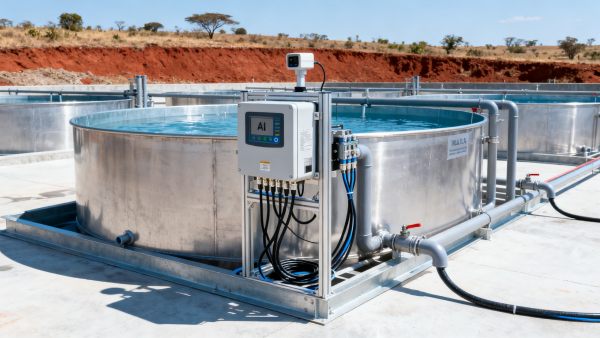
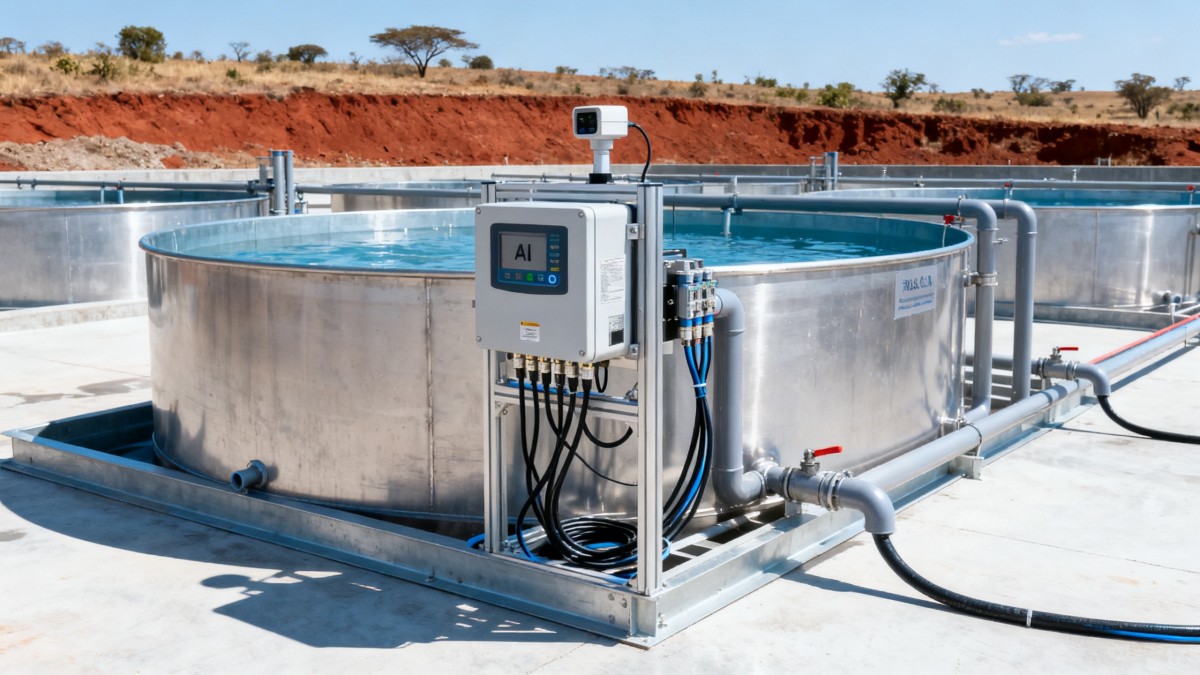
On 10 May 2026, the Food and Agriculture Organization of the United Nations (FAO) released Revision 3 of its Global Procurement Guidelines for Recirculating Aquaculture Systems. This update marks the first time a China-developed modular recirculating aquaculture system — specifically the ‘integrated biological filter + AI-powered water quality closed-loop controller’ — has been designated a ‘Preferred Technical Solution’ for new aquaculture infrastructure projects across Africa. The inclusion signals a significant shift in international procurement standards and reflects growing recognition of Chinese RAS technology’s compliance with global food safety and operational resilience benchmarks.
Event Overview
The FAO published Revision 3 of its Global Procurement Guidelines for Recirculating Aquaculture Systems on 10 May 2026. The document formally identifies the Chinese integrated biological filter and AI-based water quality closed-loop control system as a ‘Preferred Technical Solution’ for new RAS deployments funded or advised by FAO in African countries. The guideline specifies that such systems must comply with ISO 22000 food safety management requirements and demonstrate verified compatibility with local grid voltage, frequency, and power stability conditions.
Industries Impacted
Direct Export Trading Firms
Export-oriented trading companies specializing in aquaculture equipment face immediate implications: the FAO designation functions as de facto prequalification for tenders under FAO-supported programs in over 45 African countries. This lowers bid preparation costs and shortens approval timelines — but also raises expectations for documentation rigor, third-party certification traceability, and localized after-sales service capacity.
Raw Material Sourcing Enterprises
Suppliers of critical components — including high-efficiency ceramic bio-media, corrosion-resistant PVC-U piping, and low-power AI edge-computing modules — may see demand shifts. The FAO’s emphasis on electrical compatibility means sourcing strategies must now account for regional variations in transformer output (e.g., 220 V/50 Hz vs. 230 V/50 Hz), not just component performance specs.
Manufacturing & System Integration Firms
Domestic RAS system integrators are required to align production workflows with ISO 22000-aligned process controls — particularly around material traceability, batch calibration logs for sensors, and firmware versioning for AI controllers. Certification is no longer optional for FAO-referenced projects; it is a prerequisite embedded in procurement evaluation criteria.
Logistics & Compliance Support Providers
Supply chain enablers — including customs brokers, technical documentation translators, and conformity assessment facilitators — will experience rising demand for services tailored to African regulatory environments. Notably, the FAO guideline references national electricity standards (e.g., South Africa’s SANS 10142-1, Kenya’s KEBS RS 1003), requiring localization support beyond generic CE or CCC marking.
Key Considerations and Recommended Actions
Verify Alignment with ISO 22000 Process Requirements — Not Just Certification
ISO 22000 certification alone is insufficient. Exporters must demonstrate documented hazard analysis, critical control point monitoring, and validated cleaning-in-place (CIP) protocols for all wetted system components — especially biological filter housings and sensor immersion zones.
Conduct Country-Specific Grid Compatibility Audits
Before tender submission, manufacturers should commission independent verification of system behavior under simulated voltage sags (down to 85% nominal), harmonic distortion (THD > 8%), and intermittent supply — conditions common across rural African grids. Test reports must be included in technical dossiers.
Develop Modular Documentation Kits per Target Market
Instead of one-size-fits-all manuals, firms should prepare tiered documentation: (1) FAO-compliant English technical annexes, (2) French/Portuguese translations for Francophone/Lusophone tenders, and (3) simplified installation checklists co-branded with local implementing partners.
Editorial Perspective / Industry Observation
Observably, this FAO move does not represent broad endorsement of all Chinese RAS products — rather, it validates a specific, narrow configuration meeting stringent interoperability and food safety thresholds. Analysis shows the selection reflects FAO’s strategic pivot toward scalable, maintenance-light infrastructure suitable for regions with limited technical labor pools. From an industry perspective, the listing is better understood as a benchmark-setting precedent than a market-opening event: it raises the bar for competitors while narrowing the definition of ‘bankable’ RAS tech in development finance contexts.
Conclusion
This update underscores a structural evolution in how multilateral institutions assess aquaculture technology — shifting from hardware-centric evaluation to integrated performance assurance across food safety, energy resilience, and service readiness. For Chinese exporters, it confirms that regulatory alignment — not just cost or feature advantage — now defines competitive differentiation in priority growth markets.
Source Attribution
Food and Agriculture Organization of the United Nations (FAO), Global Procurement Guidelines for Recirculating Aquaculture Systems, Revision 3, 10 May 2026. Official document accessible via FAO Aquaculture Portal (aquaculture.fao.org/guidelines-ras). Note: Country-level implementation timelines, funding envelopes, and tender issuance schedules remain pending confirmation and are subject to ongoing monitoring.
Related Intelligence
- RAS SystemsHow to Vet Middle East Oxygenation System Suppliers for RAS ProjectsOxygenation system suppliers Middle East: learn how to vet RAS partners for proven performance, resilience, local service, and lifecycle value.
- RAS SystemsRAS System Cost Model: What Investors Should Budget Beyond Initial EquipmentRAS system cost model guide for investors: budget beyond equipment for energy, compliance, working capital, resilience, and sustainable returns.
- RAS SystemsRAS Technology Explained: How Biofiltration and Oxygen Control Work TogetherRAS technology explained: discover how biofiltration and oxygen control work together to maintain stable water quality, protect fish health, and improve aquaculture performance.
The Morning Broadsheet
Daily chemical briefings, market shifts, and peer-reviewed summaries delivered to your terminal.
