

The Authority in Global Agricultural Chemistry & Bio-Resources
Green Corridor Asia-Europe Cold Chain Route Launches Jun 2026
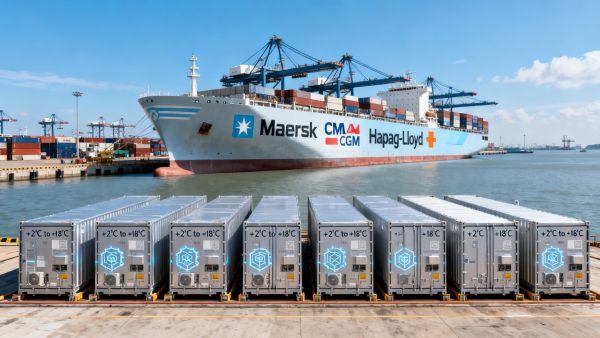
Global shipping alliance ‘Green Corridor’ will launch its dedicated Asia–Europe cold chain service on 1 June 2026 — a development with immediate implications for life sciences logistics, precision equipment trade, and regulated cross-border supply chains. The initiative marks one of the first carrier-coordinated, temperature-verified, blockchain-integrated maritime corridors explicitly designed for high-sensitivity cargo requiring strict environmental control.
Event Overview
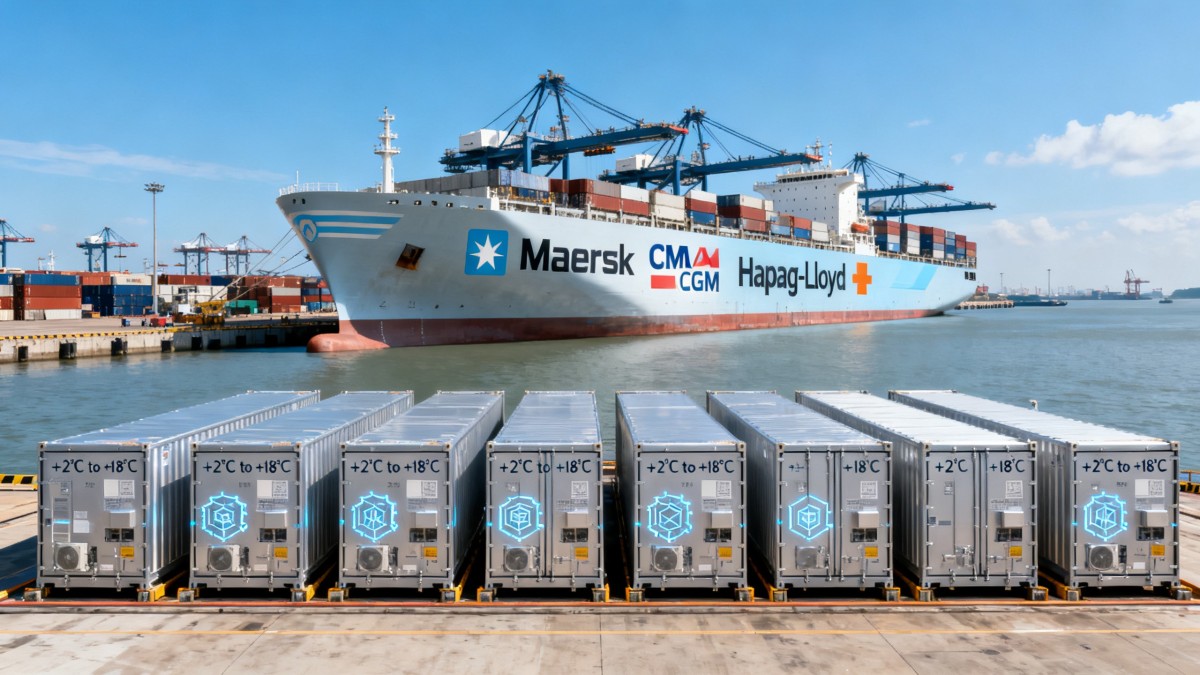
The ‘Green Corridor’ Asia–Europe cold chain route — jointly operated by Maersk, CMA CGM, and Hapag-Lloyd — commences operations on 1 June 2026. Its initial phase covers the Shanghai–Rotterdam–Abu Dhabi rotation, featuring purpose-built temperature-controlled containers maintaining +2°C to +18°C with humidity regulation. The service is optimized for precision water treatment technologies, including Aeration & Water Tech equipment. Transit time is reduced by 3.5 days versus standard LCL (Less than Container Load) solutions, and total logistics cost decreases by 22%. All temperature and humidity data are captured in real time and immutably recorded on-chain, compliant with FDA 21 CFR Part 11 requirements for electronic records and signatures.
Industries Affected
Direct Trading Enterprises
Exporters and importers of regulated water treatment systems face direct operational impact: shorter lead times improve order-to-cash cycles, while the 22% logistics cost reduction improves landed-cost predictability. Crucially, FDA-aligned data traceability reduces audit risk and facilitates customs clearance in regulated markets — particularly relevant for U.S.-bound or Gulf Cooperation Council (GCC)-destined shipments.
Raw Material Procurement Entities
Procurement teams sourcing components for modular water treatment units (e.g., sensors, membrane housings, or control modules) must reassess vendor logistics SLAs. With Green Corridor enabling tighter environmental tolerances and verifiable chain-of-custody, procurement strategies may shift toward just-in-time delivery of mission-critical subassemblies — but only where suppliers can align packaging and handover protocols with corridor-specific温控 (temperature/humidity) documentation standards.
Manufacturing Enterprises
Original Equipment Manufacturers (OEMs) integrating Aeration & Water Tech systems into larger infrastructure projects — such as municipal desalination plants or industrial wastewater reuse facilities — gain enhanced scheduling confidence. Reduced transit variability supports more accurate project milestone planning; however, manufacturers must validate whether their existing packaging and pre-shipment conditioning meet the corridor’s +2°C to +18°C operational envelope — deviations may void temperature compliance certification.
Supply Chain Service Providers
Third-party logistics (3PL) providers, cold chain integrators, and regulatory compliance consultants face both opportunity and adaptation pressure. Demand for corridor-aligned documentation support (e.g., FDA Part 11-compliant data packages, blockchain-access credentials, and multi-port humidity validation reports) is expected to rise. Yet, integration requires technical upgrades — notably API-level connectivity to the corridor’s data platform — which may not be uniformly available across regional service partners.
Key Considerations and Recommended Actions
Verify Equipment Compatibility with Specified Temperature-Humidity Range
Before booking, shippers must confirm that Aeration & Water Tech devices — including embedded electronics and polymer-based components — remain functionally stable and warranty-compliant within the +2°C to +18°C / controlled-humidity environment. Manufacturer datasheets and thermal validation reports should be cross-referenced against corridor specifications.
Assess Data Integration Requirements for FDA 21 CFR Part 11 Compliance
Organizations relying on internal quality management systems (QMS) must evaluate whether their current infrastructure can ingest, authenticate, and archive the corridor’s blockchain-stamped environmental logs. Manual export and reformatting may compromise audit readiness — automated ingestion is strongly advised for regulated users.
Evaluate Port-Specific Handling Protocols at Rotterdam and Abu Dhabi
While Shanghai port integration is mature, Rotterdam and Abu Dhabi terminals have varying levels of cold-chain ramp-up readiness. Shippers should request terminal-specific Standard Operating Procedures (SOPs) for container dwell time, power continuity during transshipment, and humidity maintenance during yard storage — all of which affect end-to-end compliance.
Editorial Perspective / Industry Observation
Observably, Green Corridor is less a standalone route and more a regulatory infrastructure testbed: its FDA-aligned, blockchain-anchored model signals a broader industry pivot from ‘transport-only’ to ‘compliance-as-a-service’ logistics. Analysis shows this approach is gaining traction not only in pharma and biotech but also in adjacent high-regulation verticals — including water technology, where product integrity directly impacts public health outcomes. That said, adoption hinges on interoperability; without standardized APIs and shared validation frameworks across carriers and ports, scalability remains constrained. Current more critical question is not whether the corridor works — but whether it catalyzes harmonized global cold-chain governance.
Conclusion
The Green Corridor launch reflects an evolving definition of maritime competitiveness: no longer measured solely in speed or cost, but in verifiable regulatory alignment and environmental fidelity. For water technology exporters and their partners, this represents both a logistical upgrade and a new layer of operational accountability — one best approached with technical diligence, not just commercial enthusiasm.
Source Attribution
Official announcements from Maersk, CMA CGM, and Hapag-Lloyd (joint press release, 12 March 2024); FDA Guidance on 21 CFR Part 11 (updated February 2024); International Maritime Organization (IMO) Cold Chain Working Group interim report Q4 2025. Note: Terminal SOPs for Rotterdam and Abu Dhabi are pending final publication — subject to ongoing observation.
Related Intelligence
- Aeration & Water TechSelecting Solids Filtration for Aquaculture: Flow Rates, Loading, and Fish WelfareSolids filtration aquaculture guide: compare flow rates, peak loading, capture performance, maintenance, and fish welfare to choose a reliable system.
- Aeration & Water TechWhat RO water treatment systems deliver consistent 98% salt rejection at 25°C with feed TDS over 3,000 ppm?RO water treatment systems that deliver proven 98% salt rejection at 25°C with >3,000 ppm TDS—engineered for API synthesis, aquaculture & grain processing.
- Aeration & Water TechCan pond aeration systems maintain dissolved oxygen above 5 mg/L during summer stratification in catfish ponds?Pond aeration systems can sustain >5 mg/L DO during summer stratification—when engineered for mixing *and* oxygen transfer. See field-proven data & design essentials.
The Morning Broadsheet
Daily chemical briefings, market shifts, and peer-reviewed summaries delivered to your terminal.
