

The Authority in Global Agricultural Chemistry & Bio-Resources
Singapore Expands Aquaculture Tech FastTrack to Aeration & Water Equipment
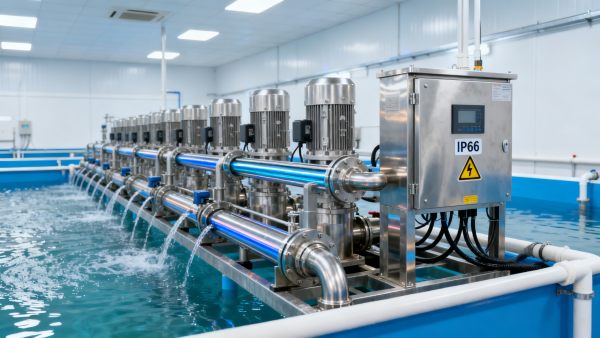
Singapore’s Agri-Food and Veterinary Authority (SFA) and Singapore Standards Council (SSC) jointly announced on 7 May 2026 the expansion of the ‘Aquaculture Tech FastTrack’ mutual recognition framework to cover the full range of aeration and water treatment equipment. This development directly affects cross-border trade in aquaculture technology between Singapore and China, streamlining market access for certified manufacturers and reducing regulatory friction — a response to growing regional demand for scalable, climate-resilient aquaculture infrastructure.
Event Overview
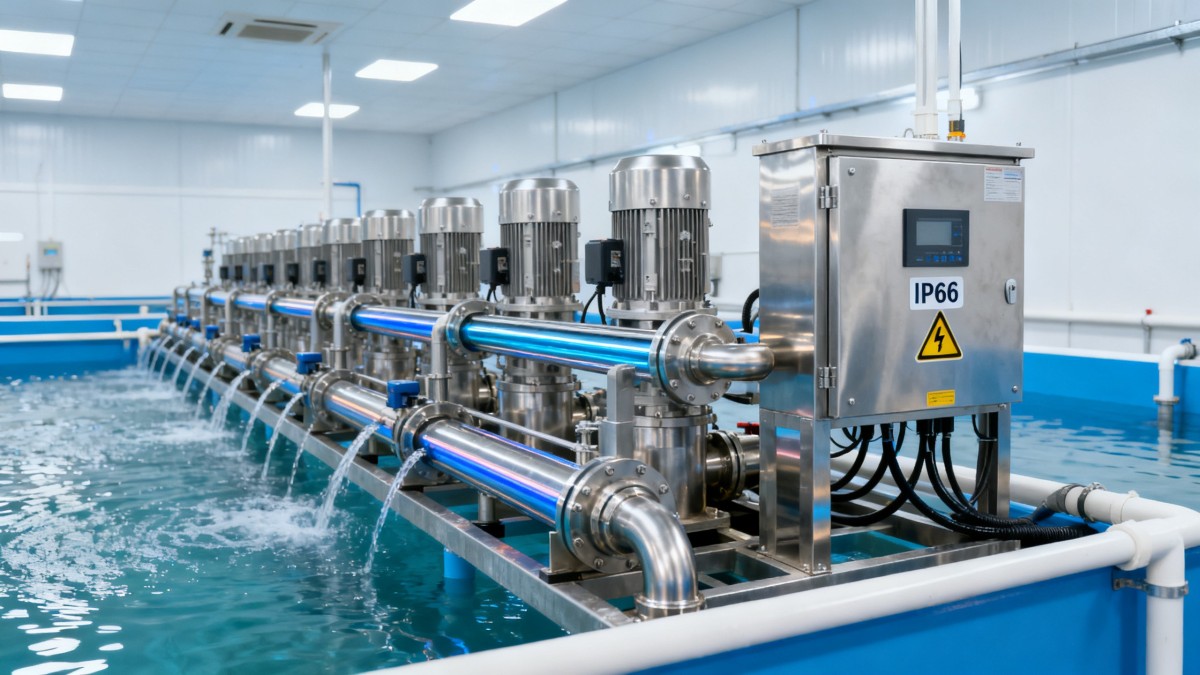
On 7 May 2026, the Singapore Food Agency (SFA) — formerly SFA, now restructured under the Singapore Food Agency Act — and the Singapore Standards Council (SSC) confirmed the extension of the Aquaculture Tech FastTrack mutual recognition arrangement to include all aeration and water technology equipment. Under the updated framework, test reports issued by China National Accreditation Service for Conformity Assessment (CNAS)-accredited laboratories — specifically those covering ISO 14644-1 cleanroom air cleanliness, IP66 ingress protection rating, and EN 60335-1 electrical safety — are now accepted for certification purposes in Singapore. Eligible enterprises no longer need to undergo redundant local testing; average certification lead time is reduced by 60%.
Industries Impacted
Direct Trade Enterprises
Export-oriented manufacturers and distributors of aerators, oxygenation systems, UV sterilizers, and integrated water recirculation units face immediate operational impact. Because Singapore serves as both a regional distribution hub and a high-trust gateway to ASEAN markets, acceptance of CNAS-issued reports lowers entry barriers — particularly for SMEs lacking in-house compliance teams. The reduction in certification cycle time enables faster order fulfillment and more responsive participation in public tenders tied to Singapore’s national aquaculture modernization initiative.
Raw Material Procurement Enterprises
Suppliers of critical components — such as stainless-steel housings, submersible motor assemblies, ozone-generating cells, and sensor modules — are indirectly affected. While not subject to FastTrack certification themselves, their downstream customers increasingly require traceable, pre-validated component-level test data aligned with ISO 14644-1 or EN 60335-1. Procurement managers must now assess whether upstream suppliers maintain CNAS-accredited test partnerships — otherwise, integration into FastTrack-certified final products may be delayed or rejected.
Manufacturing & Assembly Enterprises
OEM/ODM firms integrating third-party components into complete aeration or water treatment systems benefit most directly. The mutual recognition eliminates duplicate validation steps at the system level — especially valuable where enclosure integrity (IP66), airflow consistency (linked to ISO 14644-1 particulate control in enclosed biofilters), and electrical safety co-depend. However, manufacturers remain fully responsible for final system-level conformity; FastTrack does not waive design responsibility or post-market surveillance obligations.
Supply Chain Service Providers
Certification consultants, logistics integrators offering ‘certification-ready’ warehousing, and technical documentation agencies must update service offerings. Demand is rising for bilingual (English–Mandarin) compliance packaging — including annotated test report translations, SSC-formatted declaration templates, and audit-readiness checklists aligned with both CNAS and SSC requirements. Firms slow to adapt risk marginalization in bid responses for Singapore-based project consortia.
Key Considerations and Recommended Actions
Verify CNAS Lab Scope Before Submission
Not all CNAS-accredited labs are authorized to issue reports against ISO 14644-1 (Class 5–8), IP66, or EN 60335-1. Enterprises must confirm that the lab’s CNAS scope document explicitly lists these standards — and that the test was conducted under the correct edition referenced in SSC’s updated FastTrack Annex A (Edition 2025.2).
Align Product Documentation with SSC’s ‘Technical File’ Requirements
FastTrack acceptance hinges on completeness: test reports alone are insufficient. Companies must prepare supplementary technical files — including risk assessments per ISO 14971, installation/maintenance manuals with Singaporean bilingual labeling, and evidence of production process controls. Missing elements trigger case-by-case review, eroding the 60% time saving.
Monitor Expansion to Other ASEAN Jurisdictions
While currently limited to Singapore, SSC has signaled intent to pilot reciprocal arrangements with Vietnam’s Ministry of Agriculture and Rural Development (MARD) and Thailand’s Department of Fisheries (DOF) in H2 2026. Early adopters gaining FastTrack experience now will hold comparative advantage when those frameworks go live.
Editorial Perspective / Industry Observation
Analysis shows this expansion reflects a broader recalibration in Asia-Pacific regulatory cooperation: rather than harmonizing standards wholesale, authorities are prioritizing pragmatic, use-case-specific mutual recognition — starting with high-volume, low-risk equipment categories where test methodologies are mature and widely adopted. Observably, the selection of ISO 14644-1 (typically associated with pharmaceutical cleanrooms) signals Singapore’s emphasis on pathogen control in high-density RAS (Recirculating Aquaculture Systems), not just mechanical reliability. From an industry perspective, this move is better understood not as a ‘regulatory concession’, but as a targeted infrastructure enabler — one that rewards upstream standardization discipline with downstream market agility.
Conclusion
This FastTrack extension marks a meaningful step toward interoperable aquaculture tech regulation in Southeast Asia. It does not eliminate compliance complexity, but it redistributes effort — incentivizing investment in standardized testing capability over fragmented, jurisdiction-by-jurisdiction validation. For the sector, the larger implication lies in precedent: if aeration and water equipment succeed under mutual recognition, filtration media, feed delivery automation, and AI-driven monitoring platforms become logical next candidates. A rational conclusion is that regulatory convergence is accelerating — but selectively, incrementally, and always anchored in verifiable technical equivalence.
Source Attribution
Official announcement: Singapore Food Agency (SFA) Press Release No. SF-2026-05-07-AQ; Singapore Standards Council Circular SSC/AQ/FT/2026/03. Both documents published 7 May 2026 on www.sfa.gov.sg and www.singaporestandards.com. Note: Implementation guidelines, list of accepted CNAS labs, and FastTrack application portal updates remain pending publication; stakeholders are advised to monitor both sites through Q3 2026.
Related Intelligence
- Aeration & Water TechSelecting Solids Filtration for Aquaculture: Flow Rates, Loading, and Fish WelfareSolids filtration aquaculture guide: compare flow rates, peak loading, capture performance, maintenance, and fish welfare to choose a reliable system.
- Aeration & Water TechWhat RO water treatment systems deliver consistent 98% salt rejection at 25°C with feed TDS over 3,000 ppm?RO water treatment systems that deliver proven 98% salt rejection at 25°C with >3,000 ppm TDS—engineered for API synthesis, aquaculture & grain processing.
- Aeration & Water TechCan pond aeration systems maintain dissolved oxygen above 5 mg/L during summer stratification in catfish ponds?Pond aeration systems can sustain >5 mg/L DO during summer stratification—when engineered for mixing *and* oxygen transfer. See field-proven data & design essentials.
The Morning Broadsheet
Daily chemical briefings, market shifts, and peer-reviewed summaries delivered to your terminal.
